
Nagoro: The Japanese Village of 300 Scarecrows
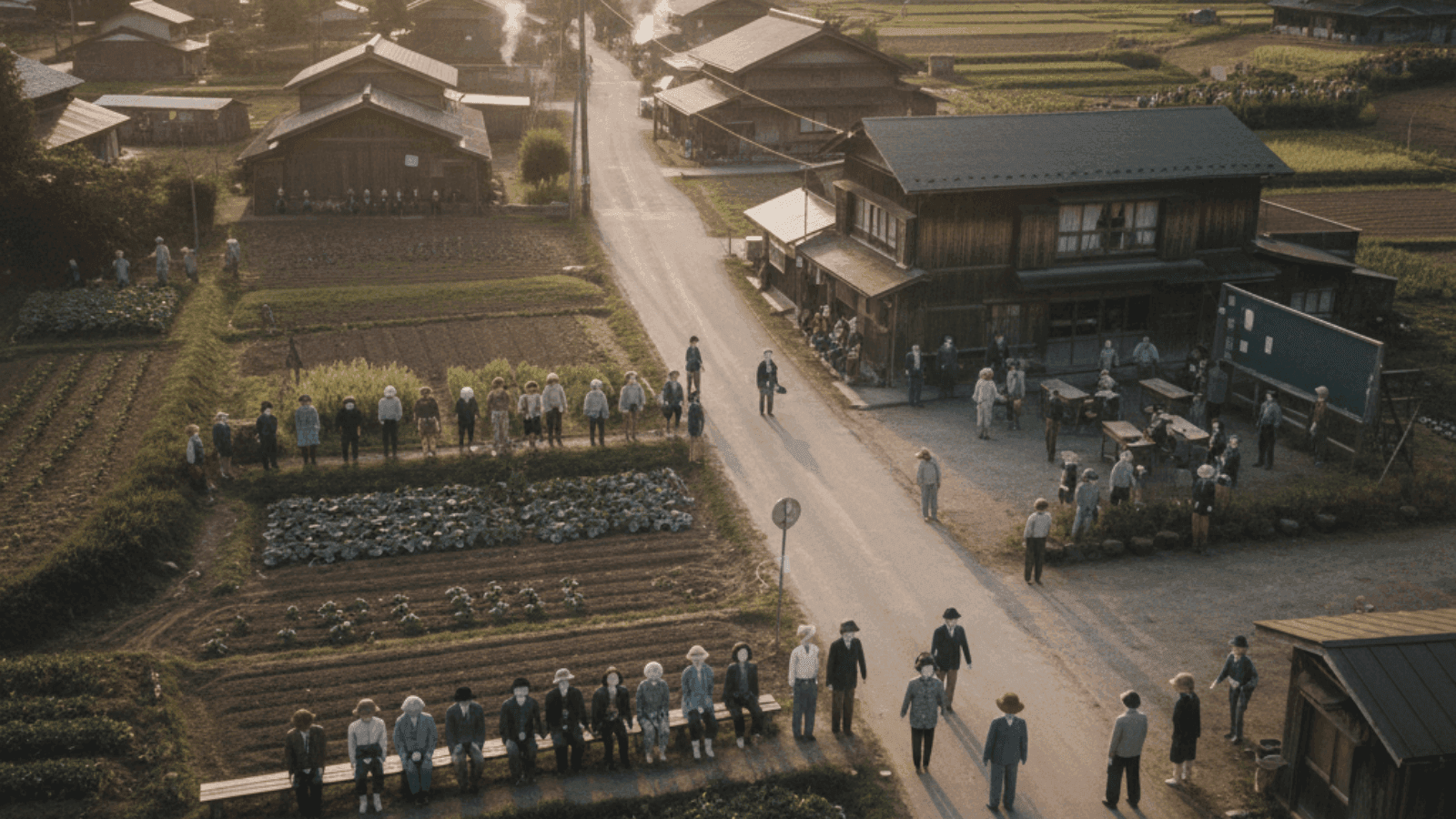
More than 300 life-sized scarecrows sit quietly across the slopes of Nagoro, while fewer than 30 real residents still live there.
They wait at bus stops, lean against bridges, tend imaginary farms, and watch over empty classrooms. At first glance, they look like villagers frozen in time. Only when you stand still long enough do you notice the stillness is permanent.
Why scarecrows outnumber people 10 to 1
Nagoro wasn’t always like this. Like many rural villages in Japan, its population shrank over decades as younger residents moved to cities. Schools closed, farms were abandoned, and houses slowly emptied.
One resident decided to respond in her own way.
Ayano Tsukimi began making scarecrows in the early 2000s, starting with one that resembled her late father. She placed it in the field where he used to work. Then she made another. And another.
Soon, she recreated former neighbors, friends, and villagers from memory. Each scarecrow was dressed in real clothes, stuffed with straw and fabric, and positioned where that person once lived or worked. They weren’t decorations. They were placeholders for lives that had moved on.
Today, these figures outnumber the human population by more than ten to one.
Walking through Nagoro
The scarecrows aren’t gathered in one place. They’re everywhere.
Some sit on porches, as if taking a break after chores. Others cluster near fields, mimicking farmers who once worked the land. A pair waits patiently at a bus stop that rarely sees passengers anymore. There’s a realism to them that makes you slow down. Their clothes fade in the sun. Their hats tilt slightly. Their expressions, stitched simply, still carry emotion. You begin to recognize them as part of the village rather than objects.

Ayano’s workshop inside the abandoned kindergarten
The old kindergarten building still stands, though no children attend anymore.
Inside, Ayano continues her work. Rows of partially finished scarecrows lean against walls. Fabric scraps, sewing tools, and old clothing are arranged neatly around the room. It feels less like a studio and more like a continuation of the village itself.
Some scarecrows are seated in the classroom, posed as students mid-lesson. Others stand near the windows, facing outward toward the mountains.
Visitors are welcome to step inside quietly and observe. The atmosphere carries a sense of care rather than sadness.
The annual scarecrow festival brings the village to life
Every year, during the first weekend of October, Nagoro holds its scarecrow festival.
New figures appear across the village, created by locals and visitors alike. People walk the streets, photograph their favorite scarecrows, and share stories about the real individuals who inspired them. The event doesn’t feel like a tourist attraction. It feels like a reunion. The village briefly fills with voices again.
How to Reach Nagoro from Tokushima
- From Tokushima, take a train or drive toward Miyoshi, the nearest major town
- Travel to Oboke Station, then take a local bus for about 40 minutes. There are only two bus services per day, so timing matters
- Renting a car gives more flexibility. The drive through the Iya Valley takes about two hours from Miyoshi Interchange
- Some travelers hike part of the route, including a 3 km trail near a bridge designed by Kengo Kuma
- Weekend shuttle vans occasionally run from the Otsuka Museum of Art, depending on the season
Staying overnight in the Iya Valley
- Family-run homestays offer simple tatami rooms and home-cooked meals using local ingredients
- Small guesthouses are scattered throughout the valley, often with views of mountains and rivers
- Traditional farm stays allow visitors to experience rural life more closely
- Some accommodations provide pickup from nearby stations if arranged in advance
- Booking early is recommended, especially during the October festival.
If Japan’s mountain villages and their quiet, curious stories are calling you, Neomaxer helps you find stays that place you right in the heart of experiences like Nagoro.









