
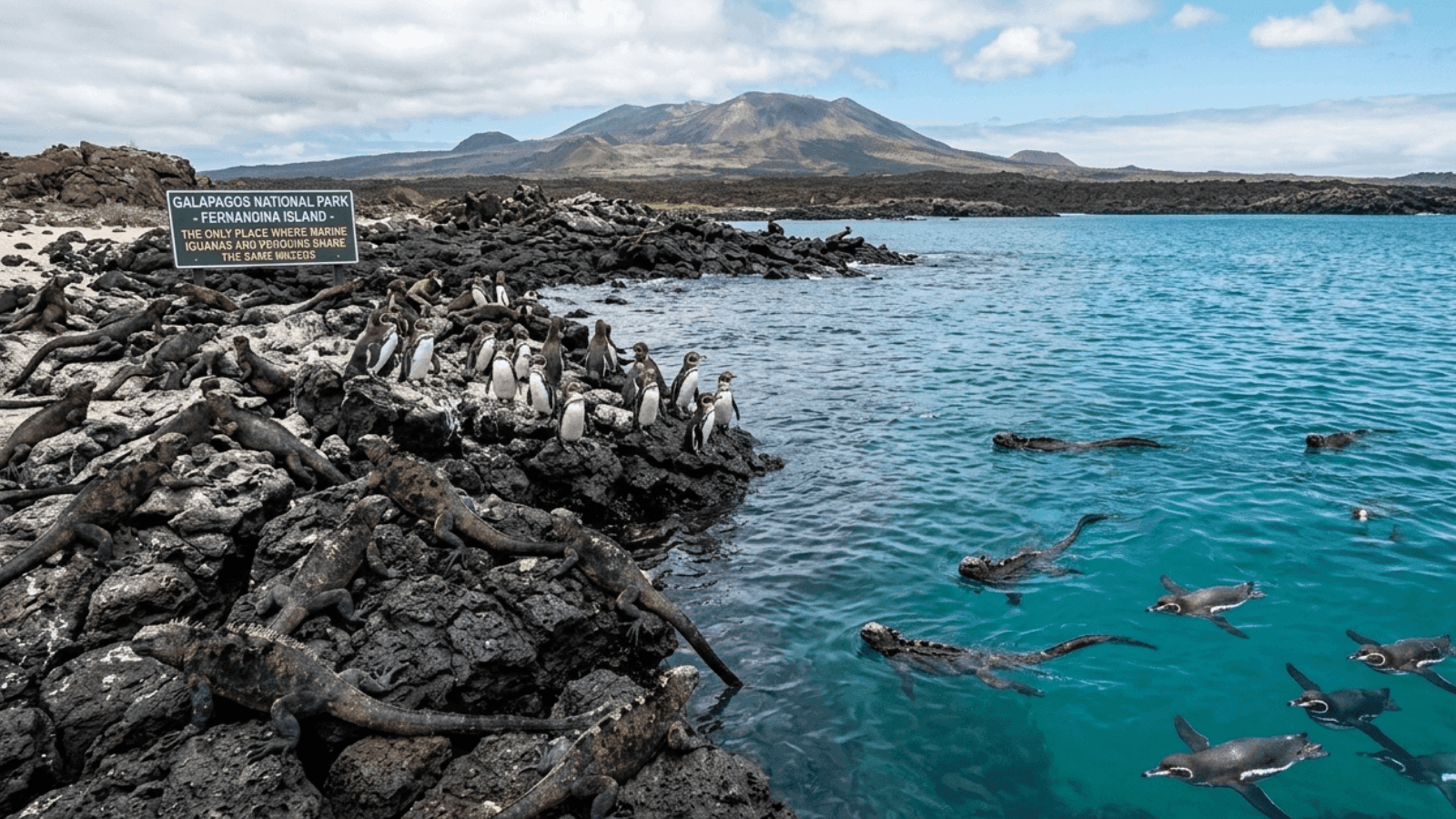
The Only Place Where Marine Iguanas and Penguins Share the Same Waters
A lizard paddles past. A penguin zips by. Both belong here, and neither looks even slightly surprised about it. In the Galápagos, the rules of geography bend just enough to make reptiles and penguins neighbors in the same tide.
Galapagos Waters Off Santa Cruz Host Iguana-Penguin Swims
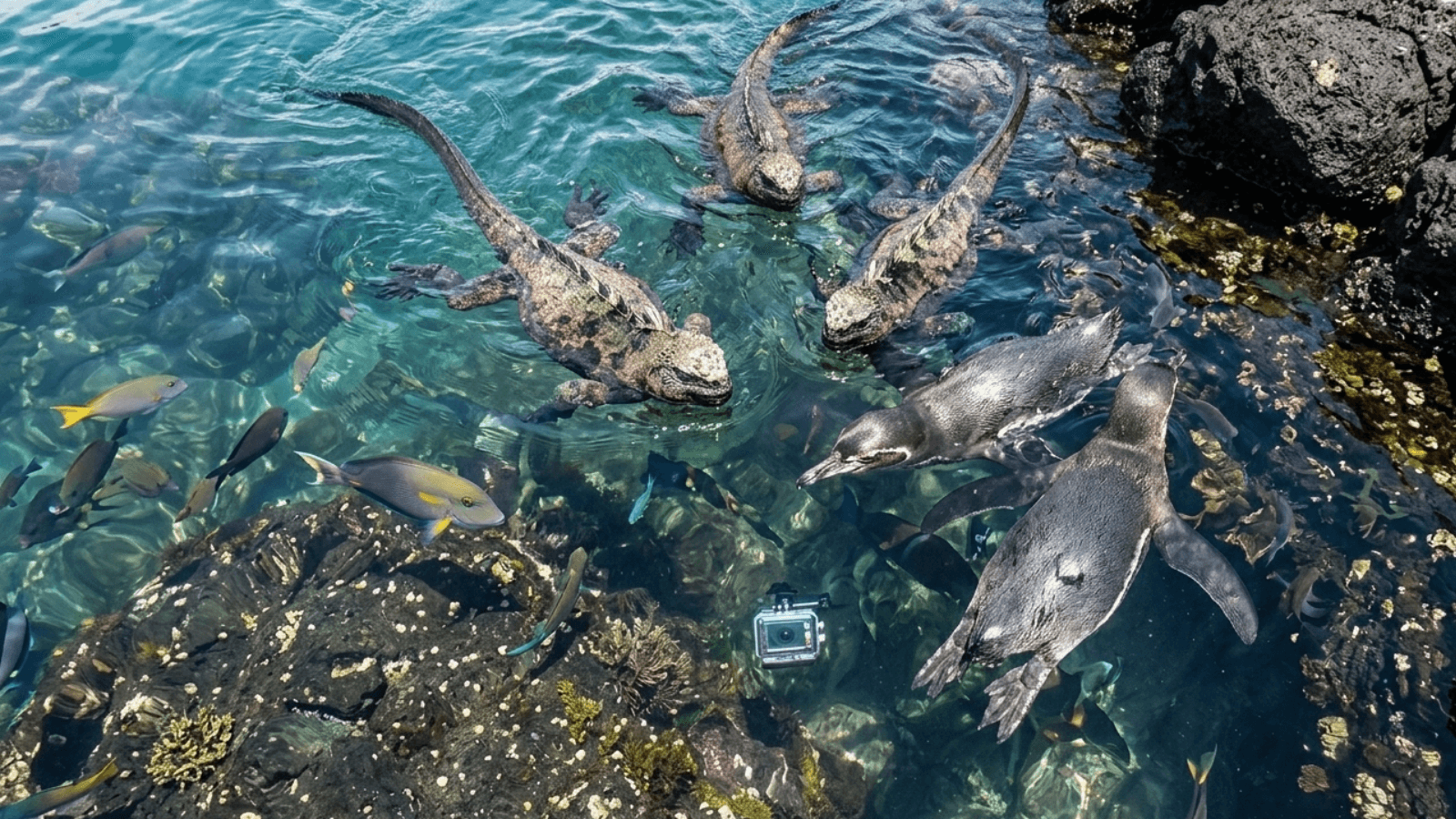
Off Santa Cruz, especially near Puerto Ayora and the rocky inlets around Tortuga Bay, marine iguanas feed on algae just below the surface. They move slowly, grazing along volcanic rock shelves, often surfacing with salt crusted on their snouts.
Not far from them, Galápagos penguins hunt small schooling fish. These are the only penguins found north of the equator, surviving here because the Humboldt and Cromwell currents cool the water. Snorkelers sometimes find themselves floating between both species, one prehistoric and reptilian, the other compact and quick.
Wolf and Darwin Islands Pack Strongest Currents Year-Round
Far to the north, Wolf and Darwin are different altogether. The currents here are powerful, unpredictable, and full of life. Divers come for hammerheads and whale sharks, but the same nutrient surge that supports those giants sustains the wider marine web across the archipelago.
Conditions can shift within minutes. Surge, thermoclines, and blue-water drifts demand confidence and experience, especially during peak current cycles.
How to Reach Galapagos From Quito
Flights depart daily from Quito to Baltra, the main gateway island. LATAM operates direct services in roughly two hours, with return fares often around USD 200 depending on season.
Avianca typically routes via Guayaquil, bringing total travel time closer to three hours, with fares sometimes starting near USD 180. On arrival at Baltra, a short bus ride of about 45 minutes connects the airport to the dock serving Puerto Ayora for around USD 5.
From Santa Cruz, ferries run daily to Isabela Island. The crossing takes about two hours and costs roughly USD 30, though seas can be rough during windy months.
Who's Built for Galapagos Drift Dives
- Beginners stay around Los Tuneles on Isabela, where lava arches shelter calmer, shallow water
- Advanced divers head to Punta Carrion and Gordon Rocks for stronger currents and pelagic sightings
- Photographers watch for marine iguana cleaning stations, where small fish pick parasites from their scales
- Snorkelers often join penguin shoals near Bartolomé, where lava formations drop into clear blue channels
Dive Gear Rentals Skip Wetsuit Hassles
Water temperatures hover around 18 to 22 degrees Celsius for much of the year. Many operators provide 5mm wetsuits, hoods, and gloves as part of dive packages, which makes packing lighter.
Rental gear quality is generally reliable in Puerto Ayora and aboard liveaboards, though serious divers often bring their own regulators or dive computers. Seasickness medication is worth carrying, especially for open crossings between islands.
Best Months Dodge December Rain Squalls
- June to November brings cooler water, stronger currents, and higher chances of large pelagics
- December to May sees warmer seas, calmer surface conditions, and clearer skies for island hikes
- December rain squalls can interrupt boat schedules without much notice
- Liveaboard dive permits often fill six months ahead, especially for Wolf and Darwin itineraries.
Marine iguanas need the algae that flourish in cold upwellings, and penguins rely on the same productivity for fish. The overlap is fragile, dependent on ocean cycles that do not exist in quite this way anywhere else.
If swimming beside marine iguanas and watching penguins cut through Pacific swells sounds like your kind of trip, Neomaxer curates stays that place you right where the action is.









