
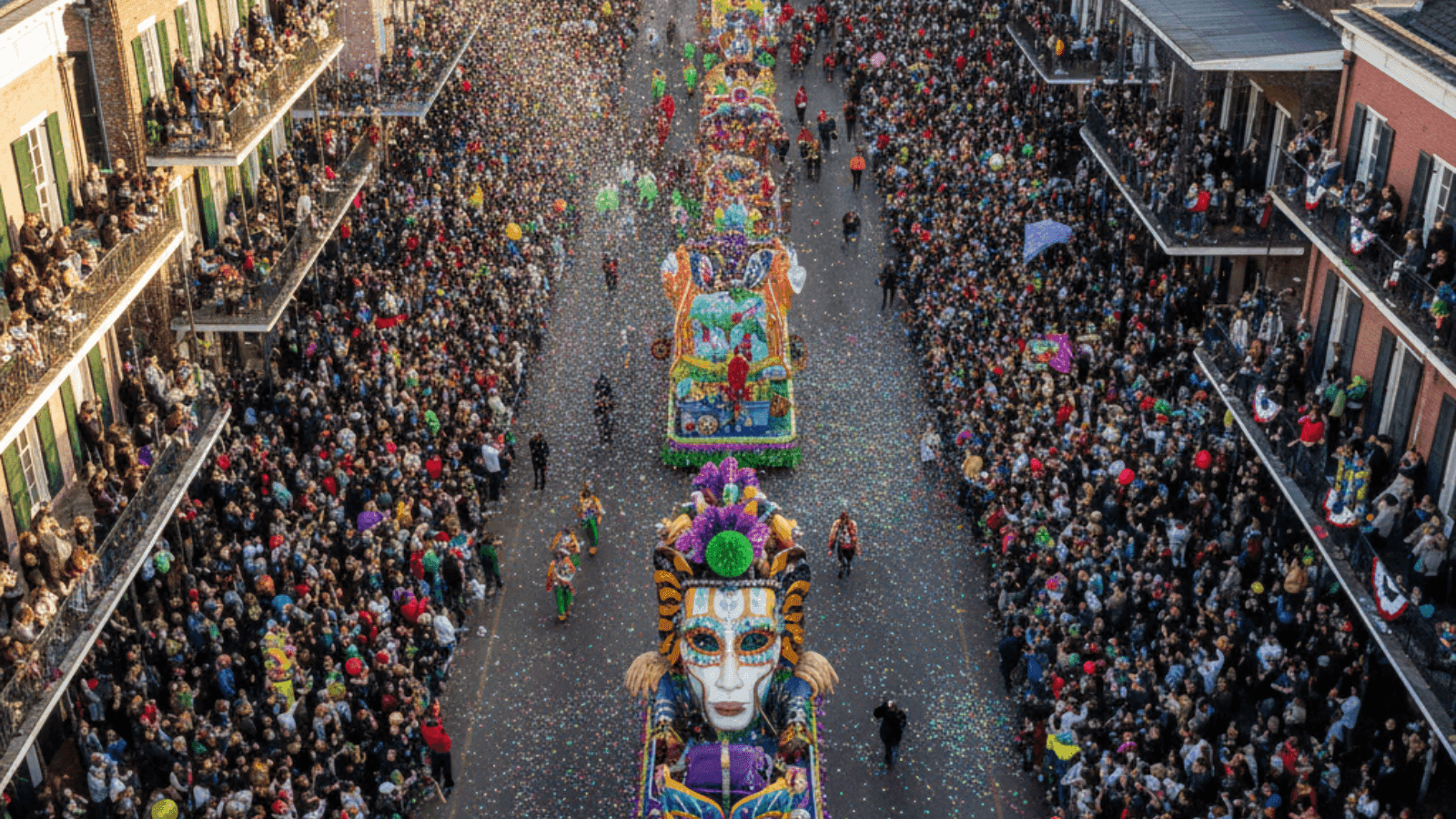
Carnival season in New Orleans and the travel appeal of Mardi Gras
The streets that become the stage
Carnival season takes over New Orleans, especially in neighborhoods built long before cars existed. The narrow streets of the French Quarter fill with people standing shoulder to shoulder, watching floats roll past buildings that have seen generations of celebrations.
Parades also pass through wider routes like St. Charles Avenue, where oak trees frame the road and streetcars pause as crowds gather. Bourbon Street becomes the loudest stretch, but quieter residential blocks often offer a better view and more space to actually enjoy the moment.
Timing your visit changes everything
Carnival season begins on January 6 each year and builds slowly over several weeks. Early parades are easier to watch, with fewer crowds and more room to move around.
The final week leading up to Mardi Gras Day is when everything peaks. Major krewes like Krewe of Rex roll through the city with elaborate floats, masked riders, and marching bands that leave behind beads hanging from trees and balconies.
What travelers should experience firsthand
- Standing along St. Charles Avenue as floats approach slowly and riders toss beads into the crowd
- Catching a string of beads and realizing how quickly strangers celebrate small victories together
- Hearing brass bands play without amplification, loud enough to stop conversations mid sentence
- Watching locals arrive hours early with folding chairs, coolers, and ladders for children
- Walking through side streets where smaller neighborhood parades pass without warning
- Seeing costumed participants move through crowds without announcing who they are
- Noticing how entire families participate, from grandparents to small children
- Looking up and spotting beads hanging from tree branches days after parades end

Food and traditions
King cake appears in bakeries across the city, decorated in purple, green, and gold sugar. Inside each cake is a small plastic baby, and whoever finds it is expected to bring the next cake.
Street food becomes part of the rhythm. Vendors sell hot sausage, fried seafood, and sweet drinks while music plays nearby. The smell of food mixes with the sound of marching bands and passing crowds, creating something that feels both ordinary and rare.
How to reach New Orleans
Most visitors arrive through Louis Armstrong New Orleans International Airport, located about 25 minutes from downtown. Taxis and rideshare services operate continuously during Carnival season, though travel time increases on major parade days.
Train and road connections link the city to other parts of the United States, but flying remains the fastest option for most travelers. Booking early is necessary because Mardi Gras attracts visitors from across the world.
Where to stay and how to move around
Hotels inside the French Quarter place you within walking distance of major celebrations, but they also come with constant noise. Areas like the Garden District offer quieter nights while still allowing easy access to parade routes.
Streetcars provide a reliable way to move through the city, especially along St. Charles Avenue. Walking often becomes the fastest option when roads close and crowds fill the main routes near the Mississippi River.
Travel tips for Mardi Gras visitors
- Book accommodation several months in advance to avoid limited availability
- Choose parade spots early in the day to avoid standing far behind crowds
- Wear comfortable shoes since walking distances increase without warning
- Carry water because celebrations last longer than expected
- Avoid driving near parade routes because many streets close completely
- Respect barriers and instructions from parade organizers and police
- Keep your phone secure in crowded areas where movement is slow
- Explore neighborhoods beyond the main tourist streets to see local celebrations.
If you want to stay close enough to hear the music from your window and step straight into the Carnival atmosphere, where you stay makes all the difference. Neomaxer helps you find thoughtfully selected stays that place you right where New Orleans feels most alive.









