
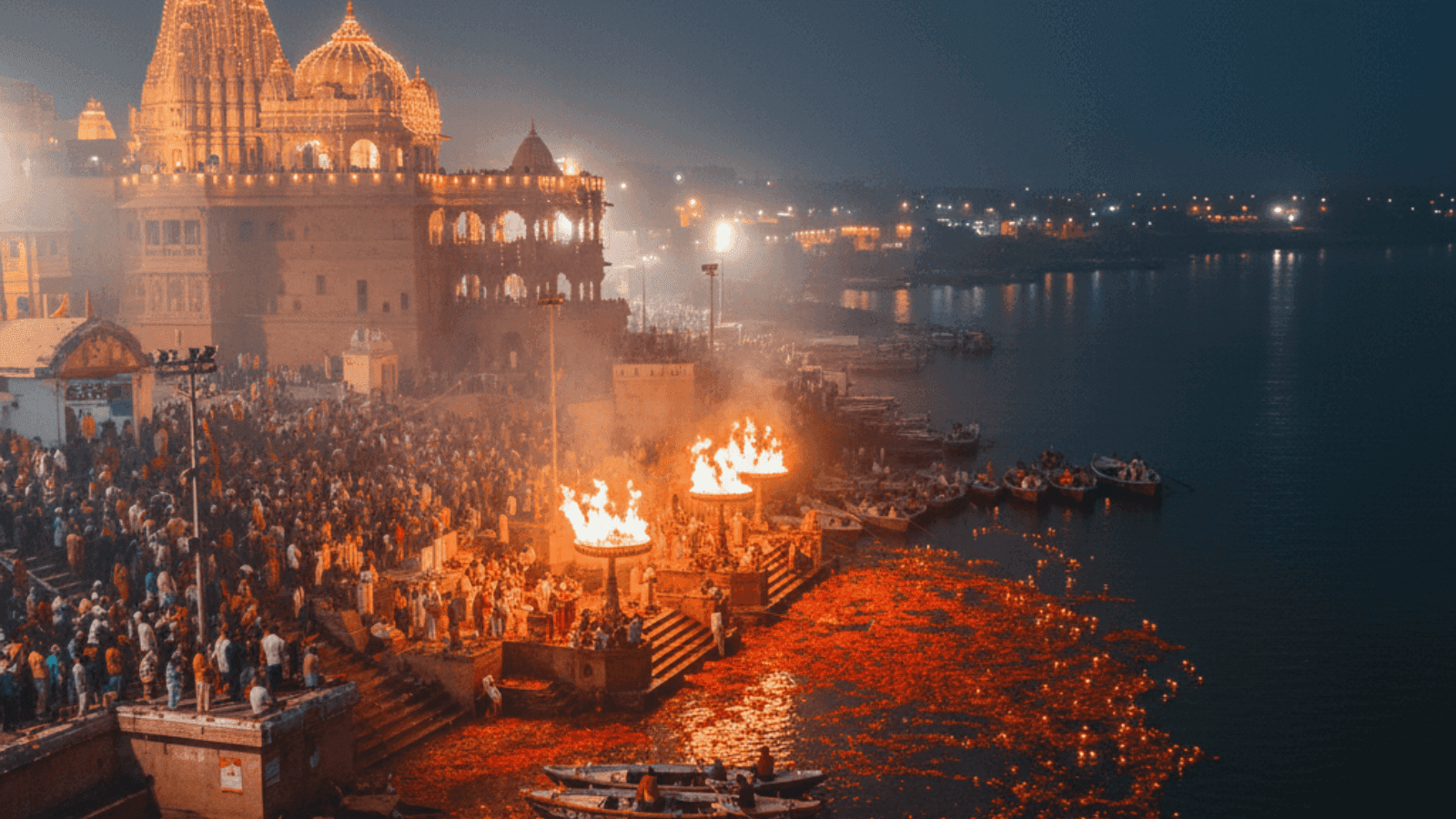
Maha Shivaratri Night in Varanasi by the Ganga
The city does not sleep on Maha Shivaratri. Someone is chanting, someone is laughing, someone is hurrying toward the temple with flowers in hand. Maha Shivaratri turns the whole city into one long, breathing prayer.
How Maha Shivaratri Looks and Feels in Varanasi
The epicentre of the celebration is the Kashi Vishwanath Temple. From early morning, devotees queue for hours for darshan. By evening, the crowd thickens, and chants of “Har Har Mahadev” ripple through the narrow lanes around the temple.
Shiva processions move through the old city. You’ll see sadhus smeared in ash, locals dressed in festive clothes, and musicians beating drums that echo between centuries-old walls. Many observe a fast during the day and break it only after midnight prayers.
The celebration peaks at midnight, believed to mark the sacred hour of Shiva’s cosmic dance. Temples conduct special rituals, including Rudrabhishek, where the Shiva lingam is bathed in milk, honey, and sacred water.
Where to Go in Varanasi on Mahashivratri
- Dashashwamedh Ghat – The most dramatic evening aarti takes place here. On Maha Shivaratri, the energy multiplies. Arrive at least an hour early to find space.
- Assi Ghat – Slightly less chaotic, with devotional singing and a younger crowd. Good if you want atmosphere without extreme pushing.
- Manikarnika Ghat – Not festive, but deeply symbolic. On this night especially, the presence of life and death along the Ganga feels profound.
- Kashi Vishwanath Temple area – Even if you don’t enter, walking the decorated lanes around it is an experience in itself.

Best Time to Experience It
The festival usually falls in February or March, depending on the lunar calendar. The main rituals intensify after sunset and continue until early morning.
If you want to witness the full arc, start around 6 pm at the ghats, move toward the temple area by 9 pm, and stay through midnight. The hours between 11 pm and 1 am carry the strongest devotional surge. Early morning, around 4 am, the crowds thin slightly. That’s when the city feels both exhausted and luminous.
How to Plan Your Visit
Book accommodation weeks in advance. Maha Shivaratri draws pilgrims from across India. Stay close to the old city or the ghats to avoid traffic snarls. Roads near the temple often close or operate under strict security. Expect barricades, police checks, and long walking stretches.
Dress modestly. Comfortable footwear is essential, but you may need to remove it frequently near temple entrances. Carry minimal belongings; security restrictions are strict around temple zones. Hydrate during the day. Even in February, crowds and movement can drain you.
How to Reach Varanasi
Lal Bahadur Shastri International Airport connects the city to Delhi, Mumbai, and other major hubs. From the airport, taxis take about an hour to reach the ghats, depending on traffic.
Varanasi Junction railway station is well linked to major Indian cities. Trains are heavily booked during the festival, so reserve early.
If arriving by road, expect diversions near the old city. Auto-rickshaws and cycle-rickshaws become more practical than cars as you get closer to the ghats.
Local Customs to Respect
- Many devotees observe a strict fast. Avoid eating openly in temple queues.
- Photography inside temple premises is usually prohibited. Always check before clicking.
- Alcohol and non-vegetarian food are avoided by many locals on this day.
- If you’re offered prasad, accept it with your right hand. You may also encounter groups consuming bhang, traditionally associated with Shiva. Observe respectfully; participation is a personal choice and should be approached cautiously.
Tips for Travellers
- The old city lanes are extremely narrow. Move slowly and keep patience. Pushing is common in dense crowds, but maintaining calm helps.
- Mobile networks can weaken at peak hours. Decide meeting points in advance if you’re traveling in a group.
- Carry some cash. Small vendors selling flowers, diyas, and tea may not accept digital payments.
- Late-night food options are limited, but tea stalls remain open. A small cup of chai at 2 am, overlooking the Ganga, feels strangely grounding.
- Boats operate at night during the festival. A short ride on the river gives you a different perspective of the illuminated ghats, though confirm safety measures before boarding.
- By dawn, the chants soften, the sky turns pale over the river, and the city begins another day as if it never kept vigil at all. If you want to experience Varanasi’s Maha Shivaratri from a stay that keeps you close to the ghats and the rhythm of the city, Neomaxer curates handpicked places that match the moment.









