
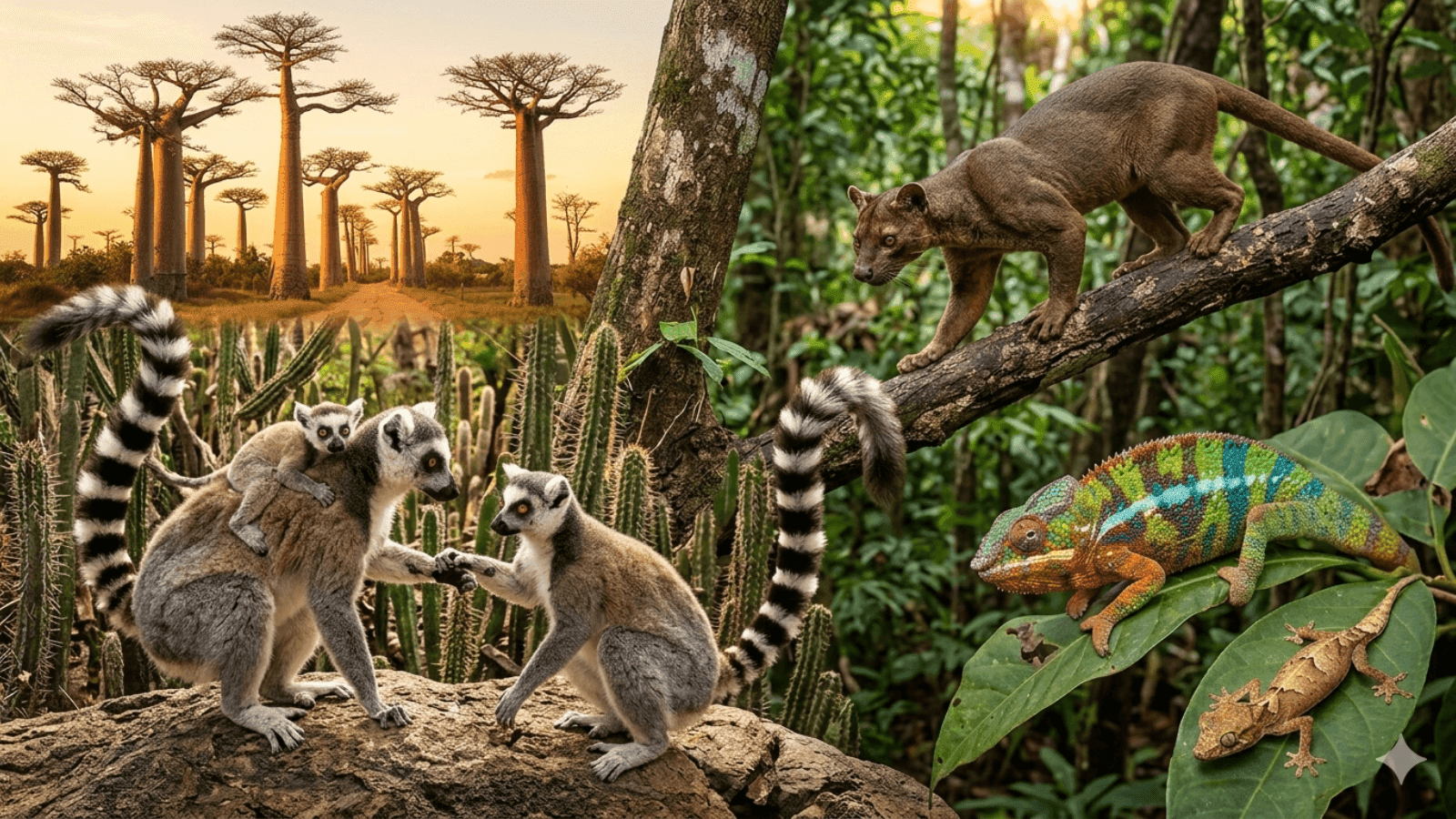
Madagascar Is Known for Wildlife That Exists Only on This Island
Nothing prepares you for the moment a lemur pauses mid-branch and studies you back.
Madagascar Hosts 90% of the World’s Lemur Species
Madagascar broke away from mainland Africa around 88 million years ago, and everything that evolved afterward did so in isolation. That separation is why nearly 90% of its wildlife exists nowhere else, including over 100 species of lemurs that range from mouse-sized nocturnal climbers to the loud, unmistakable indri whose calls carry across entire valleys.
Lemurs are not confined to zoos or remote research zones. They cross forest trails, leap between bamboo groves, and watch silently from tree trunks. Seeing them in the wild feels less like spotting wildlife and more like being allowed into something that was already happening without you.
Ranomafana National Park Runs Lemur Treks Daily
Ranomafana National Park is dense, wet, and alive from the moment the sun rises. Morning treks often begin with mist still hanging low over the canopy, and within minutes, guides begin pointing out movement that would otherwise go unnoticed.
Golden bamboo lemurs live here, feeding on shoots that contain cyanide levels lethal to most animals. The trails are uneven and humid, but sightings are frequent enough that even first-time visitors leave with multiple encounters. Guides know individual territories and adjust routes daily based on recent activity.
Andasibe-Mantadia Chameleon Spotting Night Walks
Andasibe-Mantadia National Park changes completely after dark. What looks like still vegetation during the day becomes active once headlamps cut through the trees.
Chameleons sleep exposed on thin branches at night, turning pale and easier to spot. Leaf-tailed geckos flatten themselves against bark, nearly invisible until a guide traces their outline with light. The rainforest doesn’t quiet down. It shifts into a different rhythm, slower and more deliberate.

Packing for Rainy Season Baobab Drives
The rainy season between November and April reshapes the landscape but does not shut it down. Dirt roads become softer, skies stay heavy, and the baobab trees stand against darker backdrops that make their shapes more dramatic.
A light waterproof jacket, sealed footwear, and dry bags for cameras make long drives manageable. Rain rarely lasts all day. It arrives, changes the air, and moves on, leaving everything greener and more vivid than before.
Isalo National Park Canyon Hikes Stay Dry in April
Isalo National Park sits in the island’s southwest, where sandstone formations replace rainforest. The terrain opens into canyons, natural pools, and dry trails that remain accessible even during wetter months elsewhere.
Ring-tailed lemurs rest on warm rock surfaces in the early morning. By midday, hikers move through narrow canyon passages toward shaded swimming spots where water collects year-round. The dryness here offers balance to an itinerary dominated by rainforest humidity.
How to Reach Antananarivo from Paris
- Direct flights from Air France connect Paris to Antananarivo in about 11 hours, with return fares averaging EUR 800
- Qatar Airways operates one-stop routes through Doha, taking around 15 hours total, often closer to EUR 650 return
- Kenya Airways flies via Nairobi, with total travel time near 14 hours and fares around EUR 700
- Local taxis from Ivato International Airport to the city center take about 30 minutes and cost roughly 50,000 Malagasy Ariary
How Many Days to Plan for Madagascar
- 2 days in Andasibe to see indri lemurs, night reptiles, and rainforest trails
- 2 days in Ranomafana for bamboo lemurs and deeper jungle trekking
- 2 days in Isalo for canyon hikes, natural pools, and dry landscapes
- 1 day in Antananarivo to adjust, explore markets, and organize onward travel
- 2 to 3 days in the west for baobab drives and coastal wildlife
If Madagascar’s rainforests, baobab roads, and canyon trails are calling your name, the right stay makes every wildlife sighting feel closer and more personal. Neomaxer helps you find thoughtfully located stays that place you right where Madagascar’s rare wildlife and national parks come alive.









