
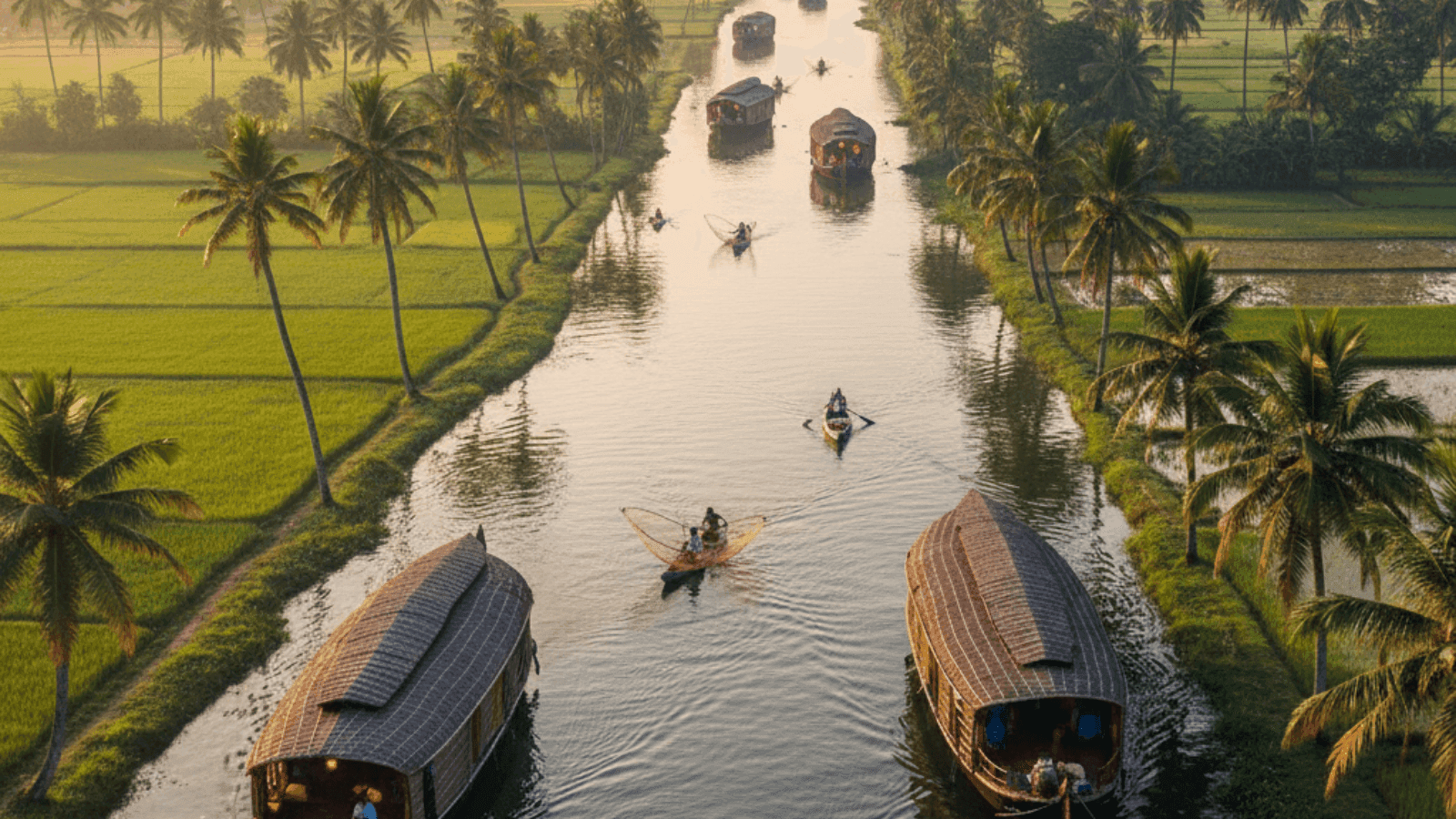
Living Along the Backwaters of Kuttanad During Harvest Season
Harvest Season Along the Backwaters
During harvest time, the canals around Vembanad Lake stay busy in a quiet sort of way. Boats move past carrying sacks of rice, a harvester works its way slowly across the fields, and farmers walk along the bund roads between water and paddy, stopping now and then to talk.
By evening the work starts wrapping up. Boats return with the last loads, a few people sit around the tea stalls near the canal, and the water turns still as the light fades. The whole place settles down after a long day in the fields.
Best Time to Visit
Harvest season usually falls somewhere between September and March depending on the crop cycle. That’s when Kuttanad feels the most alive, with golden fields waiting to be cut and boats constantly moving along the waterways.
It’s also simply a pleasant time to be here. The monsoon rains have already filled the canals and lakes, and the heavy downpours have passed, leaving the backwaters looking full and green.
How Many Days to Plan
Two or three days is usually enough to get a sense of the place. That gives time to wander through the villages, take slow boat rides into the smaller canals, and watch how farming and daily life overlap here. An extra day makes things more relaxed. The early morning hours, when the canals are quiet and farmers begin heading to the fields, often turn out to be the most memorable part of a visit.
Things Travelers Often Notice During Harvest
Once harvest begins, the entire landscape seems organized around rice. Boats line up near jetties stacked with grain sacks, tractors rumble slowly along narrow bund roads, and fields gradually shift from gold to bare earth.

Things Travelers Often Miss
Most travelers stick close to the well-known houseboat routes near Alappuzha. The quieter farming villages lie a little deeper inside Kuttanad, and that’s where the rhythm of the place becomes easier to notice.
Small ferries move people across canals every few minutes, narrow paths run along the edges of paddy fields, and tea stalls sit in spots where you can watch entire fields stretching out below water level.
The pumping stations are easy to overlook too. They quietly push water out of the reclaimed land, which is the only reason rice farming works here at all.
Planning Insights
Travel in Kuttanad rarely happens quickly. Roads follow long curves along canal embankments, and in some places the only connection between two villages is still a small ferry crossing. Staying inside one of the villages instead of along the busy tourist canals changes the experience completely. Morning activity starts right outside the door instead of somewhere farther away.
Tips for Travellers
- Start canal rides early before the heat builds
- Carry small cash for ferries and tea stalls
- Waterproof bags help when stepping between boats
- Expect travel to take longer than it looks on a map
- Light cotton clothing makes humid days easier
Life Around the Below-Sea-Level Paddy Fields
One of the strangest things about Kuttanad is realizing that the fields sit lower than the surrounding water. Long earthen bunds separate canals from farmland, forming narrow roads where people walk, cycle, and move small tractors.
During harvest, those bund roads become busy little pathways. Boats unload rice at small jetties, farmers move from field to field, and the entire area feels quietly focused on finishing the season’s work.
Dos and Don’ts
- Do greet locals when passing along village paths
- Do ask before taking photos of people working
- Do respect private paths that run through fields
- Don’t throw waste into canals or waterways
- Don’t walk into fields without permission
Local Behavior or Expectations
Kuttanad still feels like a place where people know each other. Evenings often gather neighbors around tea stalls, and ferries carry schoolchildren and workers back and forth across the canals.
Visitors who slow down fit in easily. Sitting for a few minutes with a cup of chai or watching farmers unload paddy from a boat usually leads to small nods, smiles, or an easy conversation.
Mistakes First-Time Visitors Make
One common mistake is seeing Kuttanad only as a houseboat destination. Those boats travel the wide backwater channels, while the real farming landscape lies deeper inside smaller canals and village roads.
Another surprise is distance. A place that looks close across the water may take a long detour by road or require a ferry crossing to reach.
For stays close to places like Kuttanad’s backwaters, Neomaxer lists unique options across interesting destinations.









