
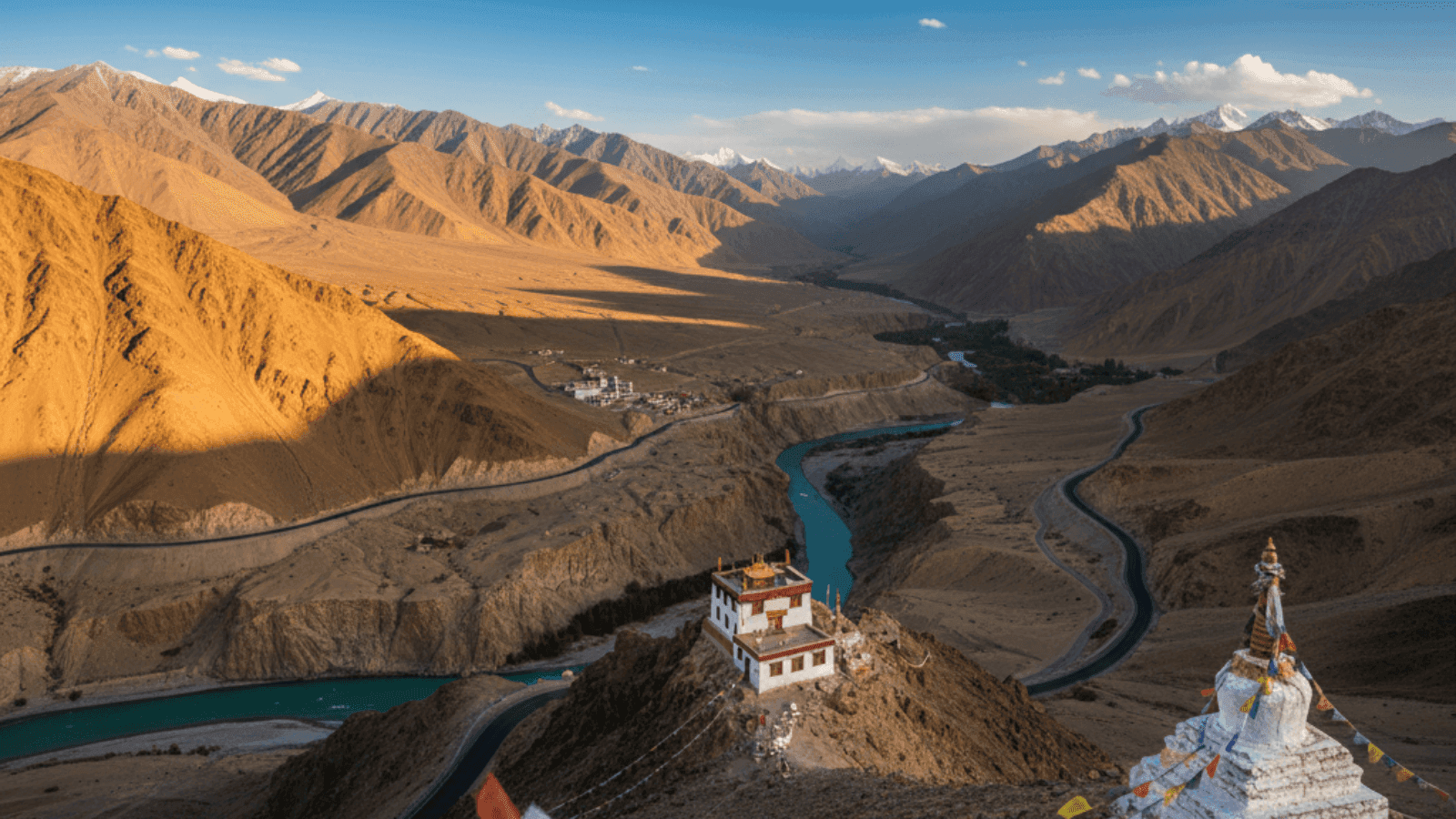
Ladakh Without the Rush: Travel Slow, Travel Better
Your body will decide the itinerary before your map does. Most people arrive in Leh feeling energetic and confident, and that confidence usually lasts until night. The headache, nausea, or breathlessness often shows up later, quietly, once the excitement settles. This is why the first decisions you make matter more than the rest.
Stay in Leh longer than you think you should
Leh sits at around 3,500 metres, higher than most people have ever slept before. The smartest thing you can do is stay there for two full days with no long drives planned.
Walk slowly through the market, sit in a café, visit Shanti Stupa if you feel fine, then come back and rest. If climbing stairs feels harder than usual, take that seriously. This isn’t laziness. It’s your body adjusting. People who rush out of Leh on day one often spend the next few days chasing comfort instead of enjoying the place.
Don’t plan movement every day
Ladakh looks compact on a map, but the drives are long, tiring, and physically demanding. Covering a new destination every single day leaves no room for recovery.
Choose one area and stay there for multiple nights. Nubra Valley works well for this. Pangong can work too if you stay nearby instead of driving back the same day. When you stay put, mornings feel calmer and evenings don’t feel rushed. You notice small things instead of watching the clock.

Skip places instead of squeezing them in
- Trying to do Nubra, Pangong, Tso Moriri, Hanle, and Zanskar in one trip turns Ladakh into a blur.
- Every extra location adds hours in a vehicle, shorter nights, and more strain at altitude.
- Cutting even one place often improves the entire trip. Fewer destinations mean fewer high passes, calmer days, and enough energy to actually walk around instead of just arriving.
- Ladakh doesn’t reward speed. It responds better when you give it time.
Pack for walking, not for photos
Heavy luggage makes altitude harder. Carrying, lifting, and unpacking large bags takes more out of you than you realise.
You don’t need multiple jackets or different outfits for each day. What works is layering: a thermal base layer, one warm jacket, a windproof outer layer, and comfortable shoes you can walk in.
Most people overpack jeans, sweaters, and extra footwear. What they forget is lip balm, moisturiser, sunscreen, and a reusable bottle.
Eat simply, even if you don’t want to
Your appetite changes at altitude. Heavy or oily food can feel fine at first and uncomfortable later. Local meals like thukpa, rice, lentils, and momos are warm, filling, and easy on digestion. Alcohol should be avoided completely in the first few days, even if you feel okay.
Drink water regularly. Dry air dehydrates you faster than you expect, especially on drives.
Treat high passes as transit points
Chang La and Khardung La are not places to hang around. The air is thinner there, and staying longer increases the chances of dizziness and nausea.
Take a quick photo if you want, then keep moving. Descending is what helps your body recover, not standing still at the top. Most altitude-related issues begin because people linger where they shouldn’t.
Keep empty days in the plan
Weather shifts fast. Roads close. Winds pick up. A buffer day prevents rushed decisions and long drives when you’re already tired.
Trying to “make up” for a lost day often leads to longer hours at altitude, which helps no one. Flexibility makes Ladakh easier on both the body and the mind.
Use less, stay longer
Water is scarce and waste management is limited. Staying longer in one place, refilling bottles, and avoiding disposable plastic reduces strain without effort.
Walking through villages, eating locally cooked food, and respecting monastery spaces keeps travel grounded instead of extractive. You don’t need to do anything special to be responsible. Just slow down.
Pay attention to what slowing down changes
Evenings stretch out. Sleep improves. Conversations happen without rushing. Somewhere between fewer plans and longer pauses, Ladakh stops feeling like something to finish and starts feeling like somewhere you’re allowed to be.
Choose stays that support rest
Where you sleep matters more than where you stop for photos. Guesthouses and homestays with warm meals, heating, and quiet evenings help your body recover. Power cuts, limited hot water, and cold nights are normal in many areas. Carry a headlamp and manage expectations instead of fighting the conditions. If you want to experience Ladakh at a pace that feels easy on the body and generous with time, where stays support rest instead of rushing, Neomaxer makes that kind of travel simple.









