
Kila Raipur and the Rural Olympics Most Travellers Don’t Know Exist
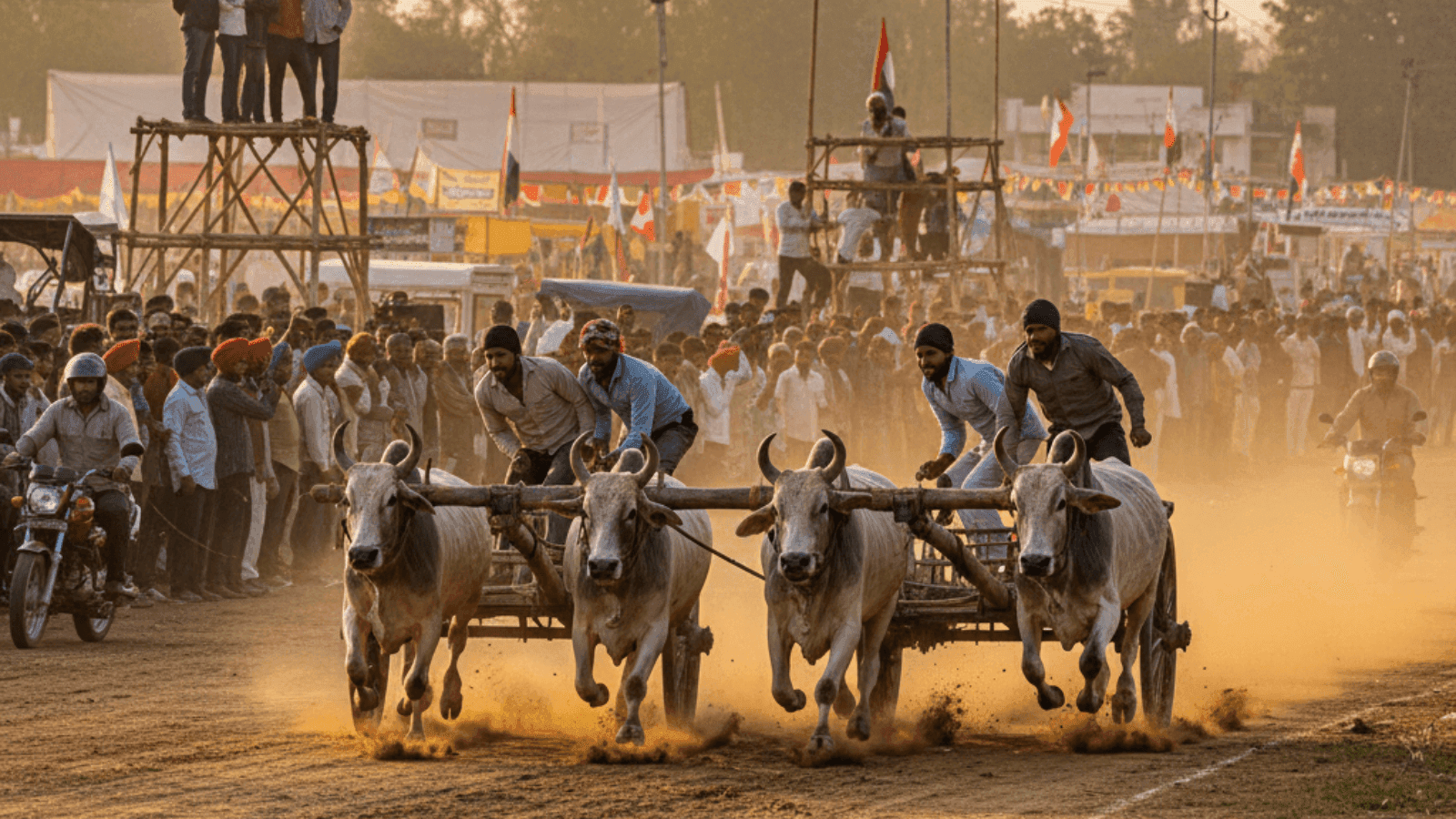
Bullock carts fly past faster than most people expect.
A village festival that never tried to become modern
In the village of Kila Raipur, just outside Ludhiana, February brings a kind of energy that has nothing to do with modern stadiums. The air fills with dust, shouting, and the sound of hooves, engines, and cheering. This is the Kila Raipur Rural Olympics, a sports festival that has quietly existed since 1933.
It started with one man, Inder Singh Grewal, who wanted to encourage physical fitness among local youth. What began as small-scale competitions between nearby villages turned into one of rural India’s most distinctive sporting gatherings. Today, it draws thousands of spectators, including curious travellers who had no idea something like this existed.
There are no sponsorship banners dominating the space. No digital screens. Just people, animals, and a field.
What makes the Kila Raipur Rural Olympics different
Most sporting events separate athletes from their everyday lives. Here, the athletes come directly from them.
Participants are farmers, mechanics, drivers, and labourers. Their strength isn’t built in controlled environments. It comes from lifting grain sacks, working long hours in fields, and handling heavy machinery.
Nothing feels staged. Even the announcements sound informal, sometimes improvised, sometimes drowned out by crowd noise. The festival still reflects the rhythm of rural Punjab more than organised sport.

When does this festival happen
The Rural Olympics usually take place in February, after the winter harvest. This timing allows farmers to participate without disrupting their work cycle. It also makes the weather ideal for outdoor events, with cool mornings and comfortable afternoons.
For travellers, February offers the best chance to see Punjab’s countryside when it feels active but not rushed.
The fields surrounding the village often still carry the golden traces of harvest season.
Events travellers will see at the Rural Olympics
- Bullock cart races across open dirt tracks
- Tractor races driven by farmers themselves
- Kabaddi matches between rival village teams
- Sprint races, often run barefoot
- Tug of war competitions with large teams
- Traditional wrestling matches
- Bicycle races on standard road cycles
- Rope climbing contests
- Motorcycle balance and stunt demonstrations Strength displays using farm tools and heavy objects
Bullock cart racing remains the most talked-about event. The animals are trained carefully, and their speed surprises first-time visitors. Kabaddi draws intense attention. Every move matters, and the crowd reacts instantly.
Who participates in the games
- Farmers from villages across Punjab
- Athletes from neighbouring states like Haryana and Rajasthan
- Young men training informally throughout the year
- Older participants continuing long-standing traditions
- Local teams representing their home villages
- Animal handlers showcasing trained bulls and horses
- Visitors and photographers documenting the festival
- Travellers who come specifically to witness rural sporting culture
What travellers notice first when they arrive
There is no clear boundary between participant and spectator. Competitors walk through the crowd before events. You might see a tractor racer drinking tea minutes before competing.
Families sit together on temporary stands, carrying homemade food and blankets. Children run along the edges of the field, copying the athletes.
The atmosphere throughout the day
Mornings feel slow and observant. People arrive gradually, greeting each other and finding places to sit. By afternoon, the pace shifts. Engines start. Animals move into position. The crowd becomes louder. Each event changes the rhythm of the space. Between competitions, people talk, eat, and wait.
Why photographers and travellers are drawn here
The festival offers something difficult to replicate elsewhere. There is no attempt to modernise its appearance for visitors. The authenticity remains intact. Expressions are real. Reactions are immediate. Every frame tells a story without explanation.
How to reach Kila Raipur
- Located about 15 kilometres from Ludhiana
- Ludhiana is well connected by train to Delhi, Amritsar, and Chandigarh
- The nearest airport is in Chandigarh, about 100 kilometres away
- Taxis and local buses are available from Ludhiana
- Roads leading to the village are accessible but narrow
- Staying overnight in Ludhiana is the most practical option
- Local transport is easiest to arrange from the city.
If watching Punjab’s most thrilling rural sports festival from the heart of the action sounds like your kind of trip, Neomaxer helps you find stays that keep you close to moments like these.









