
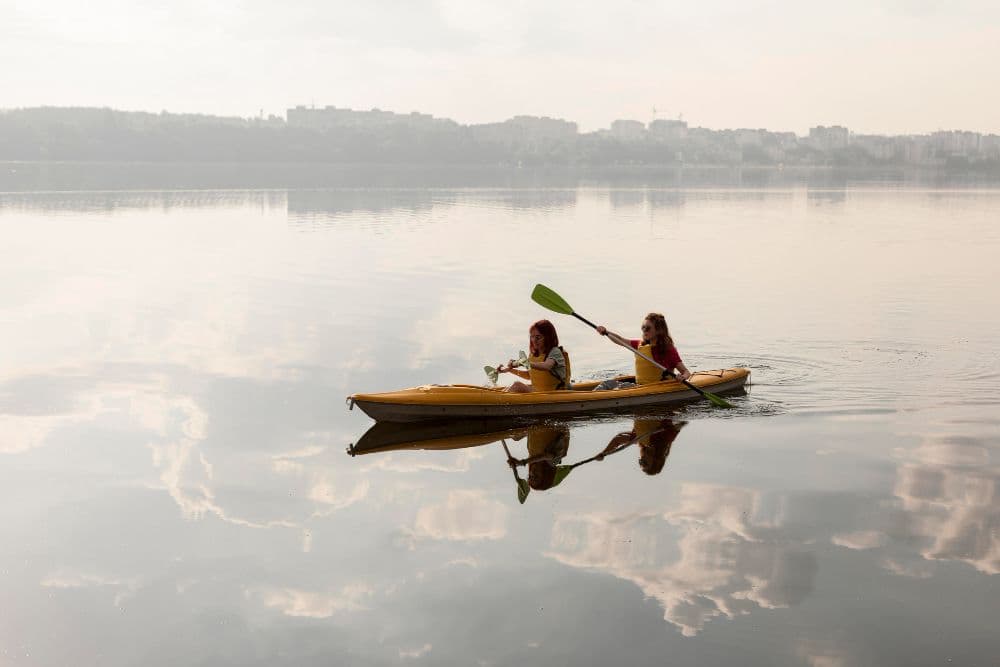
The moment you push off into Chilika Lake, you could swear it's the ocean. That same endless gray-blue water stretching out, salty and still. Locals won't promise you'll spot dolphins, but they'll show you the signs; the sudden ripples where there shouldn't be any, the fishing nets warning you where not to go, that shift in the breeze telling you it's time to turn back. And when every bird takes flight at once? You listen. This isn't some polished tourist trap. It's real life out here hardworking people, and a lagoon that doesn't give up its magic easily.
Why kayaking here is different
Motorboats show you the highlights fast, however a kayak lets you listen to the rhythm of water. You hear paddle drips, wingbeats, and the small slap of brackish water against reeds.
What kayaking gives you
- Closer birdwatching without engine noise
- Narrow channels and shallow edges that bigger boats avoid
- Slower pace for photos and still moments
- A safer way to learn the lagoon’s moods before you go farther
The “world largest coastal lagoon” feel, explained simply
Chilika's this big lagoon where fresh water mixes with saltwater from the Bay of Bengal. Depending on the season and where you're standing, the water can look totally different - sometimes it's calm on top, but don't be fooled, there's always currents moving underneath.
Chilika Lake story in one line
Chilika Lake is this amazing place where river water and seawater are always pushing against each other. That wild mix creates the perfect spot for birds, fishermen, and even dolphins to gather.
Where is Chilika Lake, and which district is it in?
If you keep hearing people ask Chilika Lake in which district, the real answer is that the lake spreads across multiple districts in Odisha. Most travelers enter through popular points linked to Puri and Khordha sides, and the lake also extends toward Ganjam.
Easy entry points for Chilika Lake tourism
- Satapada: famous for dolphin spotting routes and the lake-to-sea mouth area
- Barkul: good base for calmer waters and wider lagoon views
- Mangalajodi (near the wetland edge): best for birds, especially in winter
- Rambha: quieter, scenic, with a more local feel

Best time for kayaking and what the water “says”
If you're just starting out, winter's probably your best bet the skies stay clearer and you'll spot way more birds. Summers can be brutal with all that wind. And monsoon season? Sure, everything turns lush and green, but those currents get gnarly and the weather flips on you fast.
Timing that works
- October to March: comfortable air, busy season, better for beginners
- Early morning: softer wind, smoother water, better bird activity
- Late afternoon: pretty light, but wind can pick up fast
Kayak routes that feel safe and rewarding
Don't choose routes by how far you think you can handle them, but by your comfort level. Distance isnt the only problem in Chilika; the wind and traffic of boats change the level of effort.
-
Shoreline glide (Beginner, 1 to 2 hours) Paddle along the bank, make turning moves, and try to understand the nets and markers. This is quite a suitable activity if you are only starting kayaking or have kids along.
-
Channel and reeds (Intermediate, 2 to 3 hours) Navigate narrow water stretches and the edges of the reeds where the birds are feeding. Stay slow and watchful, as fishermen may be working silently close to you.
-
Open, lagoon push (Fit paddlers, 3 to 5 hours) This is the moment when the big water sensation you get. In your planning, enlist the help of a local guide, check the wind, and bring more water than you think youll need.
Wildlife moments: dolphins and birds
Yeah, those dolphins in Chilika Lake? They're totally real but don't expect some circus act. Irrawaddy dolphins barely poke their heads up for a second. You'll have the best shot at spotting them when the water's still and there aren't a bunch of boats scaring them off.
How to watch without causing harm
- Keep distance and avoid chasing surfacing dolphins
- Lower your voice and pause paddling when you spot movement
- Never feed wildlife, and never throw food into the lagoon
Birdlife is a winter headline here, especially around wetland zones. If you see many birds suddenly take off together, treat it like a warning sign that something disturbed them, and go back away.
Safety and rules that matter on the water
This lagoon is working space for fishing communities, so kayaking is about awareness, not just fun.
Quick safety checklist
- Wear a life jacket always, even if you can swim
- Do not cut across visible net lines or bamboo markers
- Carry dry bag, sun protection, and 2 liters of water minimum
- Avoid solo kayaking in open sections unless you are experienced
- Ask about permits if your route goes near protected zones like Nalabana
Planning your trip without overcomplicating it
For Chilika Lake tourism, your best move is to base yourself near your chosen entry point and book a local kayaking session or guide. Confirm what is included, kayak type, rescue support, and the exact route, because “Chilika Lake kayaking” can mean very different water conditions depending on where you start.
Chilika Lake is at its best when you let it set the pace, and if you want an easy base near the shore so you can start early for calm water and a better chance at Chilika Lake dolphins, book your stay via Neomaxer.









