
Kanger Valley reminds you what forests felt like before tourism arrived
The first thing you notice is how complete the silence feels. Not empty silence, but the kind filled with insect calls, distant bird notes, and the slow movement of leaves overhead. Inside Kanger Valley National Park, the forest is still in charge.
Where Kanger Valley is and why it still feels untouched
The park lies in the Bastar region of Chhattisgarh, about 27 kilometres from Jagdalpur. Bastar has always been more forest than city, and that balance has protected Kanger Valley from becoming crowded or commercial.
This is part of the larger Dandakaranya forests, mentioned in ancient Indian epics and still dominated by sal, teak, and bamboo. The terrain shifts constantly. One moment you are walking on dry leaves under tall sal trees. A few minutes later, the forest dips into cooler valleys where moisture lingers and moss clings to rocks.
Places you should not miss inside Kanger Valley
- Tirathgarh Falls, where water drops in wide, layered steps through thick forest
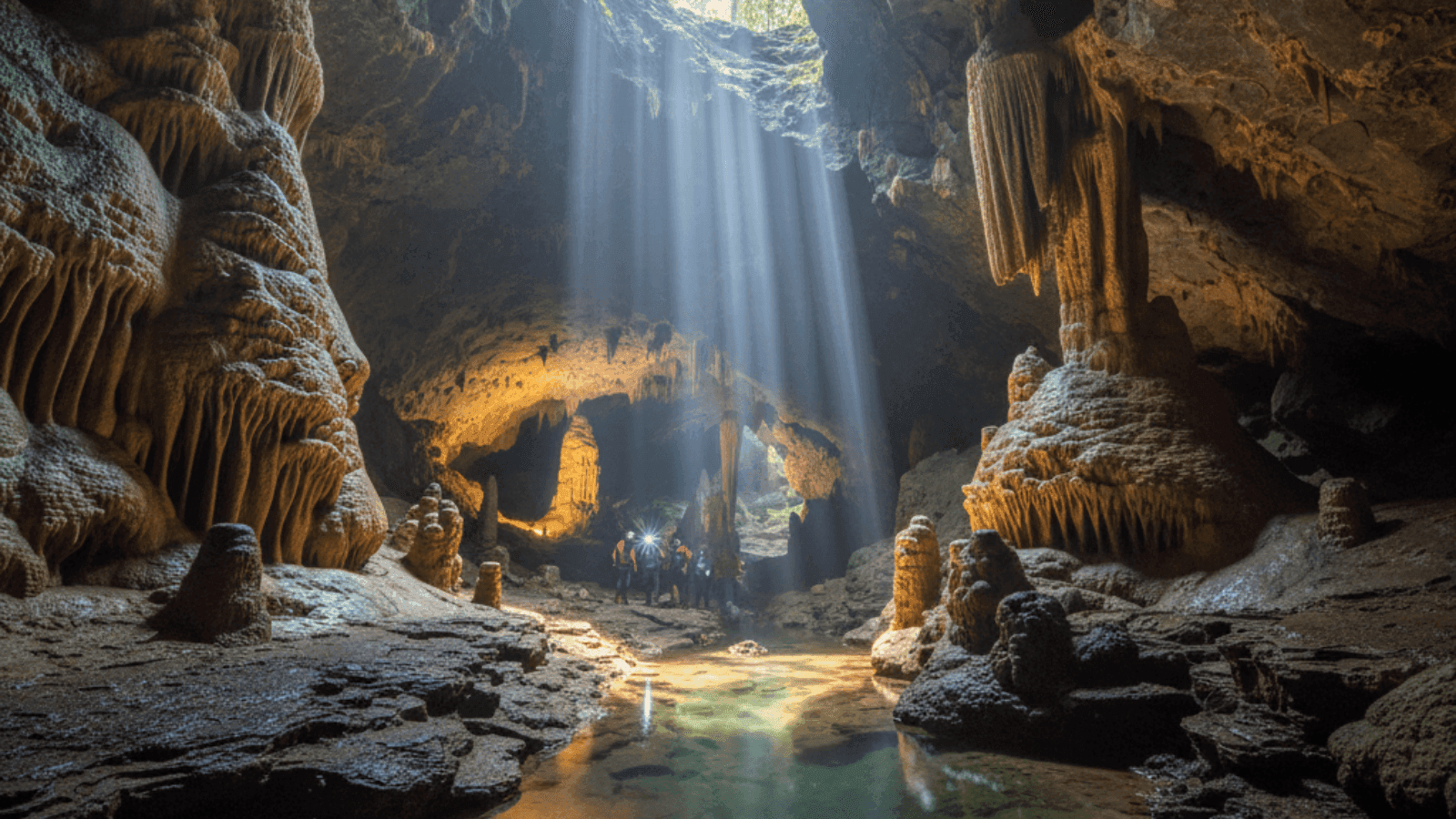
- Kutumsar Cave, one of India’s longest natural limestone caves with complete darkness inside
- Kailash Cave, known for its white limestone formations shaped over thousands of years
- Dandak Cave, quieter and less visited, with narrow passages and cool interiors
- Forest drives along the Kanger River, where the road curves through uninterrupted tree cover
Flora and fauna that still dominate the landscape
Kanger Valley protects a rare mix of dry deciduous and moist deciduous forest. Sal trees dominate large sections, forming tall, straight columns that block sunlight and create cooler ground conditions. Teak, bamboo, and tendu trees grow densely in other patches.
Wildlife is present but not always visible. Leopards, sloth bears, wild boars, and barking deer live here, moving mostly at dawn or dusk. You are more likely to see langurs watching quietly from branches or hear the sudden alarm call of a deer.
Birdlife is easier to spot. Hill mynas, drongos, woodpeckers, and hornbills move constantly through the canopy. Butterflies appear in open clearings where sunlight reaches the ground. In some spots, dozens gather near damp soil, their wings flickering in constant motion.
Why UNESCO is watching this forest closely
Kanger Valley is part of the tentative list of UNESCO World Heritage Sites under the serial nomination “Sacred Ensembles of the Hoysalas and Central Indian Landscape” framework, particularly for its ecological and geological significance.
The limestone caves here are a major reason. These cave systems formed over millions of years through slow mineral deposits and water erosion. They preserve geological records that scientists continue to study.
The park also represents one of the last intact forest ecosystems in central India. Many similar forests elsewhere have been fragmented by roads, mining, or settlements. Kanger Valley remains largely continuous.
There is also cultural importance. Indigenous communities in Bastar have lived alongside these forests for generations, maintaining traditions connected to specific trees, rivers, and landforms.

Best months to visit
October to March offers the most comfortable conditions. The air is cooler, the forest is easier to walk through, and caves remain accessible.
Post monsoon months between October and December are especially good. The waterfalls are still strong, and the forest feels fresh and dense.
Summer months from April to June can be very hot, with temperatures rising above 40°C. Some caves may close during monsoon due to flooding and safety risks.
Things to keep in mind before entering the park
- Entry permits must be obtained at the forest check post
- Timings are usually limited to daylight hours
- Plastic items should be avoided and carried back out
- Local guides are required for entering caves
- Mobile network disappears quickly after entry
- Wear shoes with grip because trails can be slippery
- Do not expect food stalls or shops inside
How to reach Kanger Valley
Jagdalpur is the nearest town with regular road connectivity. It also has a small airport with limited flights from cities like Raipur and Hyderabad.
From Jagdalpur, the park entrance is about a 45 minute drive. The road gradually narrows, and traffic becomes sparse. The transition from town to forest happens quickly.
Raipur, the capital of Chhattisgarh, is the nearest major airport and railway hub. From Raipur, Jagdalpur can be reached by overnight bus, train, or a long drive.
Who this place is really for
This is not a checklist destination. There are no queues, no guided entertainment loops, no controlled viewpoints with railings everywhere. Kanger Valley rewards patience. People who slow down notice more. A bird shifting branches. The temperature drop near water. The smell of damp limestone inside caves.
It suits travellers who do not need constant stimulation, who are comfortable with uncertainty, and who can walk without expecting something dramatic at the end of every trail.
If Kanger Valley is calling you, where you stay should feel just as rooted in the place. Neomaxer curates stays that keep you close to forests, silence, and the kind of travel that stays with you.









