
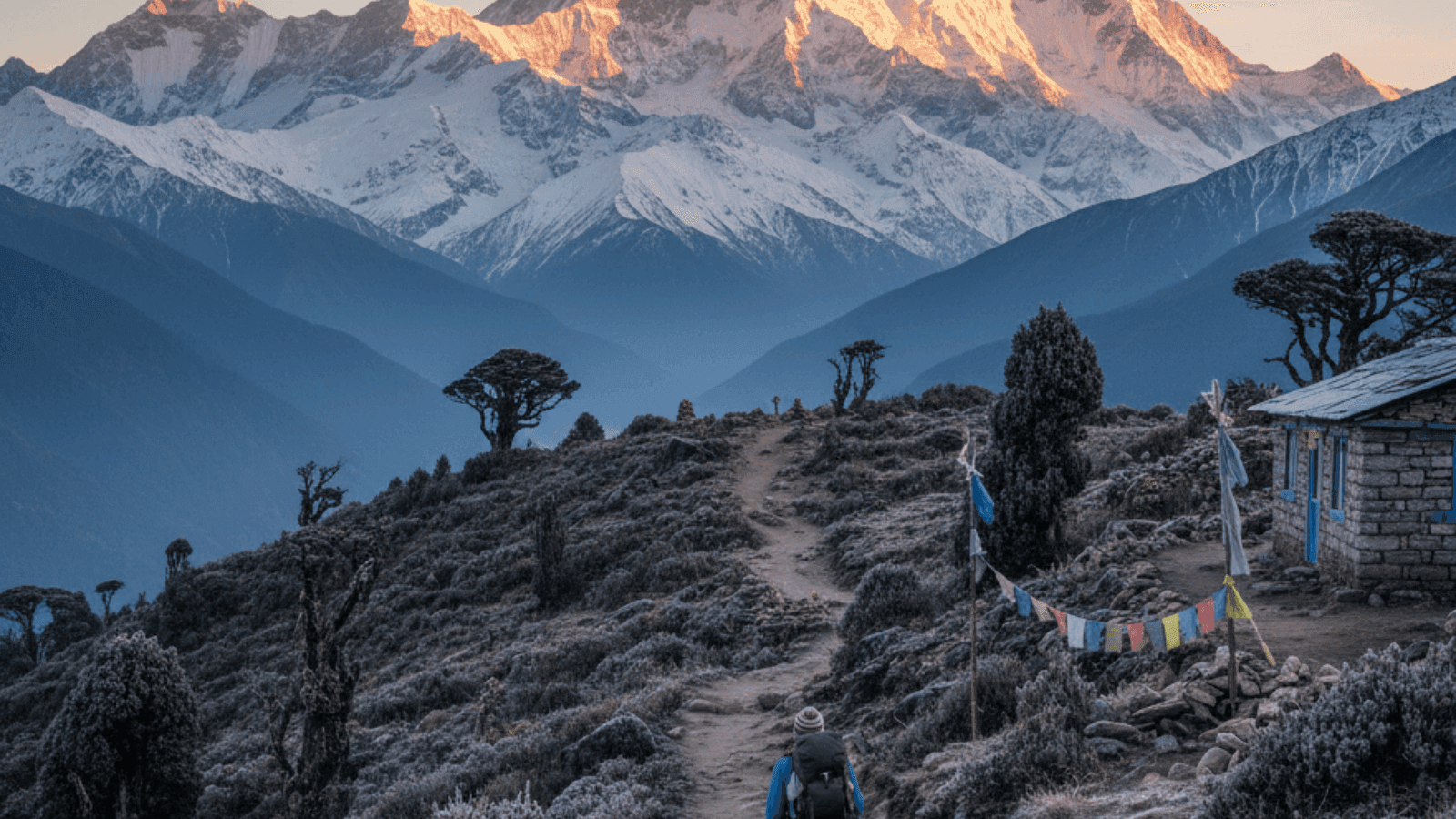
Kanchenjunga Through the Seasons, A Trek That Changes With the Sky
Kanchenjunga never shows up the same way twice. Light, cloud, and temperature keep rewriting the experience as you move higher. The season decides how the trail speaks to you.
Spring - March to May
Spring is when the trail wakes up first, long before most trekkers arrive. Lower forests between Suketar and Ghunsa fill with rhododendrons in red, pink, and white, while higher sections stay stark and quiet.
Clear mornings are common, especially in April, with Kanchenjunga’s south face catching early sunlight before clouds build up by afternoon. Snow remains on high passes, but the route itself is stable, with fewer landslides compared to later months. Nights can feel sharper than expected, especially above 4,000 meters, where the wind cuts through camps.
- Temperature: Daytime temperatures at lower elevations hover between 10°C and 18°C, dropping to around -5°C to 5°C at higher camps like Lhonak.
Summer and Monsoon - June to August
Summer changes the trek completely, often without warning. Heavy monsoon rains soak eastern Nepal, turning forest paths muddy and swelling rivers that need careful crossings.
Cloud cover is persistent, and mountain views become rare. Leeches appear below 3,000 meters, especially around Mitlung and Amjilosa. Landslides can block trails for days, and flights into Suketar are frequently delayed or canceled. This season is chosen mostly by trekkers who value solitude over scenery.
- Temperature: Temperatures rise slightly, ranging from 15°C to 22°C in lower valleys, while higher elevations stay between 0°C and 8°C.
Autumn: September to November
Autumn strips the sky clean. After the monsoon withdraws, visibility stretches for miles, and Kanchenjunga stands sharp and massive against deep blue skies.
October offers the most stable conditions, with dry trails and predictable weather patterns. Mornings are cold but clear, while afternoons remain comfortable for long walking hours. November brings colder nights and early snowfall at higher camps, adding risk to the final approach but rewarding trekkers with quieter trails.
- Temperature: Daytime temperatures range from 8°C to 15°C at mid-elevations, while nights at Pangpema can drop to -10°C or lower.

Winter - December to February
Winter closes parts of Kanchenjunga without formally announcing it. Snow blankets the trail beyond Ghunsa, and access to Pangpema becomes uncertain after heavy snowfall.
Villages remain open, but teahouses reduce services, and water sources often freeze overnight. The landscape turns stark and monochrome, with long shadows and silence replacing the autumn bustle. Only experienced trekkers attempt this season, carrying extra gear and flexibility in their schedules.
- Temperature: Daytime temperatures struggle to rise above 5°C, while nights can plunge to -15°C or colder at higher altitudes.
Safety and trail-readiness tips by season:
- Use trekking poles year-round; they matter most on wet monsoon trails and icy winter sections
- Build buffer days into your plan, especially in autumn and early winter when snowfall can block access to Pangpema
- Wear microspikes or light crampons in late autumn and winter for icy mornings
- Be conservative with daily distances; villages are far apart and evacuation options are limited
- Carry insulation layers even in spring and autumn; afternoons can feel warm, nights rarely are
- Start walking early to avoid afternoon cloud build-up and wind at higher camps
- Pack windproof outer layers; wind chill near Pangpema can feel far colder than forecast temperatures
- Keep water bottles insulated at night as freezing is common above Ghunsa
Who This Trek Is Ideal For
Kanchenjunga suits trekkers who value depth over convenience. It works best for those comfortable with long walking days, basic teahouses, and limited connectivity. Prior high-altitude trekking experience helps, especially for managing cold nights and sustained climbs above 4,000 meters.
The route appeals to travelers who prefer quiet trails, raw landscapes, and time to adapt slowly rather than rushing summit viewpoints. It is less suitable for first-time trekkers or those seeking luxury lodges, quick access, or guaranteed weather windows.
If walking Kanchenjunga feels like something you want to do right, Neomaxer helps you stay in places that match the pace and personality of the journey.









