
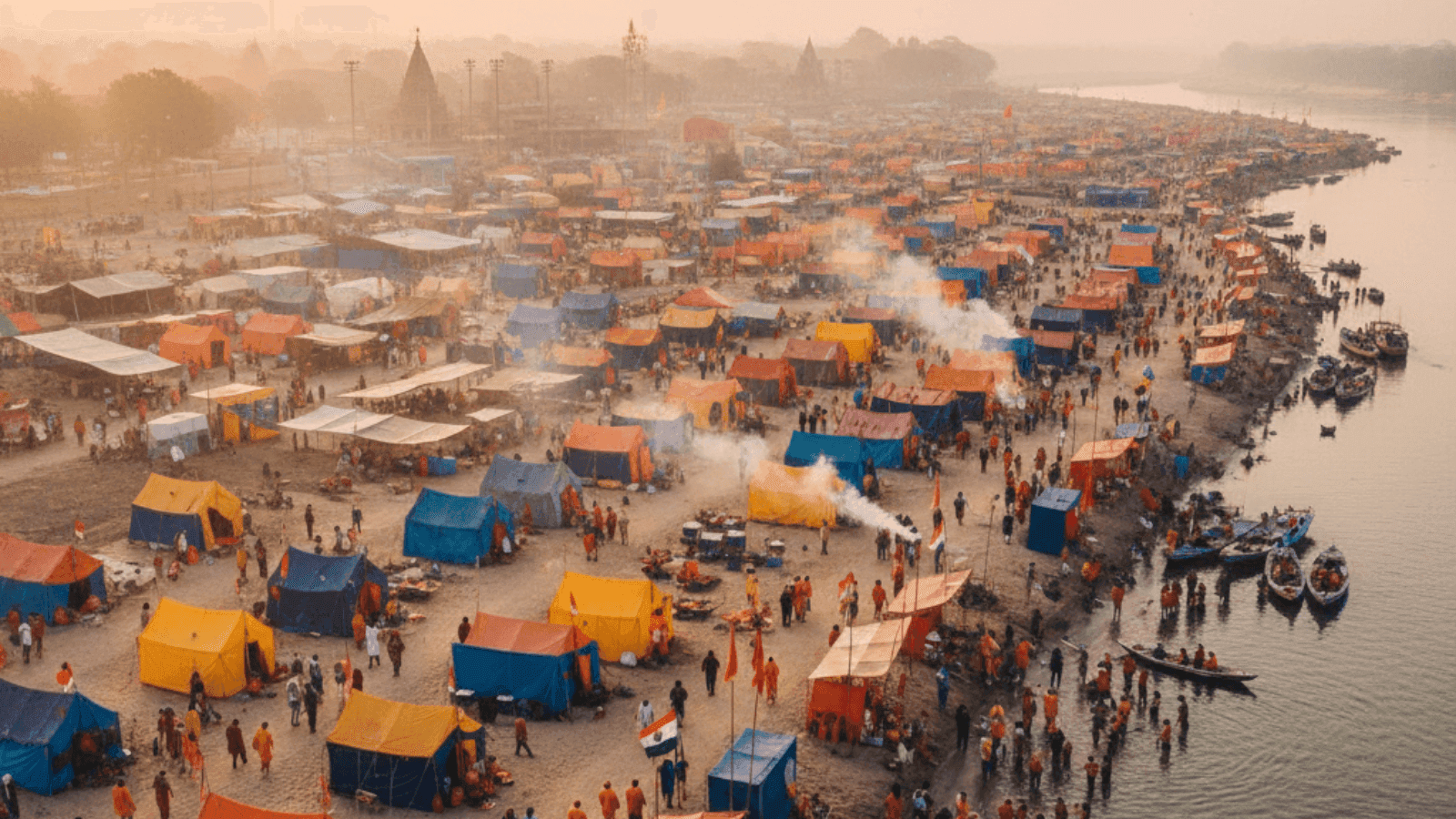
Kalpavas at Magh Mela: A Month by the Sacred River
You don’t attend Kalpavas. You commit to it. For a full lunar month, people trade routines, comfort, and clocks for river water, early mornings, and a life measured by sunrise. Kalpavas at Magh Mela is less about where you go and more about how you choose to stay.
What is the significance of Kalpavas
Kalpavas is a month-long spiritual observance practiced during the Hindu month of Magh. The word comes from “Kal” meaning time and “Vaas” meaning residence. The idea is simple. Live by the river for a fixed period and follow a strict daily routine.
The practice focuses on self-restraint rather than celebration. Kalpavasi residents wake up before dawn, bathe in the river daily, eat simple meals, sleep early, and avoid excess conversation or comfort. The consistency matters more than intensity.
Magh Mela 2026 dates and Kalpavas duration
Magh Mela 2026 will be held in Prayagraj from January 14 to February 12, 2026, based on the Hindu lunar calendar.
Kalpavas begins on Paush Purnima (January 14, 2026) and concludes on Maghi Purnima (February 12, 2026). This full period of nearly one month is traditionally observed by Kalpavasi residents. Key bathing dates during Magh Mela 2026 include Mauni Amavasya, Basant Panchami, Maghi Purnima, and other Magh snan days, when crowds increase significantly and movement around the riverbanks slows.
Where Kalpavas takes place in Prayagraj
Kalpavas is observed on the floodplains near the Triveni Sangam, the confluence of the Ganga and Yamuna rivers. The Saraswati is believed to flow underground at this point.
Temporary settlements are constructed on the riverbed itself. These include tent clusters, pathways, bathing ghats, medical camps, and basic marketplaces. Once Magh Mela ends, the entire area is dismantled.
The main Kalpavas zones are located near Arail Ghat, Sangam Nose, and designated Kalpavasi sectors managed by local authorities. Kalpavas is centred on the Ganga river, though the spiritual importance comes from the Sangam of the Ganga and Yamuna.
Daily bathing in the river is a core requirement of Kalpavas. Most residents bathe before sunrise, even during cold January mornings, regardless of weather conditions.
How to reach Prayagraj for Magh Mela
Prayagraj is well connected by air, rail, and road, though travel becomes slower during Magh Mela due to volume.
By air:
Prayagraj Airport connects to Delhi, Mumbai, Kolkata, and a few other major cities. During Magh Mela, additional flights are sometimes added, but prices rise quickly.
By train:
Prayagraj Junction, Prayagraj Chheoki, and Prayag Station handle most arrivals. Special Magh Mela trains run from major cities, but advance booking is essential.
By road:
Buses and taxis operate from Varanasi, Lucknow, and Kanpur. Expect traffic diversions and long entry times closer to peak bathing dates. From stations and airports, shuttle buses and shared autos operate to Magh Mela entry points.
What daily life looks like during Kalpavas
Days begin early. Most Kalpavasi wake between 3:30 and 4:30 am, walk to the river for snan, and return for prayer or quiet sitting.
Meals are basic, often prepared over open fires. Many follow a one-meal or two-meal routine. Sleeping arrangements are simple mattresses inside canvas tents.
Afternoons are slow. People read, chant, or sit outside their tents. Evenings end early due to cold and limited lighting. The repetition is deliberate. Kalpavas removes choice from daily life.
For travellers considering visiting Kalpavas
- Accommodation ranges from basic tents to organised camps, but comfort is minimal
- Temperatures drop sharply at night, often close to single digits
- Mobile networks work, but power supply can be inconsistent
- Toilets and bathing facilities may be shared and functional, not private
- Travellers should plan stays around logistics rather than expecting flexibility.
What to keep in mind before visiting
- Entry and exit routes change daily based on crowd control
- Photography near bathing areas should be discreet and respectful
- Walking distances are long. Vehicles are restricted inside mela zones
- Snan days mean early closures, blocked paths, and delayed movement If living close to sacred spaces and slowing your pace speaks to you, Neomaxer curates stays that let you experience places without rushing through them.









