
Kalasa: A Temple Town Built Around Coffee Estates
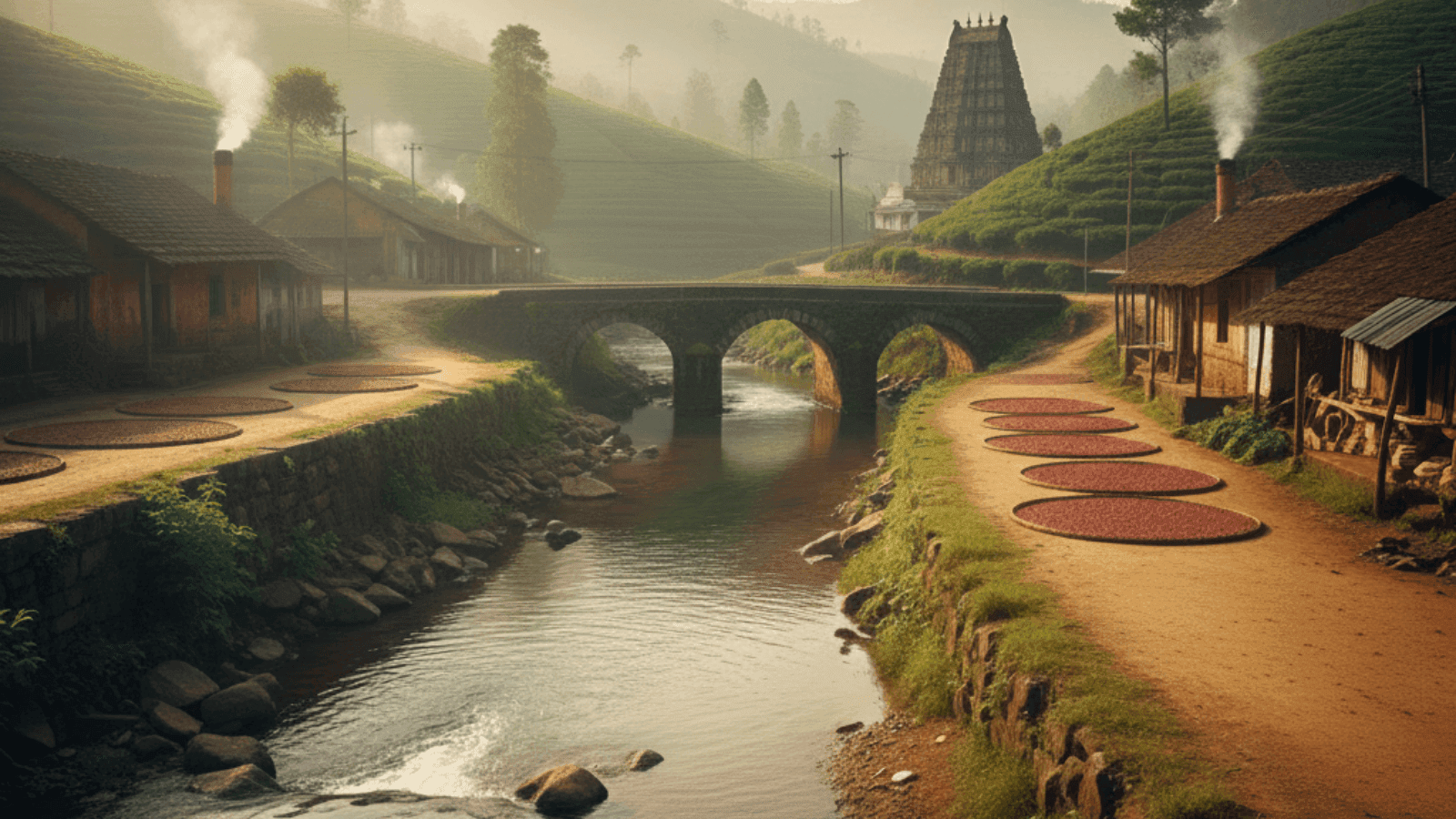
Kalasa smells like coffee before you even look for the temple. Drying beans line backyards and roadside yards, and mornings begin with estate work, not prayer bells. Faith exists here, but farming decides how the day moves.
Where the Bhadra Begins
The Bhadra River does not arrive dramatically in Kalasa. It starts small, clear, and almost shy, slipping out of Gangamoola hill and threading its way past fields and temples. Locals treat the river less like a tourist sight and more like shared infrastructure. It is where people wash vegetables, pause conversations, and measure seasons.
During monsoon months, the river swells and turns loud. The bridges stay open, buses still cross, and life continues with mild adjustments rather than alarm.
Kalaseshwara, Without the Noise
Kalaseshwara Temple stands close to the river, old and functional rather than imposing. The Shiva linga here is said to have been installed by Agastya, but the mythology does not dominate the space. The temple blends into daily life, visited by locals on their way to work, not crowds making a special trip.
There are no long queues, no loudspeakers explaining history. The temple smells of stone and water more than incense, especially on quiet afternoons.
A Town That Doesn’t Perform Devotion
Prayer in Kalasa is private and unhurried. People step in, offer what they need to, and leave. Festivals happen, but they do not overwhelm the town. The scale remains human, shaped by who actually lives here.

Coffee Before Everything Else
Coffee estates begin almost immediately outside the town limits. Arabica grows under thick shade, often mixed with arecanut, pepper vines, and fruit trees. These are not manicured plantations designed for visitors. They are working landscapes, muddy and uneven, with tools left where they were last used. Harvest season changes the town’s tempo. Temporary workers arrive, drying yards fill up, and the air carries a faint fermented sweetness.
The roads around Kalasa cut through estates and forests without ceremony. There are no designated viewpoints, no signs announcing beauty. Visibility drops suddenly when fog rolls in, especially in the early morning and late evening.
What Visitors Should Expect
Kalasa sits near protected forest zones, and the boundary is not clearly felt. Monkeys move through rooftops. Malabar giant squirrels appear on power lines. At night, the forest noise comes right up to the town edge. People lock doors early, not out of fear but routine. Wildness is expected, not marketed.
Visiting Kalasa During Monsoon Months
Monsoon is not described here, it is endured. Rain arrives heavy and often without warning. Clothes take longer to dry, roads collect potholes, and conversations adjust to the constant background sound. Shops remain open. School continues. There is no pause button.
What and Where You’ll Actually Eat in Kalasa
Eating in Kalasa is simple and deeply local. Rice, sambar, seasonal vegetables, and strong coffee define most meals. Many homes still roast and grind their own beans, producing coffee that tastes sharp and earthy rather than smooth. Small eateries serve what is available, not what sells online. Menus change without announcement.
What Kalasa Is (and Isn’t) for Tourists
There is no separate Kalasa for visitors. No curated walking trails or packaged experiences. Those who come are expected to adapt to the town’s pace, not the other way around. Accommodation is limited, quiet, and functional. Power cuts can happen. Mobile networks may weaken.
Getting Here and Moving Around Kalasa
Kalasa sits on the road to Shringeri, but it is not a stopover town trying to capture passing traffic. Many people live entire lives here without needing to leave often. Others move away and return, usually for coffee harvests or family obligations. The town holds space for both staying and leaving, without romanticising either.
How Evenings Feel in Kalasa
As daylight drops, shops close one by one. Streets empty gradually. The smell of cooking replaces the smell of coffee drying. Temple bells ring briefly, then stop. By night, Kalasa feels held together by darkness, forest sounds, and the steady belief that tomorrow will look much like today. If you’re planning to stay in or around Kalasa, Neomaxer helps you find quiet, well-located stays that match the pace of the place. Explore handpicked options on Neomaxer!









