
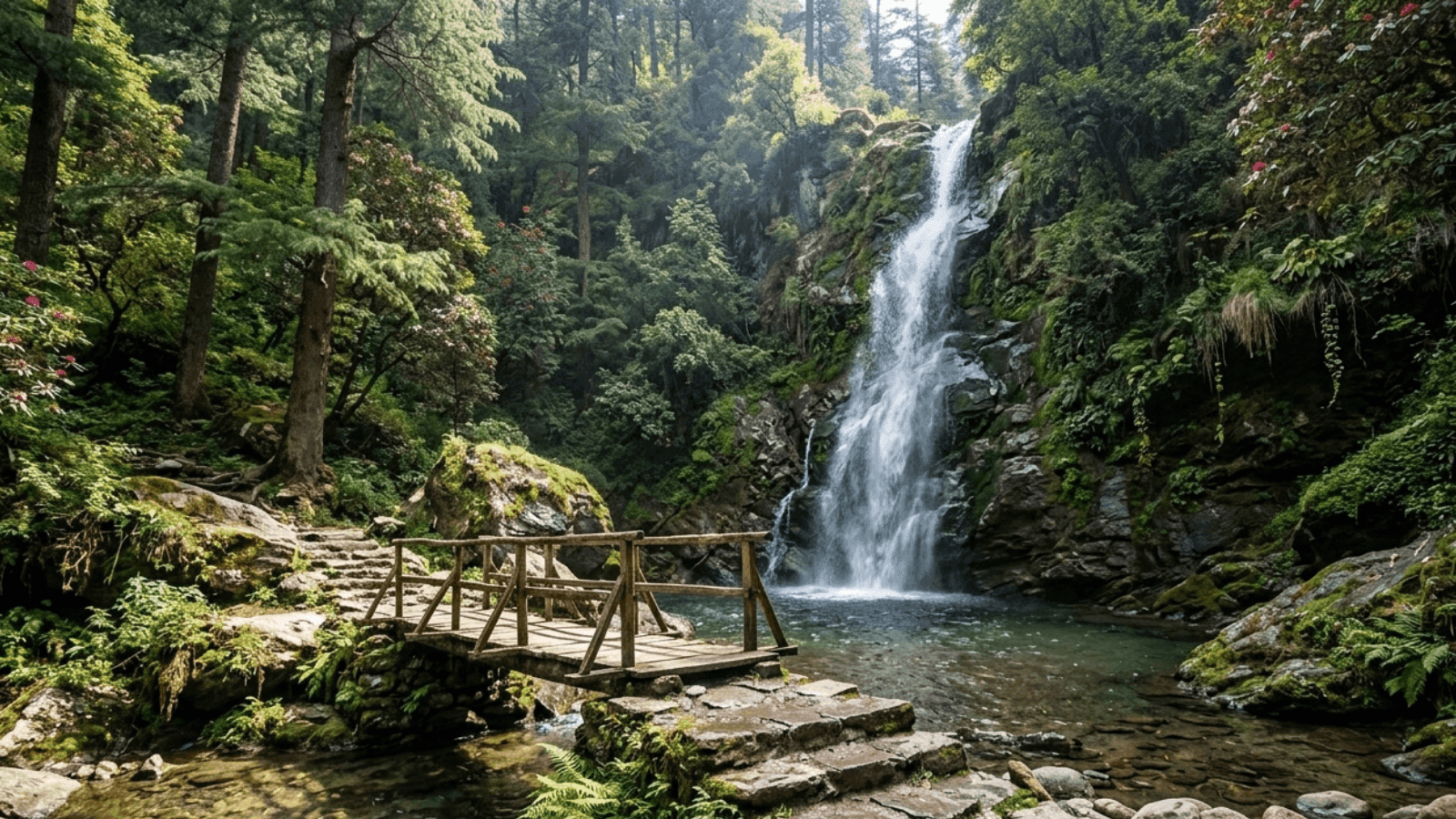
Jibhi - When the Path to a Waterfall Is as Worthy as the Waterfall Itself
The waterfall is only half the reason people remember Jibhi.
Jibhi Waterfall Trail Starts Behind Village Market
The path begins quietly, just behind the small village market where cafés sell Maggi and tea to backpackers lingering over slow mornings. There is no dramatic signboard or ticket counter, only a narrow stone trail slipping between wooden homes and apple trees.
Within minutes, the chatter of the market fades. You hear the river long before you see it.
2km Path Cuts Through Rhododendron Thickets
The trail stretches for roughly two kilometres, mostly gradual but uneven underfoot. In spring, rhododendron trees bloom in sudden bursts of red against deep green slopes. During late monsoon, the forest thickens and the earth smells raw and wet.
Wooden bridges cross small streams that feed into the main cascade. Moss clings to stones, and the light shifts constantly as clouds move across the valley. It feels less like a trek and more like walking through someone’s quiet backyard forest.
Shringa Rishi Temple Sits Midway Rest Spot
About halfway in, a modest wooden shrine dedicated to Shringa Rishi appears beside the trail. Locals stop briefly, fold their hands, and move on without fuss.
Travellers usually pause here for breath rather than prayer. It is shaded, calm, and offers a flat stone or two to sit on before the final stretch.
Ideal for Slow Waterfall Walks
The trail does not rush you, and neither should you rush it. Solo hikers often start early when the mist is still hanging low in the valley. By mid morning the fog lifts, revealing pine ridges stacked in layers.
Couples tend to carry a small picnic mat and sit near the cascade pools where the water spreads shallow over flat rock. It is not a dramatic plunge pool, but a gentle space to linger.
Photographers usually arrive around 3 pm when the light angles through the trees and turns the falling water into thin silver ribbons. Long exposure shots work well here because the flow is steady but not violent.
Families with children stick close to the safer rock shelves. There are shallow slides formed by years of water smoothing the stone, but footwear with grip matters more than confidence.

Best Months Hit Waterflow Before Dry Spells
Jibhi Waterfall is at its best between March and June, and again just after the monsoon in September. Snowmelt and fresh rain keep the cascade lively without making the trail too slippery.
By late October, the flow reduces. In peak monsoon, leeches can appear along damp sections of the forest floor. It is manageable, but not everyone enjoys that surprise.
Winter brings a different mood. The water slows, the air sharpens, and the forest feels almost silent. Fewer visitors make the walk feel personal.
How to Reach Jibhi from Delhi
- Overnight Volvo to Aut, then HRTC bus to Jibhi. Around 12 hours in total and roughly Rs 800 to 1000 depending on season.
- Direct cab via Mandi along NH3. About 10 hours door to door, usually near Rs 5000 for a small car.
- Train from Delhi to Kiratpur Sahib, then shared Sumo toward Banjar and Jibhi. Close to 9 hours combined, around Rs 600 to 800 if timed well.
- Self drive from Manali through the valley stretch. Around 160 kilometres and ideal if you enjoy mountain roads. Rental SUVs in Manali start near Rs 2000 per day.
Packing Trekking Poles for Mossy Slants
The trail is not technical, but the stones can turn slick, especially after rain. Lightweight trekking poles make downhill sections easier on the knees.
Good grip shoes matter more than expensive gear. Carry water, but do not expect to find shops once you leave the market stretch.
In monsoon months, a small salt pouch helps if leeches become persistent. They are harmless but stubborn.
Trail Safety Beats Leech Season Crowds
Weekends bring small clusters of travellers, especially during peak summer. Start before 9 am if you want space to hear the waterfall without overlapping conversations.
There are no official guards along the trail, so basic caution applies. Avoid climbing wet boulders near the main drop and keep children within sight.
Locals often use the same path for daily movement between homes and fields. A polite nod goes further here than loud excitement.
Want to stay close to these quiet forest trails and village paths? Neomaxer helps travellers find thoughtfully located stays across beautiful destinations.









