
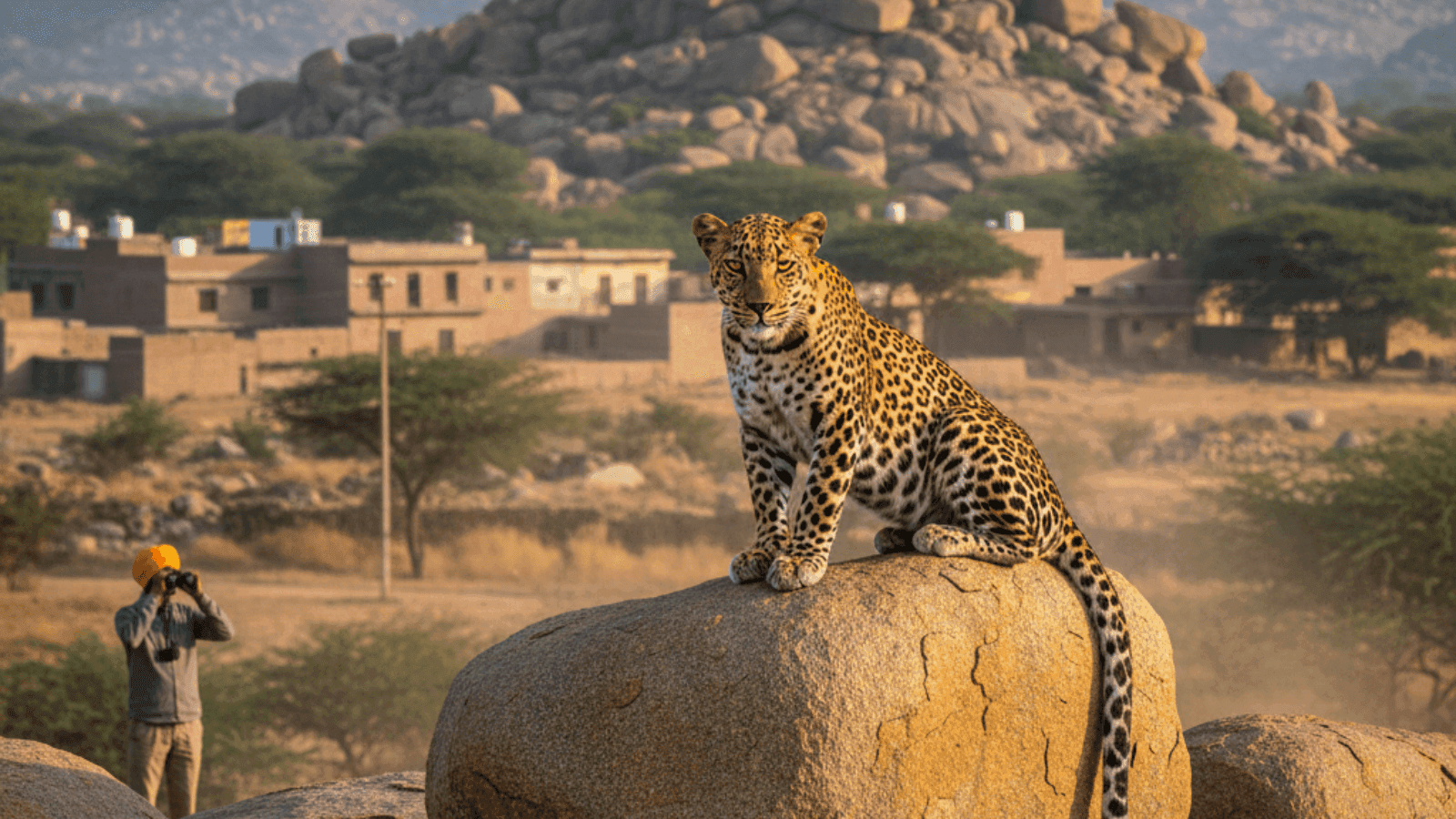
Jawai Is Entering Its Most Reliable Leopard Sightings Window
Granite hills in Jawai have a habit of revealing secrets when the air turns dry. Leopards stretch across warm rocks like they own the place, and for a few weeks each year, they truly do. February and March quietly turn Jawai into one of the most reliable places in India to watch a wild leopard simply existing.
February–March Changes Everything in Jawai
By late February, the grass across Jawai turns brittle and pale, and water becomes limited to predictable pockets. Leopards that usually stay deep inside crevices start moving more frequently between rock shelters and water sources. This movement increases daylight sightings, especially in early mornings when the granite still holds the night’s coolness.
The terrain itself works in the traveller’s favor. Jawai is not dense forest. It is open scrubland punctuated by massive granite formations, which makes tracking easier. Guides already know the commonly used paths between dens and watering points.
Rock Dens Around Kumbhalgarh Fort and Jawai’s Granite Hills
The granite formations in Jawai are ancient and fractured, forming natural caves that leopards use as permanent homes. These dens sit halfway up the hills, providing both visibility and safety. From below, they look like shadowed cracks, but experienced trackers can identify active dens by fresh pugmarks, scat, and scent markings.
Some of these rocky belts stretch toward areas influenced by the Aravalli range near Kumbhalgarh. The geology remains similar, and leopards use these continuous rocky corridors to move safely. This is why Jawai has developed a reputation for stable leopard populations living close to human settlements without conflict.

How to Reach Jawai from Maharana Pratap Airport
- Shared jeep from Udaipur via Ranakpur takes about 2 hours and costs roughly Rs 800 per person. These are commonly arranged by local safari operators.
- Private cab is the most direct option, covering about 165 km round trip for around Rs 3500, with flexible stops along the desert highway.
- Train to Falna followed by a local taxi takes 45 minutes and costs about Rs 1500, making it one of the fastest combinations.
- Bike rentals from Udaipur appeal to travellers who enjoy open desert roads, though the dust and dry wind make eye protection necessary.
Morning vs Evening Safari Windows
Morning safaris usually begin before sunrise, around 5:30 to 6:00 AM depending on the season. This is when leopards are often returning from night hunts or settling near their dens. The cooler temperature keeps them active longer, and sightings during this window feel calm and unhurried.
Evening drives start around 4:30 PM and continue until sunset. Leopards begin moving again as temperatures drop, and the golden light across the rocks improves visibility. Evening safaris also reveal other wildlife like hyenas, foxes, and migratory birds gathering near water.
Packing for Dawn Jeep Safaris
- Warm jacket or fleece, since desert mornings remain cold even in peak season
- Neutral-colored clothing that blends with rocky surroundings
- Scarf or buff to protect against dust during drives
- Camera with zoom lens, as leopards often stay perched on elevated rocks
- Small flashlight or headlamp for early departures in low light
- Sunglasses for post-sunrise glare reflecting off granite
Crocodile Lake Boat Add-Ons Near Jawai Dam
Jawai’s reservoir supports a surprising population of marsh crocodiles, locally called mugger crocodiles. Boat rides across the lake reveal them resting along muddy banks or slipping silently into the water. The stillness of the lake contrasts sharply with the rugged hills just beyond.
Birdlife is equally active here. Flamingos, cranes, and storks arrive seasonally, feeding in shallow sections. The boat moves slowly, allowing close observation without disturbing the animals.
Local Rotlo Wraps Post-Game Drive
Safari mornings often end in nearby Rabari villages, where simple meals are prepared fresh. Rotlo, a thick millet flatbread, is served warm with chutneys, onions, and sometimes goat milk curd. The food feels grounding after hours spent scanning rocks and tracking movement.
These villages coexist with leopards as part of daily life. Livestock graze below the same hills where leopards rest, and both have adapted to the rhythm of Jawai’s landscape. The safari vehicles eventually fall silent, and the granite hills return to stillness.
If Jawai is on your radar this season, staying close to the granite hills makes early safaris and sightings far more rewarding. Find well-placed safari lodges and curated stays at Neomaxer.









