
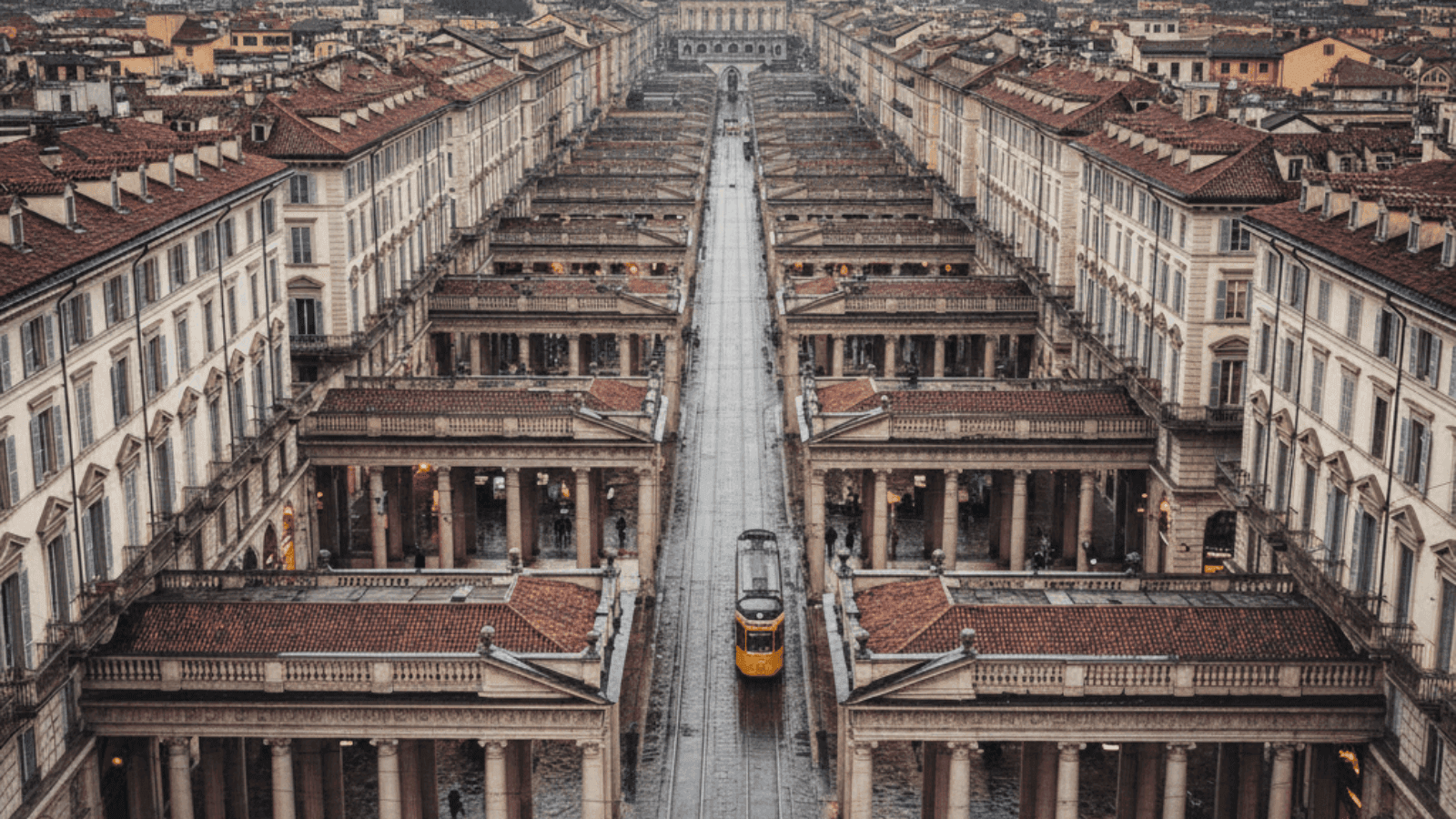
Turin, the Italian City Where You Can Walk Without an Umbrella
This City Lets You Walk in the Rain Without Getting Wet
In most cities, rain changes your plans. In this one, people just keep walking. Turin quietly built one of Europe’s most unusual pedestrian environments. Across its historic center runs a continuous network of covered walkways called porticoes, long arcaded sidewalks attached to buildings. They stretch for roughly 18 kilometers, linking squares, streets, cafés, shops, and museums under a roof of stone arches.
Walking the City Without Noticing the Weather
The covered routes connect many key places:
- Piazza Castello and the Royal Palace
- Piazza San Carlo’s cafés and boutiques
- Long shopping streets like Via Roma
- Bookshops, antique stores, and historic cafés under the arcades
Go Here to Feel the Most Impressive Porticoes
- Piazza San Carlo and its perfectly aligned arcades
- Via Po, where the porticoes lead toward the river
- Piazza Vittorio Veneto with its huge open square and continuous arches
- Galleria Subalpina, a glass-roofed arcade tucked between streets
Things Travelers Often Miss
One interesting quirk appears along Via Po. On one side of the street the porticoes remain completely continuous, even across side streets. That design was intentional so the royal family could walk toward the church across the river without stepping into the rain.
Another detail people rarely notice is how the style changes across centuries. Early medieval arches look simpler and heavier, while later ones became taller and more elegant as the city expanded. Even the flooring changes. Some streets use gray stone, others marble, and each stretch gives the walkway a slightly different character.
Best Time to Visit
Spring and early autumn usually feel most comfortable for walking around the city. Temperatures are mild, outdoor cafés stay lively, and the porticoes become useful shade during warmer afternoons. Rain showers happen occasionally in these seasons, which makes the covered walkways surprisingly convenient.
Winter visits have their own appeal too. Snow sometimes falls, and locals move through the arcades while the squares remain quiet and cold.

Weather Range
- Spring (March–May): 10°C to 22°C
- Summer (June–August): 20°C to 31°C
- Autumn (September–November): 12°C to 24°C
- Winter (December–February): 0°C to 9°C
How Many Days to Plan
Two to three days works well for most travelers. One day usually disappears inside museums and royal buildings. Another day goes toward wandering through squares, cafés, and markets while following the arcaded streets. Adding a third day gives time to cross the river and explore the hills overlooking the city.
Getting There
Most travelers arrive by train. Turin Porta Nuova railway station and Turin Porta Susa railway station connect the city with major Italian destinations including Milan, Florence, and Rome. The historic center begins just outside these stations, which makes it easy to start exploring immediately.
Flights arrive at Turin Airport, about 16 km from the center. Trains and buses run regularly into the city.
Local Behavior or Expectations
The covered walkways function almost like shared corridors. Locals use them constantly, which means people move steadily through them. Stopping suddenly in the middle of the path can slow everyone down.
In cafés, lingering is normal. Many people sit for long conversations over coffee, especially in the historic coffee houses that line the arcades. Saying a quick “permesso” when passing someone in a tight section is common and usually appreciated.
Dos and Don’ts
Do
- Walk the full length of Via Po under the porticoes
- Stop inside historic cafés rather than rushing through
- Explore smaller side streets off the main arcades
Don’t
- Block the walkway while checking maps
- Expect loud nightlife everywhere in the historic center
Planning Insights
The best way to experience the city is by following the covered walkways themselves. Instead of jumping between attractions, many travelers simply pick a direction and continue walking beneath the arches. The route naturally leads past museums, squares, bakeries, and antique stores. It feels less like sightseeing and more like drifting through an enormous sheltered promenade.
If you’d like to stay somewhere close to streets like these, take a look at Neomaxer. It’s a simple way to find good places to stay while traveling.









