
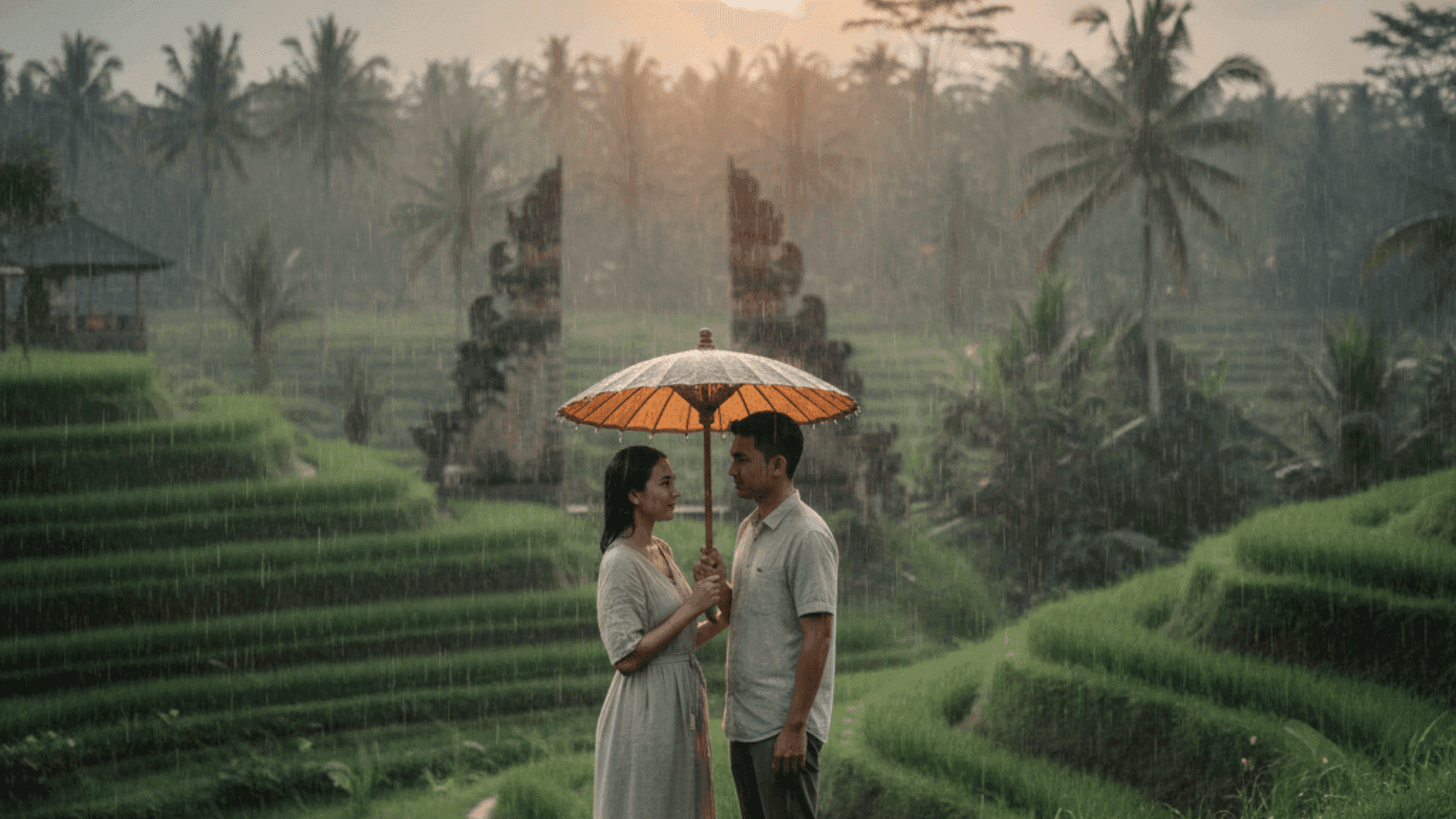
Is Bali Worth Visiting in January and What is the Rain Situation?
January in Bali comes with a daily question: will the rain arrive before or after your second coffee? Some days it wins, some days it doesn’t, and that uncertainty changes how you move through the island. The surprise is how little it actually gets in the way.
What the Weather Is Actually Like in January
January sits at the heart of Bali’s wet season. Rain is frequent, but it usually arrives in short, heavy spells rather than lingering from morning to night. Most days begin with clear or lightly clouded skies, which makes mornings the best window for outdoor plans.
Daytime temperatures stay between 27–31°C, while nights cool slightly to around 23–25°C. The heat is constant, and the humidity is noticeable. Sweat takes longer to evaporate, and midday sun can feel heavier than the temperature suggests.
You can still expect around five to six hours of sunshine on most days. Bali does not lose its sun in January; it just shares the sky with rain clouds.
Why Bali Looks Its Best After the Rains
January brings out a version of Bali that feels fuller and more intense. Rice terraces in places like Jatiluwih and Tegallalang turn deep green and freshly layered. Waterfalls such as Sekumpul and Tegenungan surge with force instead of trickling down rock faces.
Lakes sit higher, which makes temples like Ulun Danu Beratan appear closer to the water. Villages feel freshly washed after afternoon showers, and even busy roadsides look cleaner once the rain passes.

Crowds Drop Sharply After New Year
The island changes pace almost immediately after the first week of January. Once New Year’s crowds leave, beaches, temples, cafés, and markets become noticeably quieter.
Popular attractions feel less rushed. You can walk through temple complexes without being funnelled through groups. Café tables stay open longer. Even traffic becomes more manageable outside the busiest tourist zones.
Lower Costs Make a Real Difference
January sits firmly in Bali’s low season. Hotel prices drop across the board, from budget guesthouses to high-end resorts. Villas that feel out of reach during peak months often become affordable for longer stays. Flights are also cheaper after the holiday rush. Availability improves, upgrades are easier to secure, and travel feels less competitive.
For travellers who value space, comfort, and flexibility, January often stretches a budget further than expected.
Beach Time in January: What to Expect
January is not ideal for all-day beach lounging. Skies can change quickly, and rain showers often interrupt long stretches of sun. That said, swimming is still comfortable. Sea temperatures stay around 28–29°C, and beaches in southern Bali remain active. Many people still spend time by the water, just in shorter bursts.
Surf conditions shift during the wet season, with west coast beaches generally offering better consistency. Snorkelling and diving can be affected by reduced visibility after heavy rain, especially close to shore.
What to Do When the Rain Shows Up
January rewards travellers who are comfortable adjusting plans rather than sticking to rigid schedules. Good options during rainy hours include:
- Spa treatments and wellness centres, which are easy to book in low season
- Cooking classes that run regardless of weather
- Cafés and bakeries that double as quiet work or reading spots
- Yoga studios and meditation spaces that feel calmer this time of year
- Covered markets and art spaces in Ubud and Denpasar
Festivals and Cultural Events in January
January often includes Galungan, one of Bali’s most important festivals. Streets fill with penjor bamboo poles, temples become active with ceremonies, and daily routines slow down around ritual schedules. Siwa Ratri also frequently falls in January. This night of reflection focuses on forgiveness and prayer, with temple visits continuing late into the evening.
Chinese New Year may occur during January as well. Celebrations are especially visible in Denpasar and areas with Chinese-Indonesian communities, adding colour and activity without feeling tourist-driven.
What to Pack for a January Trip
Packing for January is less about extras and more about choosing the right basics. Useful items include:
- Light, breathable clothing that dries quickly
- A thin rain jacket or poncho for sudden showers
- Comfortable sandals or shoes with good grip for wet roads
- Minimal layers, since temperatures stay warm all day
For temple visits:
- Clothing that covers shoulders and knees
- A sarong of your own, though rentals are widely available
Who January Is Best Suited For
January suits travellers who enjoy flexible days, quieter surroundings, and a slower rhythm. It works well for people interested in culture, food, short excursions, and visual richness rather than packed outdoor schedules. It is less suited for travellers chasing guaranteed blue skies, long uninterrupted beach days, or tightly timed adventure itineraries that cannot move around weather windows.
Rain in Bali during January does not cancel plans. It changes the pace, creates natural pauses, and leaves space for moments that feel less scheduled and more lived-in. If you want to experience Bali at its calmest, with stays that feel comfortable, well-timed, and thoughtfully located, Neomaxer makes it easy.









