
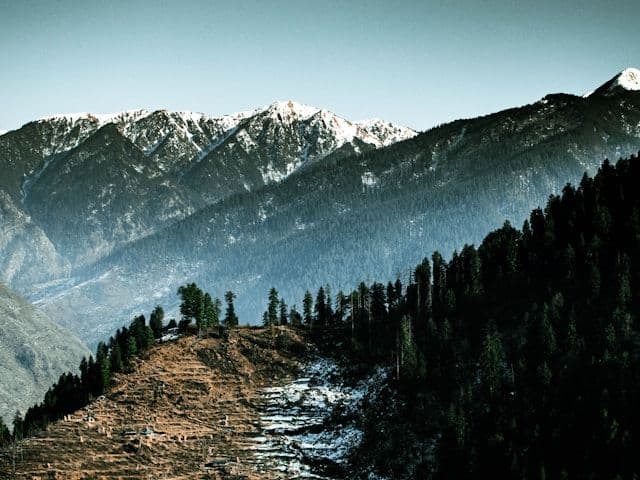
Stone houses sit beside clear water, and every decision follows the rhythm of the river that shapes Tirthan Valley. Trout movements mark the passing of months, and villagers say the flow teaches patience better than any calendar.
A valley that listens to water
Morning begins with the sound of the river hitting rocks in steady pulses. Fishermen step out only after watching the current shift shade and speed. To visit Tirthan Valley is to understand how seasons feel long or short, depending on how fish behave. The best time to visit Tirthan Valley is often decided by the clarity of the river, not the temperature.
Life is arranged around trout.
When the trout return upstream, celebrations feel subtle but deeply rooted. Children watch elders prepare nets that have been used for decades. Villagers speak about fish movements with accuracy that comes from generations of observing this water. Places to visit Tirthan Valley often begin with river viewpoints, not markets or monuments.
Forest paths that stay quiet
Trails disappear into cedar forests where sunlight filters in thin strips. Wooden bridges bend slightly over rushing water. Every turn holds the smell of moss and cold air. Silence here feels full rather than empty. Visit Tirthan Valley from Delhi if you want a journey that shifts from highways to pure wilderness in a few hours.
Rituals shaped by the river god
Before the first cast of spring, villagers offer flowers and prayers to the river. Elders say no catch begins without respect. These rituals mark new cycles of water and life, forming a natural calendar that outsiders rarely notice. Visit Tirthan Valley packages sometimes mention these customs, but few explain their meaning.
Villages that move at one pace
People walk slowly, not because of laziness but because the valley refuses to be rushed. Afternoon tasks depend on how bright or pale the river looks. Even conversations pause when the current grows loud. Tirthan Valley hotels often sit beside the water, allowing travellers to observe this daily rhythm.
The river as a storyteller
Guides claim they can read the future in ripples. Sudden dips and rises predict rain, early trout, or late movement of snowmelt from higher ridges. The water speaks in signs that locals interpret without hesitation. A good visit to the Tirthan Valley itinerary includes time to sit silently by the river rather than trying to fill every hour.

Mist that follows the current
Early mornings bring low mist that clings to the river surface. As the sun rises, the mist rises too, revealing rocks and shallow pools. Each moment feels like a small performance shaped by air and water. Places to visit in the Tirthan Valley often include these hidden river bends that appear only during certain hours.
Fishing as memory
Nets pass from grandparents to grandchildren. Techniques remain unchanged. The knowledge of where trout rest, where they hide, and when they swim is treated as a heritage that must be protected, not displayed. Chandigarh to Tirthan Valley routes bring many travellers during the active fishing months.
Forests that guard the valley
Dense tree lines rise along both sides of the river. Birds call in short bursts. Small animals appear briefly, then vanish into the bushes. The valley behaves like a living system where every creature depends on the river’s pulse. Visit Tirthan Valley packages sometimes include guided forest walks, but experienced travellers prefer wandering without a fixed plan.
When the river slows
In late seasons, the water thins, revealing stones shaped smooth over centuries. Villagers gather near shallow areas to talk about snowfall predictions and upcoming cycles. The valley grows quieter but never feels lifeless. This period offers another best times to visit Tirthan Valley if you prefer calm, cool days.
The journey inward
Travellers often say the trip changes them. The focus shifts from schedules to observing tiny movements: a small wave hitting a rock, a trout tail flashing under sunlight, a sudden hush before rain. Nature decides the day. Every tirthan valley moment ends with water dictating the next, and the valley continues its quiet cycle as travellers learn to follow its pace.









