
Hyderabad’s Cuisine and Its UNESCO Creative City Recognition
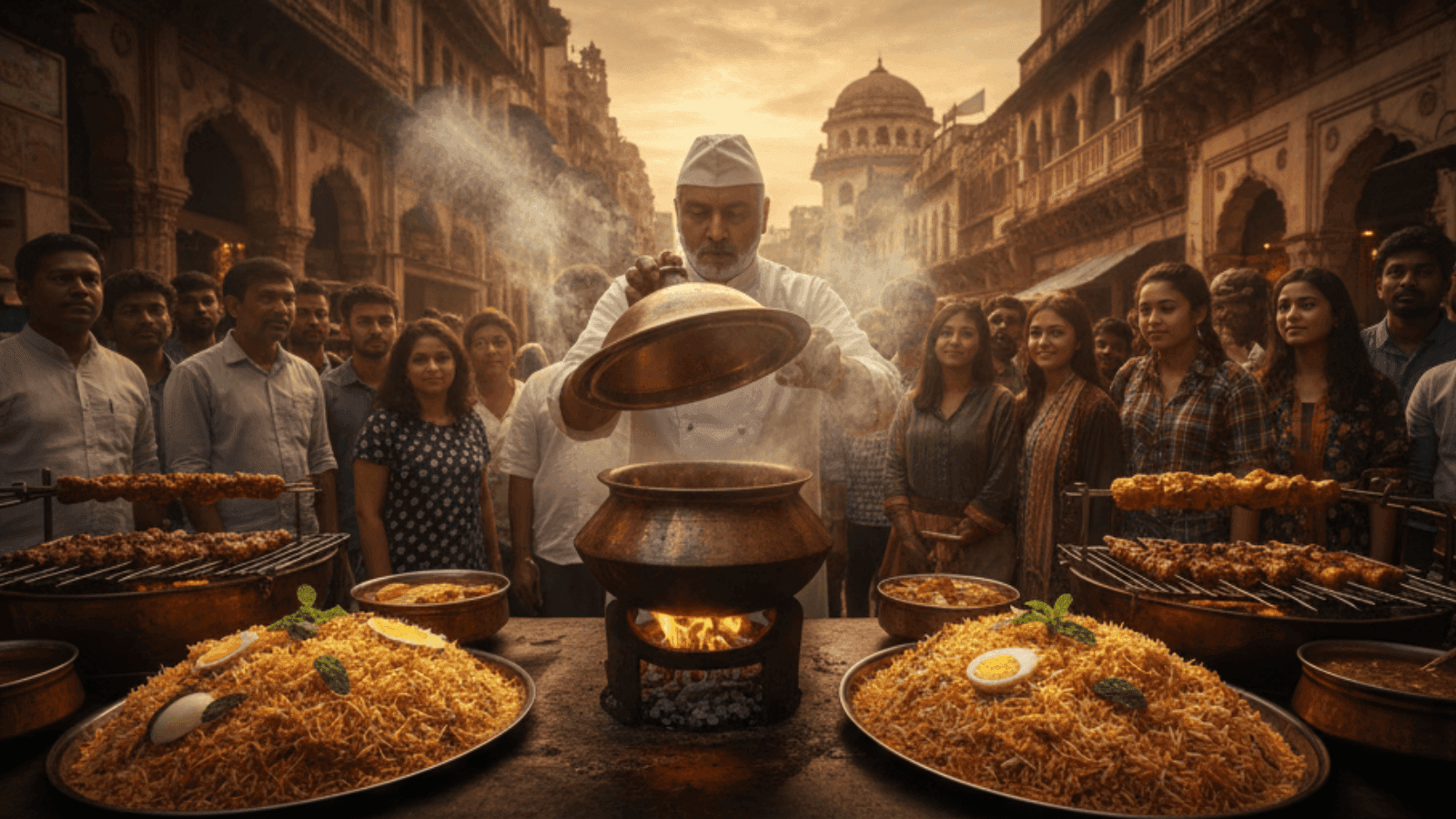
Hyderabadi biryani was never designed for speed, and neither was the food culture that produced it.
When Hyderabad’s Food Became a Cultural Language
The foundations of Hyderabadi cuisine were laid long before menus existed. In the 16th century, the Qutb Shahi dynasty introduced Persian and Turkish culinary practices into a region that already had strong Telugu food traditions. What followed was not replacement, but conversation.
By the time the Nizams took over in 1724, food had become a form of expression rather than sustenance. Dishes carried meaning. Cooking styles reflected hierarchy, geography, and ritual. What was eaten depended on the time of day, the season, and the occasion, not trends or novelty.
This long timeline matters. UNESCO’s recognition was not for a moment of excellence but for centuries of continuity.
How Royal Kitchens Shaped the City’s Everyday Cooking
Hyderabad’s culinary reputation was built inside palace kitchens, not commercial spaces. The Nizams treated food as a discipline. Royal khansamas were specialists, often tasked with mastering a single preparation over years. Precision was non-negotiable.
These kitchens acted as custodians of technique. Recipes were preserved through practice rather than writing. Skills were passed down orally, through repetition. When palace cooks eventually moved into homes and neighbourhoods, they carried these methods with them.
This is why Hyderabadi food still feels deliberate even in ordinary settings. The DNA of ceremonial cooking remains embedded in everyday meals.
How Foreign Influences Settled Without Diluting Local Taste
Hyderabadi cuisine absorbed influences gradually. Persian, Arabic, Mughlai, and Turkish elements arrived through trade, migration, and royal marriages. Telugu cooking anchored these influences to the land. Water scarcity shaped grain choices. Millets dominated early diets, while rice became prominent later. Meat-centric dishes adapted to local vegetables and souring agents.
Tamarind, gongura leaves, raw mango, peanuts, sesame, dried coconut, and curry leaves balanced richness with sharpness. Rather than standing apart, these influences fused quietly. The result was complexity without confusion.
What Defines Hyderabadi Cuisine on the Plate
Certain techniques and ideas appear repeatedly across dishes, regardless of setting.
- Dum cooking, where food is sealed and slow-steamed to let flavours settle
- Biryani cooked with rice and meat together, not assembled after
- Potli masala, where spices are infused briefly and removed
- Chillies used to structure flavour, not dominate it
- Souring agents working alongside heavy spices to maintain balance
These elements explain why Hyderabadi food feels layered but never overwhelming.
Biryani as Method, Not Fame

Potli Masala and Controlled Flavour
Potli masala is a study in restraint. Spices like kalpasi, vetiver, rose petals, betel root, cubeb berries, fennel, and royal cumin are tied into a muslin pouch and introduced into gravies briefly. Timing matters more than quantity. This technique requires judgment, not measurement.
Chillies and Sourness in Balance
Telangana was among the first regions in India to adopt chillies, a fact recorded as early as the 16th century. In Hyderabad, chillies are fried, ground, pasted, or used whole depending on the dish. They work alongside tamarind, gongura, and raw mango to create depth without excess heat.
What Travellers Should Actually Eat in Hyderabad
Food choices here depend on timing as much as appetite.
- Dum biryani cooked in sealed handi pots, not quick-service trays
- Mirchi ka salan for its balance of heat, sourness, and nutty depth
- Khatti dal to understand how simplicity holds flavour
- Nihari or paya early in the morning, when slow cooking makes sense
- Qubani ka meetha and double ka meetha for how sweetness is handled
Notice how gravies feel rich but never heavy. That balance is intentional.
How Food Shapes the Way Travellers Experience the City
Hyderabad’s food culture is inseparable from its geography.
- Old City lanes near Charminar reveal cooking shaped by trade and density
- Irani cafés reflect migration and unhurried routines
- Neighbourhoods near former palace grounds retain ceremonial habits
- Morning meals favour long-cooked meats, evenings turn to grills and snacks
- Festivals quietly transform menus without announcements
Eating by the city’s rhythm reveals patterns locals rarely explain. If you’re planning a visit, Neomaxer makes it easier to find stays that fit how you want to experience Hyderabad, whether that means waking up near Old City food lanes or staying close to quieter neighbourhoods with local cafés. Sometimes, where you stay decides what you end up tasting.









