
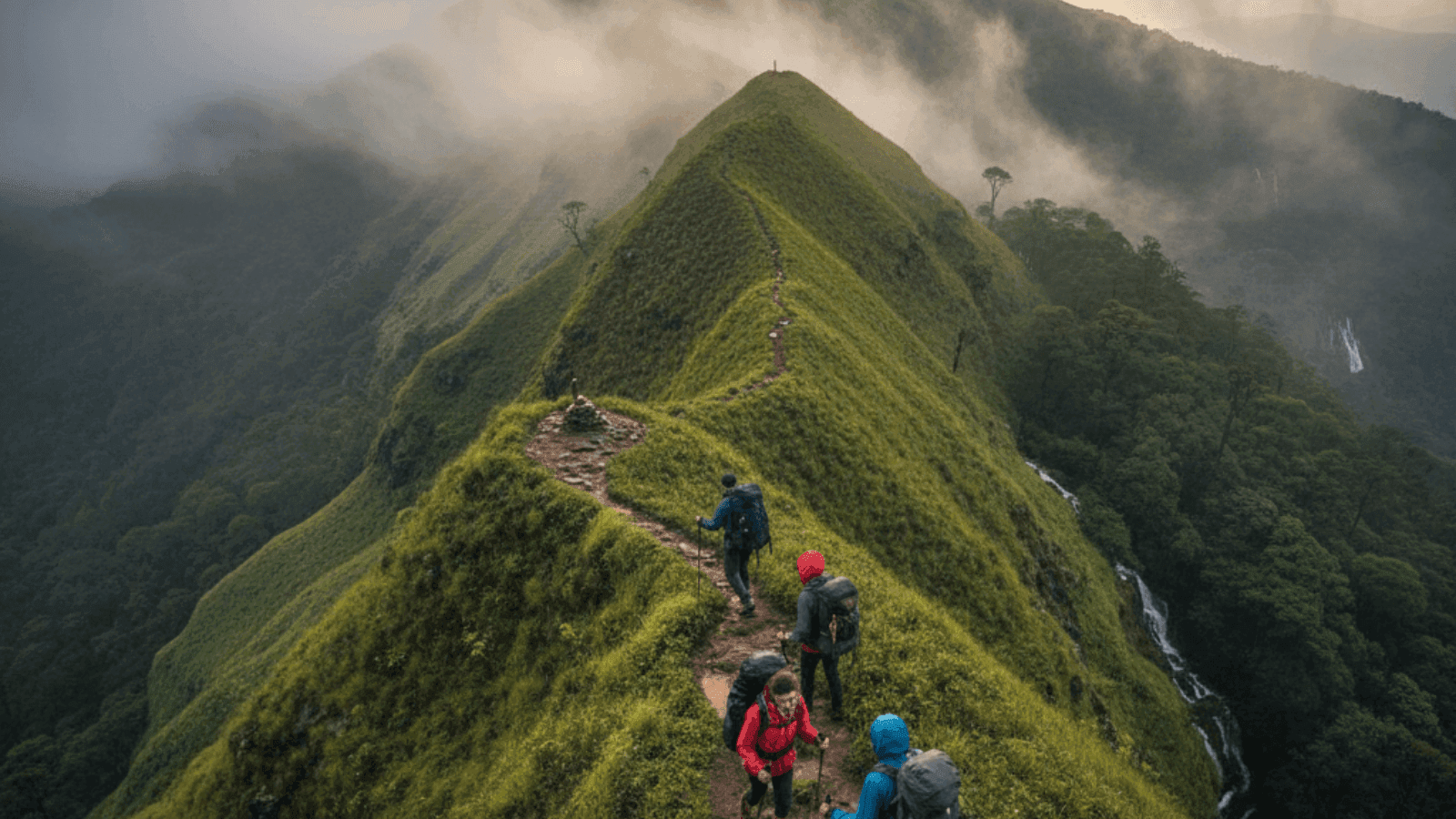
Hiking Kudremukh: The Horse-Faced Mountain of the Western Ghats
Most people start the Kudremukh trek without knowing what the name refers to. The shape only becomes clear much later, when the slope settles into something familiar and you realise you have been walking along the outline of a horse’s face.
Where the Name Comes From
From certain angles on the trail, the mountain’s profile forms a clear outline of a horse’s face, complete with a sloping forehead and muzzle. Locals have used the name “Kudremukh” for generations, long before it became a mapped trekking destination in the Western Ghats.
The shape is not visible from towns or highways. You notice it only when clouds lift briefly and the slope aligns just right. That delayed recognition is part of the trek’s character. Kudremukh does not reveal itself quickly.
Walking Through Grass, Forest, and Water
Kudremukh lies inside a national park, but it never feels fenced in or curated. The trail moves through long grass that hides dips, stones, and small streams until you are almost on top of them. In places, the grass parts suddenly into shola forest, cool and damp even when the sun is out, with exposed roots forcing you to slow down and watch every step.
Several rivers begin somewhere in these folds of land. You cross water often, sometimes without noticing at first. In summer, the crossings are quiet and ankle-deep. After rain, they announce themselves loudly, cutting across the trail with more urgency.

Starting Points, Permits, and Timing
- Entry to Kudremukh is regulated by the forest department, with limited permits issued each day
- The most common starting point is Mullodi village, usually accessed via Kalasa or Samse
- Permits are verified at the forest office before the trek begins
- Hiring a local guide is mandatory
- Most guides are from nearby villages and walk the trail based on weather, light, and ground conditions rather than fixed timings
When to Go and How to Pace It
- The trek is typically done as a long day hike, starting early in the morning
- Monsoon months bring vivid green landscapes along with leeches, slippery grass, and frequent fog
- Drier months offer clearer trails but a less dramatic landscape
- Starting late often means turning back before the summit, regardless of fitness
The Climb to the Summit
The final ascent involves a continuous uphill stretch that tests patience more than strength. There are no dramatic rock faces or technical sections. The challenge comes from exposure and length. With little tree cover, the climb feels honest and unfiltered.
At the top, the summit marker is modest. What stays with most trekkers is the view of endless green folds, hills rising and sinking into cloud, with no sign of towns or roads.
Wildlife Signs, Not Sightings
Animals here are rarely seen, but frequently noticed. Fresh hoof marks cross the trail. Dung appears near water sources. Deer calls echo briefly from forest edges and then vanish. This is not a place of posed encounters. The forest feels active without being visible. Trekkers are reminded to keep noise low, food packed securely, and movements predictable.
Weather That Rewrites the Route
Fog can roll in fast enough to erase the trail behind you. Rain changes shallow streams into obstacles within minutes. Wind directions shift at the summit ridge, carrying mist uphill instead of down. Experienced guides read these signs instinctively. They slow down when clouds settle low and push forward when the sky opens, knowing how quickly conditions can reverse.
What Stays After the Trek
Kudremukh leaves most people with a strong physical memory rather than a visual one. The feel of wet grass underfoot. The sound of wind moving across open slopes. The quiet weight of walking for hours without artificial markers or checkpoints.
The mountain does not offer many landmarks to photograph, and that seems intentional. It is easier to remember how the trek felt than to describe what it looked like, especially when the horse-shaped outline only makes sense once you are already descending, turning back, and seeing the mountain finally lower its head into the valley.
If you’re planning a trek to Kudremukh and want to stay somewhere quiet and well-placed, Neomaxer curates stays that work around terrain, weather, and real travel conditions.









