
Why Travellers Are Turning to Gurez Valley in Kashmir, India
What the scenery actually feels like
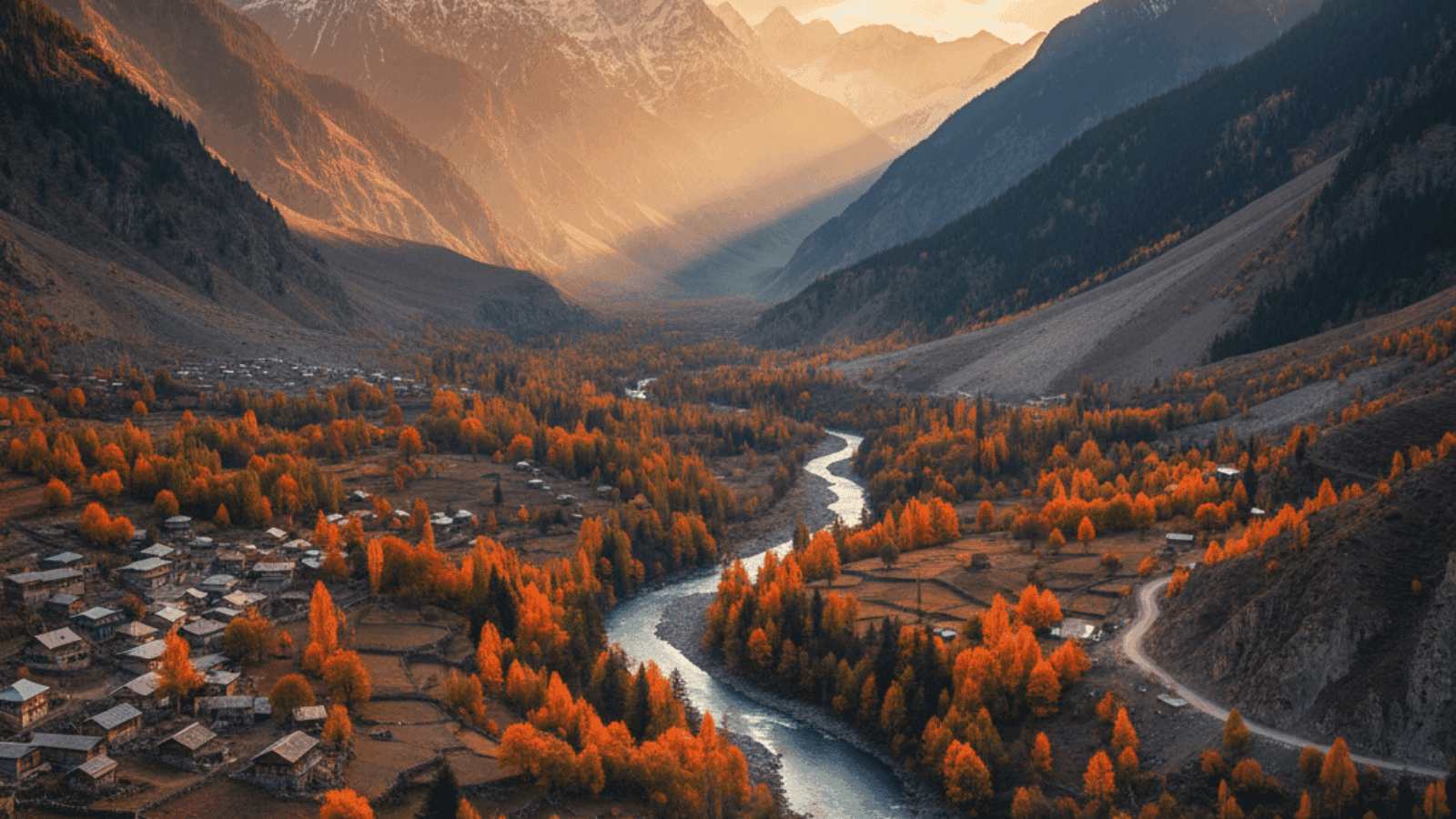
The road climbs steadily from Srinagar, passing forests that grow denser with every turn. The climb peaks at Razdan Pass, over 3,500 metres high, where the air thins and the valley reveals itself in layers. Below, the terrain softens. Wide grasslands stretch beside the river. Wooden houses sit scattered across open fields. Snow peaks stay visible even in summer.
Nothing here feels compressed. Distances are wide. Villages appear slowly. Even the sky seems larger. Light behaves differently too. Mornings are pale and cold. By afternoon, sunlight sharpens the ridgelines. Evenings flatten everything into shadow.
Why travellers are actively choosing places like Gurez now
Remote valleys offer something travellers feel is disappearing elsewhere: unpredictability. There are no crowds to follow. No fixed checklist. Plans change depending on weather, road conditions, or conversations with locals.
Part of the appeal is also access. Improved roads and better connectivity have made it easier to reach areas that were once restricted or difficult. Domestic travellers, especially those who have already seen popular hill stations, are seeking deeper landscapes.
There is also a psychological shift. Travellers want experiences that feel earned. The long drive, the lack of luxury infrastructure, and the physical remoteness all add to that feeling.

How to reach Gurez Valley
From Srinagar, the road runs north toward Bandipora, which acts as the gateway. From there, the climb toward Razdan Pass begins. The road narrows, curves tighten, and traffic thins. After crossing Razdan Pass, the descent opens into the main valley. The administrative centre, Dawar, is where most travellers stay.
The drive takes around 6 to 8 hours depending on road conditions. Weather can affect travel times significantly, especially outside peak summer. Permits are sometimes required for certain stretches, as the valley lies close to the Line of Control.
Best months to visit and what the seasons look like
Summer, from June to September, is when Gurez becomes fully accessible. Snow melts, roads open, and meadows turn green.
July and August are the most comfortable months. Days stay pleasant, and nights are cool without being harsh.
October begins to change the valley. Grass fades into gold. Air becomes sharper. Temperatures drop quickly after sunset.
Winter isolates the valley almost completely. Heavy snowfall blocks Razdan Pass, cutting off road access for months. Only locals remain through the season. Spring arrives slowly. Snow recedes unevenly, revealing patches of green beneath.
How many days to plan
Three to four days allow enough time to experience the valley without rushing. The first day usually goes into the drive and arrival. The second and third days open space to explore nearby villages, riverbanks, and high viewpoints.
Some travellers continue deeper into Tulail Valley, which feels even more remote and quieter. Longer stays begin to shift the rhythm of travel. Time slows. Walking replaces driving.
What not to miss
- Sunrise over the Kishanganga River when mist lifts slowly off the water
- The drive across Razdan Pass with uninterrupted mountain views
- Walking through Dawar village and observing traditional wooden homes
- Evening light on the valley floor when shadows stretch across grasslands
- Conversations with locals who have lived in isolation for generations
- Clear night skies with almost no light pollution
- The quieter villages deeper toward Tulail Valley
Weather realities travellers often underestimate
Even in peak summer, temperatures drop sharply after sunset. Warm afternoons can turn into cold evenings quickly. Wind is constant. Open terrain offers little shelter.
Rain is unpredictable but usually brief. Cloud cover moves fast across the valley. Altitude affects people differently. Some feel breathless during the first day, especially after crossing Razdan Pass.
What to pack for Gurez Valley
- Warm layers even if travelling in summer
- A windproof jacket
- Comfortable walking shoes with grip
- Basic medicines and personal essentials
- Power banks since electricity supply can be inconsistent
- Cash because ATMs are limited
- Sunscreen and sunglasses due to strong high-altitude sunlight
- Snacks for long road stretches without shops.
If Gurez Valley is on your mind, Neomaxer curates stays that place you right inside these mountain villages.









