
Experiencing Offbeat Travel Through Gujarati Craft Villages
Hodka Village (Near Bhuj)
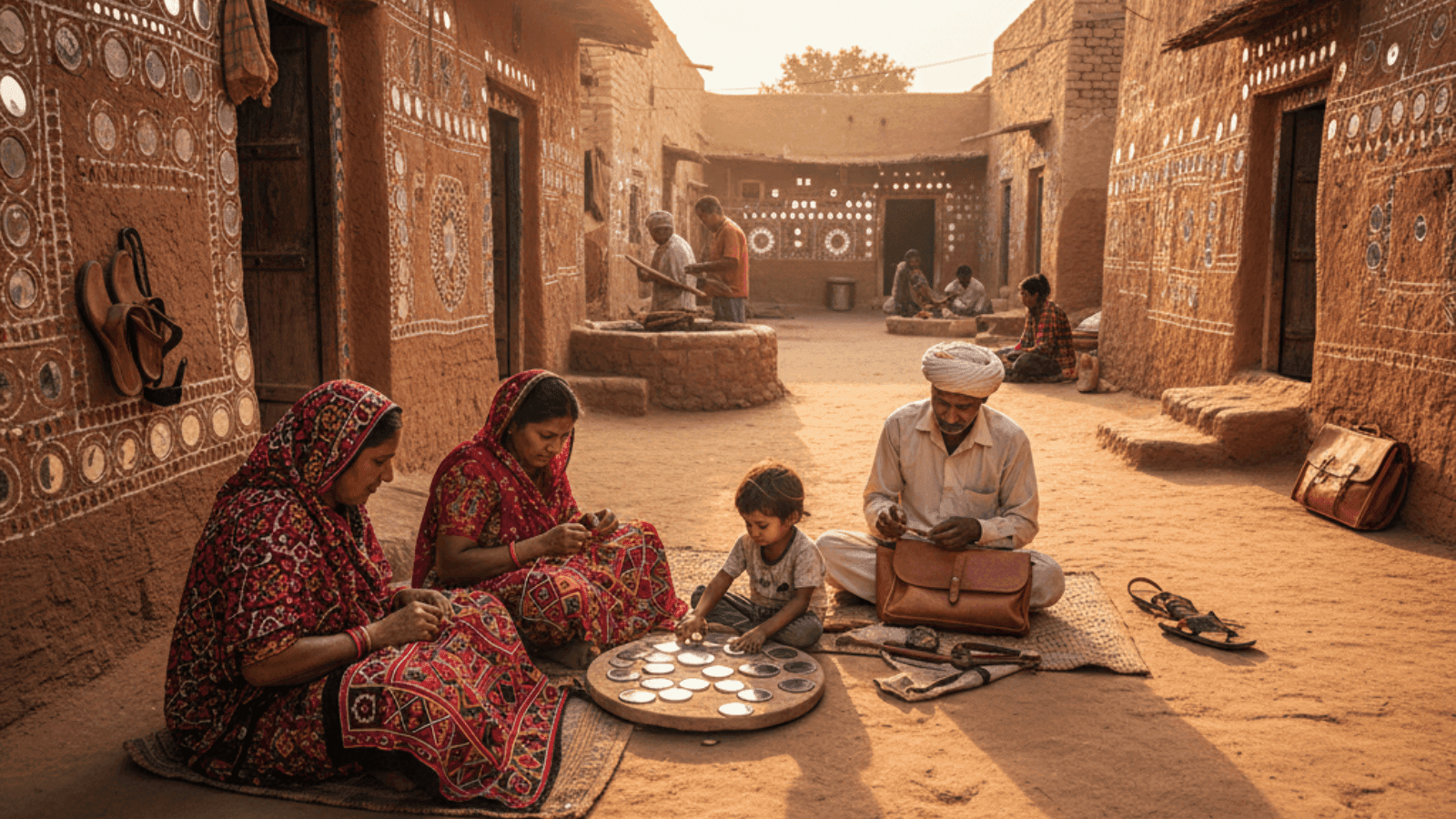
Hodka is often the first village travellers notice, not because it is loud or dramatic, but because everything feels intentionally unfinished in a good way. Homes, community spaces, and workshops blur into each other, and craft here is not staged for visitors. It is daily work that happens to be beautiful.
The village is known for structured community tourism, where locals host, cook, and guide without turning the place into a performance. Staying here means watching craft happen between chores, conversations, and long pauses.
Crafts you’ll find here
- Mutwa embroidery with bold geometric patterns
- Traditional mud mirror work on walls
- Leather accessories made for local use
Nirona Village
Nirona feels quiet until you step into a workshop. Then it becomes rhythmic. This village has guarded a few crafts so rare that only a handful of families still practice them. You don’t browse here; you watch, ask, wait, and learn.
The artisans work slowly and usually alone. Visitors are welcome, but only if they respect the pace. There is no rush to explain, sell, or demonstrate.
Crafts you’ll find here
- Rogan art painted with castor oil colours
- Copper bell making by the Lohar community
- Lacquered wood turning
Ajrakhpur
Ajrakhpur exists because artisans refused to give up their work after displacement. The village was rebuilt by Ajrakh printers who wanted clean water, open land, and control over their process. What you see today is resilience expressed through cloth.
Printing blocks rest everywhere, drying fabrics hang like flags, and the smell of dye lingers in the air. The workspaces are open, and conversations often begin with colour, not price.
Crafts you’ll find here
- Ajrakh hand block printing using natural dyes
- Indigo and madder-based textiles
- Traditional resist printing techniques

Bhujodi
Bhujodi is where weaving sounds carry across streets. Almost every household is connected to a loom, directly or indirectly. The village does not separate living from making; shawls are woven in rooms where children do homework and elders nap.
The weavers are used to visitors but remain selective about who they engage with. Those who stay longer tend to understand why certain patterns are never altered.
Crafts you’ll find here
- Kutchi shawls and stoles
- Wool and cotton handloom weaving
- Traditional motifs tied to Rabari and Ahir communities
Banni Villages (Dhordo and Surroundings)
Banni is not a single village but a landscape dotted with hamlets. Life here adjusts constantly to grasslands, droughts, and migration. Crafts are portable, durable, and deeply coded with identity.
Women embroider during pauses in pastoral life, often sitting together in clusters. Designs change subtly from hamlet to hamlet, even when outsiders can’t tell the difference.
Crafts you’ll find here
- Rabari and Banni embroidery
- Mirror work stitched into heavy textiles
- Handcrafted dowry pieces
Zura and Ludiya
These villages rarely appear on fast itineraries. They reward travellers who stop without expectations. Workshops double as living rooms, and conversations drift from craft to weather to livestock.
What stands out is how little the artisans feel the need to explain themselves. The work speaks quietly, and visitors are expected to listen.
Crafts you’ll find here
- Fine embroidery with minimal mirror use
- Hand-spun textiles
- Community-specific pattern styles
Best Months to Visit Gujarati Craft Villages
- Craft villages follow climate, not calendars. Heat, dust, and festivals shape daily work more than tourist seasons.
- October to February offers the most comfortable conditions for walking between homes and workshops. Winters are dry, mornings are slow, and artisans are usually more open to long conversations.
- March can still work if you travel early in the day. By afternoon, activity shifts indoors and slows down. Avoid peak summer unless you are specifically interested in observing how craft adapts to extreme heat. Many artisans continue working, but visitors are limited to shorter interactions.
- Monsoon months bring fewer travellers and softer landscapes. Roads can be tricky, but villages feel less guarded and more lived-in.
If staying close to these villages matters as much as visiting them, Neomaxer makes it easy to choose stays that feel rooted in the region.









