
The Spring Morning When Maharashtra Welcomes Its New Year
What Happens On Gudi Padwa Morning
Across Maharashtra, the new year starts early in the morning, not at midnight. As the sun comes up, homes open their doors and a tall bamboo staff appears outside balconies and entrances. Rangoli appears at doorways, families move in and out with plates for prayer, and the smell of fresh sweets slowly fills the street.
After placing the Gudi, a short prayer follows inside the home. Many families also taste a mix of neem leaves and jaggery. It is slightly bitter and sweet at the same time, a reminder that the year ahead will carry both.
Best Places To Witness Gudi Padwa Celebrations
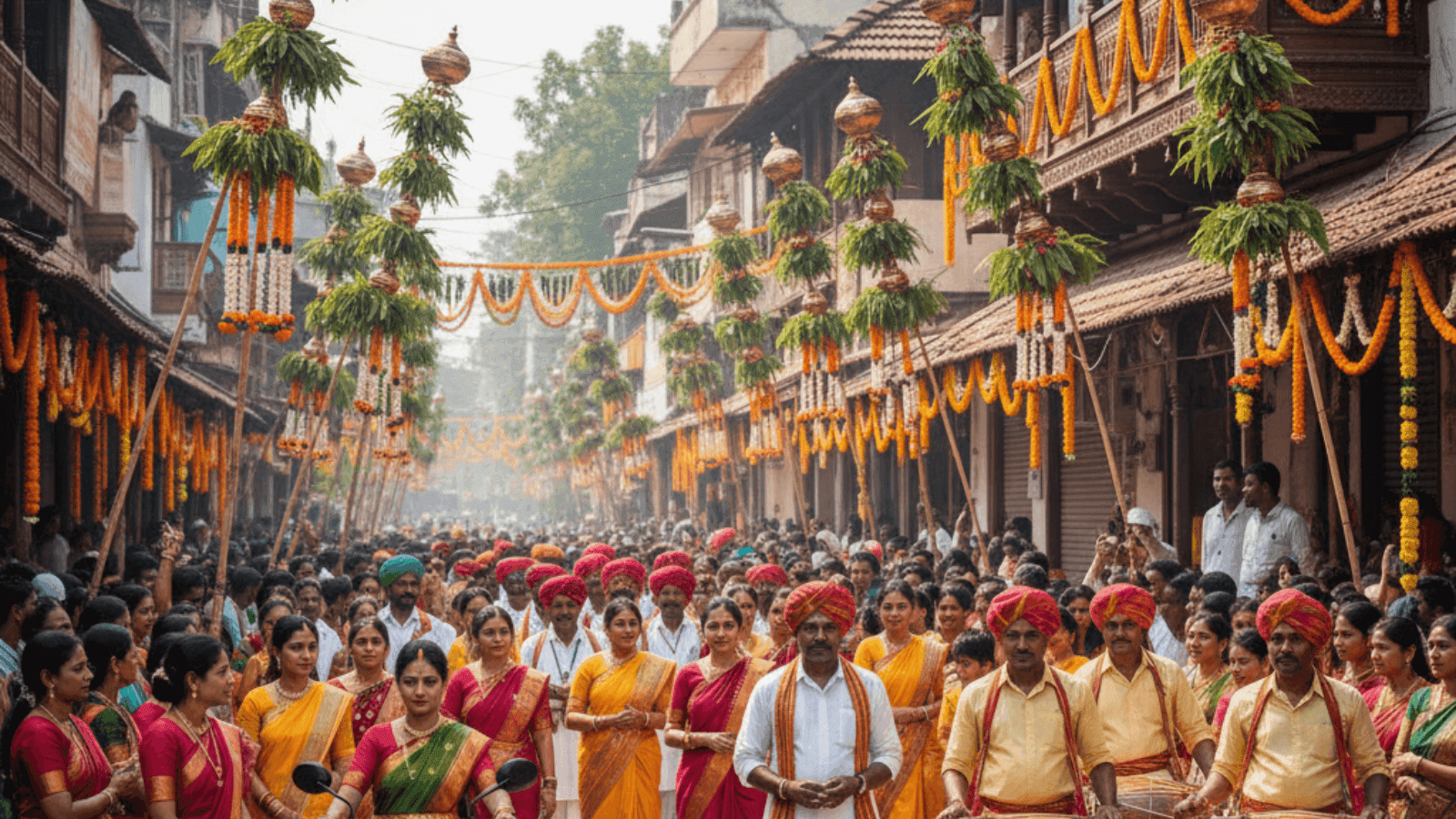
Some cities in Maharashtra show the festival in a bigger way, especially through traditional processions and community gatherings. These places give travelers a chance to see both neighborhood rituals and lively street celebrations.
- Pune for large cultural processions and traditional Marathi attire during the morning parade
- Mumbai (Girgaon, Dadar, and Lalbaug) for decorated streets and energetic community celebrations
- Nashik for temple visits and quieter neighborhood rituals
- Kolhapur for traditional homes and strong local participation
What Travelers Notice During The Festival
- Balconies lined with colorful Gudis facing the street
- Women wearing nauvari sarees during morning prayers
- Families exchanging sweets like puran poli and shrikhand
- Children walking around in new clothes
- Traditional drum processions in some cities

How Many Days To Plan
Gudi Padwa itself is a one day festival, but spending two to three days around it works well for travelers.
A short plan usually looks like this.
- Day 1 exploring local markets before the festival
- Day 2 experiencing the morning rituals
- Day 3 visiting nearby forts, temples, or heritage areas
Local Behavior Or Expectations
The festival is mostly family centered. Visitors are welcome in public spaces and temple areas, but it helps to follow local customs.
People usually dress neatly when attending prayers. Footwear is removed before entering homes or temples.
Photography in streets is generally fine, but asking before photographing someone’s home or ritual is considered polite.
Things Travelers Often Miss
- Early morning markets selling neem leaves and flowers
- Sweet shops preparing puran poli from scratch
- Rangoli designs outside almost every home
- Old houses displaying Gudis from wooden balconies
Planning Insights
Many travelers combine the festival with short heritage trips across Maharashtra. Forts near Pune, temple towns around Nashik, and coastal drives toward Konkan are common additions. Because the day marks the start of the traditional year, many locals also buy new items or begin new work on this date. Markets and shopping streets often feel busier than usual.
Tips for Travellers
- Wake up early to see Gudis across residential streets
- Carry water because afternoons get warm
- Try sweets like shrikhand and puran poli during the festival
- Visit local markets the evening before Gudi Padwa
- Stay near older neighborhoods to see more decorations
Dos And Don’ts
- Do greet locals with Gudi Padwa wishes if the festival comes up in conversation
- Do try the neem and jaggery mixture if someone offers it
- Do respect prayer spaces and rituals
- Do not interrupt ceremonies for photographs
- Do not expect loud celebrations everywhere
- Do not arrive late morning if you want to see the full festival atmosphere
Mistakes First Time Visitors Make
The most common mistake is assuming celebrations continue all day. The most meaningful part happens in the early morning hours.
Another mistake is expecting large public events everywhere. Gudi Padwa mostly lives inside neighborhoods and homes, not big venues.
Visitors who see the most usually do something simple. They walk through residential streets early in the morning while Gudis are being raised outside homes.
If mornings like this make you want to be right there in the middle of it, Neomaxer helps travelers find stays close to places where local traditions still feel alive.









