
How to Plan Three Days in Mongolia’s Gobi Desert Park
Few places pack such variety into one desert park. In Mongolia’s Gobi, red fossil cliffs, towering dunes, and a cool canyon with summer ice all sit within reach of each other. Three days here fill quickly with hikes, camel rides, and sunset light over wide open steppe.
How to Reach Gobi from Ulaanbaatar
Getting to the Gobi shapes the pace of your entire trip.
- MIAT flight to Dalanzadgad takes about 1.5 hours and usually costs around USD 150 one way
- Overnight jeep via Mandalgovi runs close to 10 hours on rough tracks at roughly USD 200
- Shared minivan drops near the park gate in about 12 hours total for around USD 80
- Rent a 4x4 from Ulaanbaatar outskirts and drive the 650 km steppe route for about USD 100 per day
Day 1 Hits Flaming Cliffs Dinosaur Egg Digs
Bayanzag, widely known as the Flaming Cliffs, rises in rust-red layers against a pale sky. This is where American paleontologist Roy Chapman Andrews uncovered dinosaur eggs in the 1920s. The cliffs glow copper at sunset, and that light alone makes the long drive worthwhile.
You walk along crumbly ridges where fossils were once found. Guides point out sediment layers and share stories of Velociraptor discoveries without turning it into a museum lecture.
The terrain is open, so wind protection matters. Even in summer, gusts carry sand and drop temperatures quickly once the sun sinks.
By late afternoon, the cliffs burn orange. Photographers spread out across the ridgeline chasing that final ten minutes of light.

Day 2 Yol Valley Ice Field Hike Fits All Levels
Yol Valley sits inside the Gurvansaikhan mountain range, cutting a narrow gorge through the desert plateau. Snow and ice linger here long into summer, sheltered from direct sun by steep rock walls.
The trail begins gently, following a stream that winds between rock faces where lammergeiers once nested. Families walk partway in sneakers and turn back near the ice patches. Hikers continue deeper, scrambling lightly over rocks and narrow passes.
The contrast feels unreal. One day you stand in a desert canyon of red dust, the next you touch ice in shade.
Carry a light jacket even if Dalanzadgad felt warm that morning. The valley traps cool air, and wind funnels through without warning.
Day 3 Wraps at a Remote Ger Camp
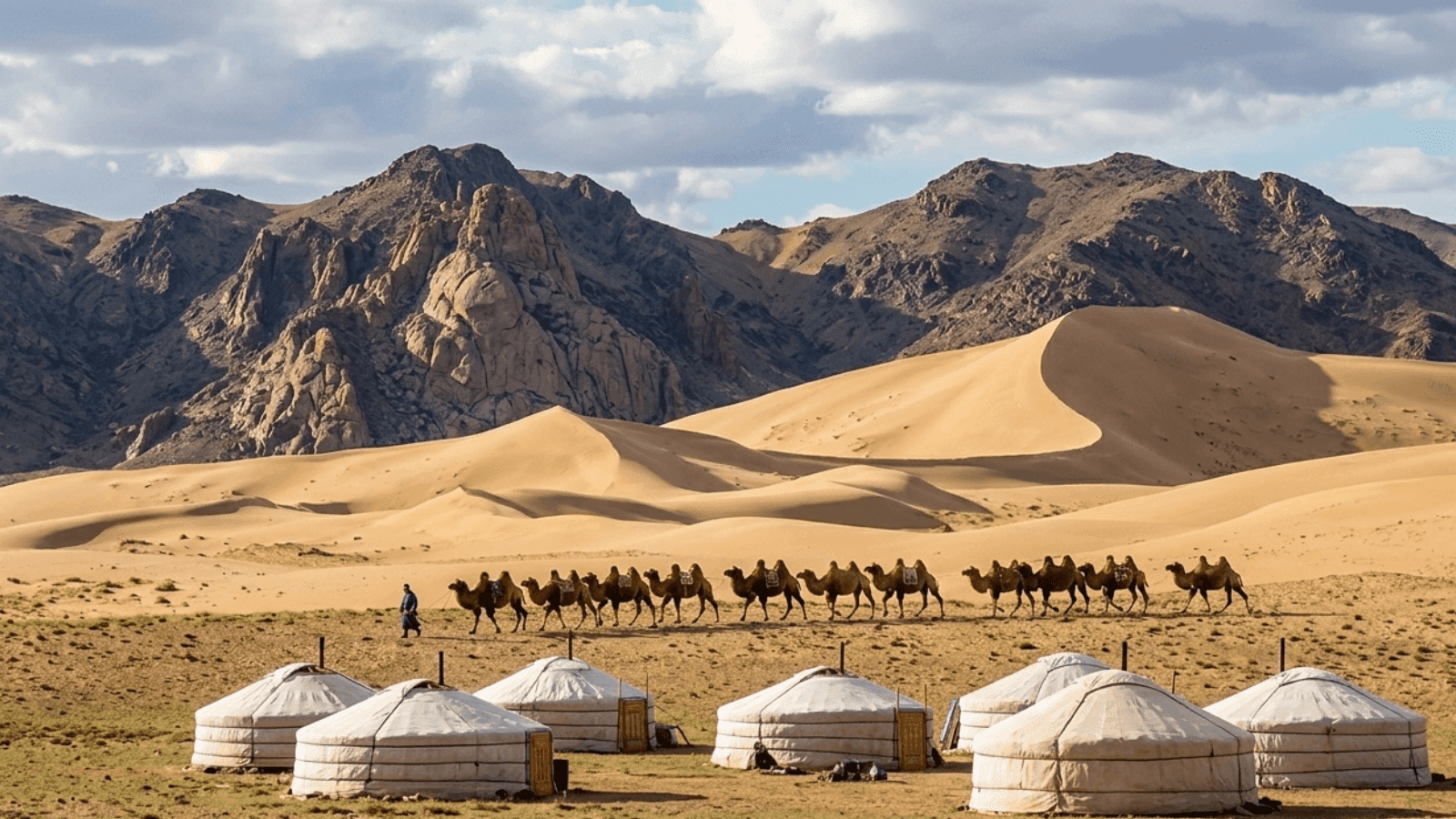
Your final day works best unplanned. Some travelers return to the dunes at dawn. Others ride Bactrian camels along the edge of the sand before heat builds.
Ger camps are scattered across open plains. These circular felt tents stay warm at night with central stoves and cool during the day due to thick insulation. Electricity often runs only a few hours in the evening.
You wake to the sound of wind brushing canvas. Breakfast might be bread, eggs, and salty milk tea served in a communal dining ger.
By the third day, the scale of the landscape starts to settle in. There are no fences, few signboards, and barely any network signal.
Ideal for Gobi First-Timers
- Families book ger camps that arrange camel rides and short dune visits
- Photographers plan around golden hour at Khongor Sand Dunes
- Hikers attempt early climbs up the tallest dune ridges
- Solo travelers often stay with local ger hosts and share khorkhog dinners
Packing Tips Handle -10C Night Drops
Nights can fall to -10°C outside peak summer. Layering works better than heavy single pieces. A thermal base, fleece mid layer, and windproof shell cover most conditions. Gloves and a beanie make a difference once the sun disappears.
Bring more water than you think you need. Dry air dehydrates quietly. Cash is essential. Card machines rarely function once you leave Dalanzadgad.
A power bank helps when camp electricity cuts early. Dust protection for cameras and phones matters more than you expect. Travel insurance that covers remote evacuation is sensible in a region where hospitals are hours away.
If the idea of camel tracks across giant dunes and quiet nights in a traditional ger sounds appealing, Neomaxer helps arrange unique stays close to the heart of Mongolia’s Gobi.









