
Goa Carnival Schedule: What Each Day Brings to the Streets
How the Goa Carnival Is Structured Each Year
The Goa Carnival runs for four days, traditionally leading up to Ash Wednesday, and each day follows a loose but time-tested rhythm. Mornings are calmer with local performances and preparations, while late afternoons and evenings belong to parades, street parties, and club-hosted dances.
The celebrations rotate across Panaji, Mapusa, Margao, and Vasco da Gama, which is why no single base lets you see everything without planning.
Day One: King Momo Takes Over
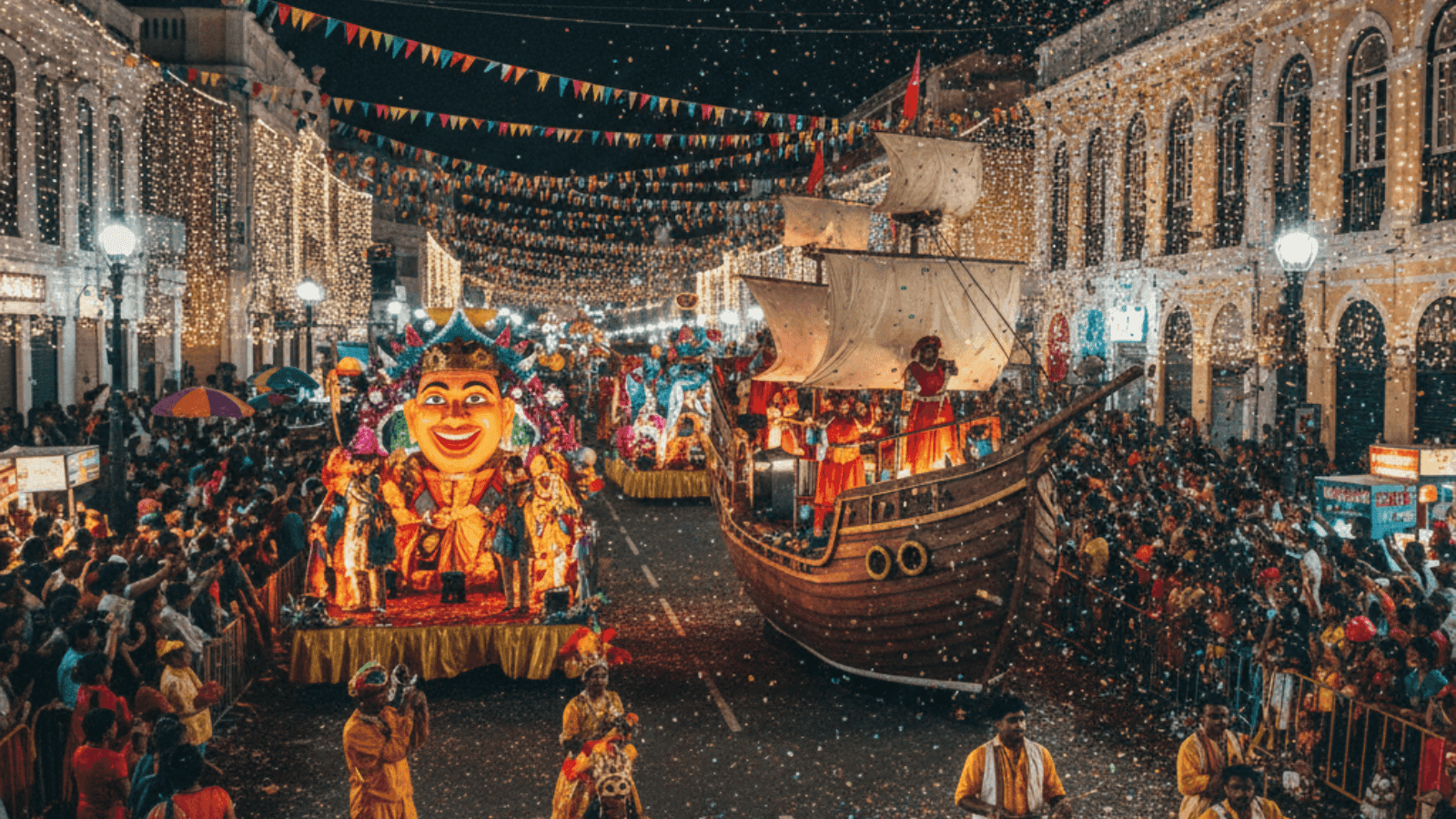
The opening day begins with the arrival of King Momo, the symbolic ruler of the carnival, who declares the start of festivities with the message to eat, drink, and make merry. Parades usually roll out in Panaji first, featuring elaborate floats, samba dancers, brass bands, and local troupes dressed in satirical costumes.
This day leans heavily ceremonial, with schools, cultural groups, and neighborhood associations taking part. Crowds gather early along main roads like Dayanand Bandodkar Marg, and traffic restrictions begin hours before the parade moves.
Day Two: The Biggest Street Parades
The second day is when the carnival feels loud, crowded, and fully unrestrained. Panaji often hosts the most elaborate procession on this day, with larger floats, amplified music, and extended routes. Mapusa and Margao usually follow with their own parades, offering a more local feel compared to the capital.
Vendors line the streets selling street snacks, beer, and carnival masks, and by evening the celebrations spill into nearby bars and clubs. This is the day when visitors feel the scale of the event most clearly.

Day Three: Local Color and Neighborhood Energy
By the third day, the carnival shifts slightly inward. Smaller towns and neighborhoods take center stage, with Vasco da Gama becoming a major hub for parades.
This day is known for playful mockery and political satire, with floats poking fun at current events and social habits. Locals participate in larger numbers, often walking alongside the parade rather than watching from barricades. The pace feels less formal and more participatory, especially in Vasco and interior areas.
Day Four: Red and Black Night
The final day is widely known as Red and Black Day, inspired by European masquerade traditions. While daytime parades still take place, the night belongs to themed parties across Panaji, Baga, and Calangute. Dress codes are taken seriously in clubs and heritage venues, and reservations are usually required.
This day feels less like a street festival and more like a citywide masquerade, with music styles shifting from brass bands to electronic and retro sets.
Top Locations and Parades to Watch
- Panaji for the grandest floats, widest routes, and official opening ceremonies
- Mapusa for a more compact parade that is easier to follow on foot
- Margao for community-led performances and cultural troupes
- Vasco da Gama for satire-heavy floats and a less tourist-dominated crowd
How to Reach Carnival Hubs Easily
Panaji is the most accessible hub, with frequent buses and taxis from North Goa beaches. Mapusa connects well by bus from Anjuna, Baga, and Calangute. Margao works best for those staying in South Goa, especially Colva and Benaulim. Vasco da Gama is closest to the airport and is easier to reach by local train or cab.
Road closures are common during parade hours, so arriving at least an hour early saves time and frustration.
Common Mistakes First-Time Visitors Make
- Trying to see multiple parades in different cities on the same day
- Arriving just before parade time and getting stuck outside barricades
- Underestimating heat and dehydration during long street events
- Skipping smaller-town parades that often feel more authentic
Practical Tips That Actually Help
- Carry cash for street food and local vendors
- Wear closed footwear if you plan to walk alongside parades
- Book taxis in advance for nights, especially on Red and Black Day
- Pick one main parade per day and explore nearby streets instead of chasing routes
What the Streets Feel Like Between Parades
Between scheduled events, the streets don’t go quiet. Bands rehearse in alleys, costumed groups pose for photos, and cafes stay open longer than usual. Locals sit on balconies watching the crowd flow past, and children follow drummers from one junction to another.
This in-between time is when the carnival feels least staged and most lived-in, especially in older neighborhoods near church squares and market roads.
If you want front-row access to Goa Carnival days without the chaos of last-minute stays, Neomaxer lines you up with handpicked homes close to the action.









