
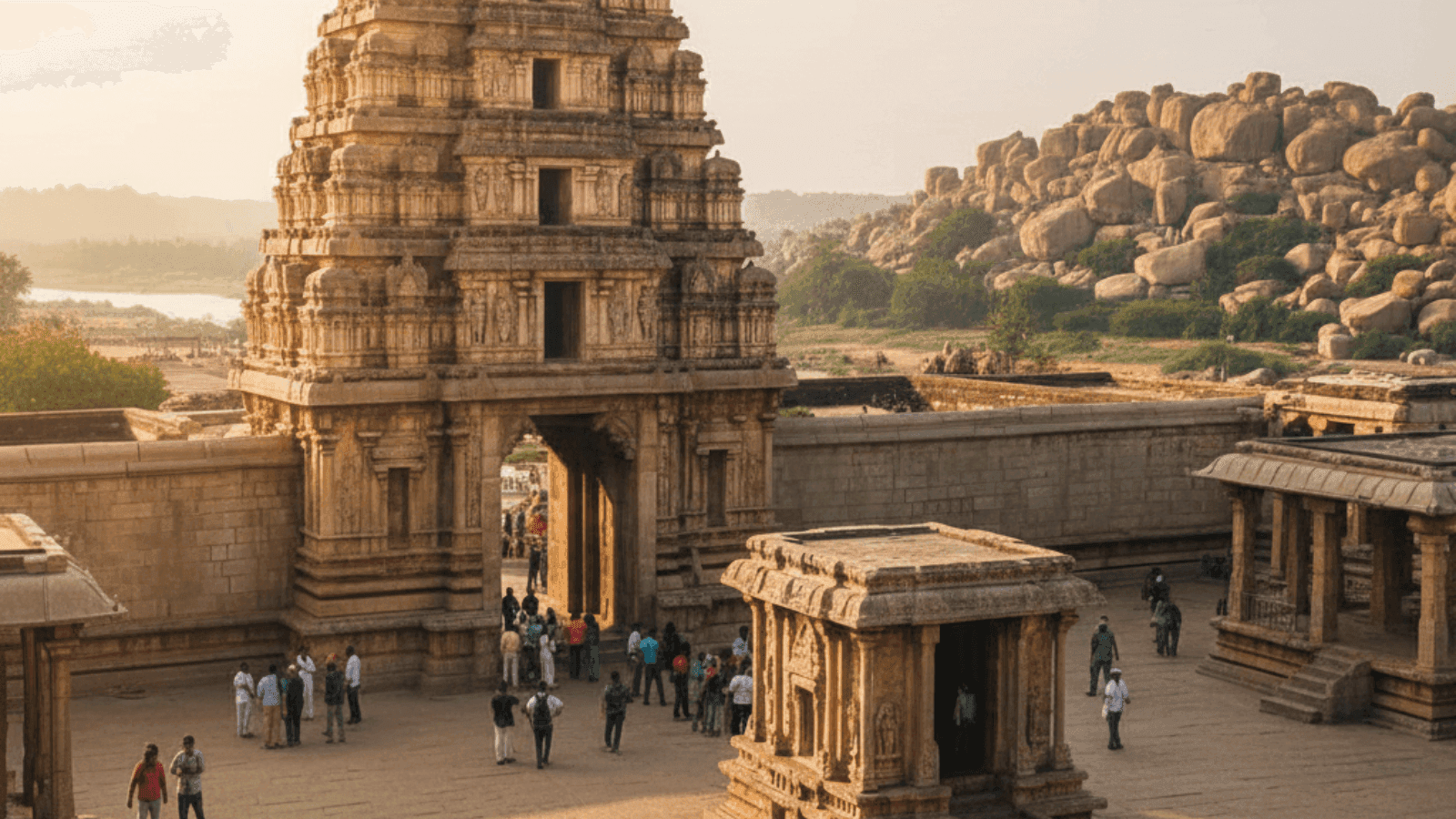
Moving Through Hampi When Digital Payments Don’t Work
Hampi teaches patience faster than any travel guide. One minute you’re staring at a 500-year-old temple, the next you’re counting crumpled notes beside a waiting auto. This is a place where movement runs on cash, conversation, and knowing how things actually work.
Phone Networks Drop Before Your Plans Do
Mobile data fades in and out across Hampi, especially once you cross the Tungabhadra or move away from the main bazaar stretch. Even when the signal bars look stable, UPI apps often stall mid-payment. Locals expect this. Travelers who rely entirely on QR codes usually learn the hard way, standing beside a parked auto with a frozen screen and an awkward smile.
ATMs Exist, Access Is the Problem
There are ATMs near Hampi Bazaar and in Hospet, but availability shifts daily. Machines run out of cash during weekends and festivals, and some stay offline for days. Hospet is the safer bet, yet it sits about 13 kilometers away. Anyone arriving without enough cash usually ends up planning a half-day trip just to withdraw money.
How Much Cash Actually Helps
₹2,000–₹3,000 per day covers autos, ferries, entry fees, meals, and rentals without stress. Smaller notes matter more than large ones. Drivers and boatmen rarely have change for ₹500 or ₹2,000 notes early in the day.
Autos Still Run on Conversation, Not Apps
Auto-rickshaws remain the most practical way to move between ruins scattered across Hampi. Routes are informal. Prices depend on distance, waiting time, and how many stops you add. Payment happens at the end, in cash, after a brief chat about where you are going and how long you plan to stay.
Typical Auto Costs
Short hops near the bazaar usually cost ₹100–₹150. Half-day sightseeing runs between ₹800 and ₹1,200. Full-day routes covering both sides of the river go higher. Digital payments are occasionally accepted near the bazaar, but drivers never depend on them.

Crossing the River Runs on Coins and Trust
The small ferries across the Tungabhadra operate all day and shut at sunset. Tickets are inexpensive and strictly cash-based. No printed slips, no scanners, just a count of passengers and boats moving back and forth in a steady rhythm.
Missing the last ferry means a long road detour or staying put for the night. Locals watch the river, not the clock.
Scooter Rentals Ask for Paper, Not Screens
Renting a scooter or bicycle gives the most freedom in Hampi’s wide landscape. Rental shops usually ask for cash, a license copy, and sometimes a passport or ID as deposit. Rates change with season, but payment terms do not.
What to Check Before Paying
Fuel level, brakes, and lights matter more than paperwork. Remote temple roads get dark quickly after sunset, and help takes time to arrive.
Guides Expect Settlement at Sunset
Licensed guides and local storytellers often spend an entire day walking or riding along with you. Fees are discussed upfront, but payment usually happens after the last stop. Cash avoids confusion. Network issues make transfers unreliable just when everyone is tired and ready to head back.
Temple Entry Fees Stay Old-School
Most temples are free, but camera fees and specific monuments still collect small charges in cash. Ticket counters rarely support cards. Coins and smaller notes move faster than standing in line while a payment app reloads.
Eating on the Road Needs Small Notes
Local eateries, tea stalls, and coconut vendors operate entirely on cash. Many places close between lunch and dinner, and when they reopen, change can be scarce. Paying exact amounts keeps the line moving and the mood friendly.
Evenings Change the Rules
After sunset, transport options thin out. Autos charge more, ferries stop, and rentals expect vehicles back. Cash becomes even more important because negotiations happen quickly and informally, without time for payment retries.
Locals Read Preparedness Instantly
Drivers, boatmen, and shopkeepers can tell who has cash ready. Transactions stay smooth, prices stay fair, and conversations stay relaxed. Fumbling with a dead phone usually leads to delays, rerouted plans, or waiting until someone else finishes withdrawing money.
Hampi moves at its own pace, shaped by stone, river, and daylight, not by network strength or battery percentage. If you want to experience Hampi without transport stress or last-minute scrambling, Neomaxer helps you stay close to what matters.









