
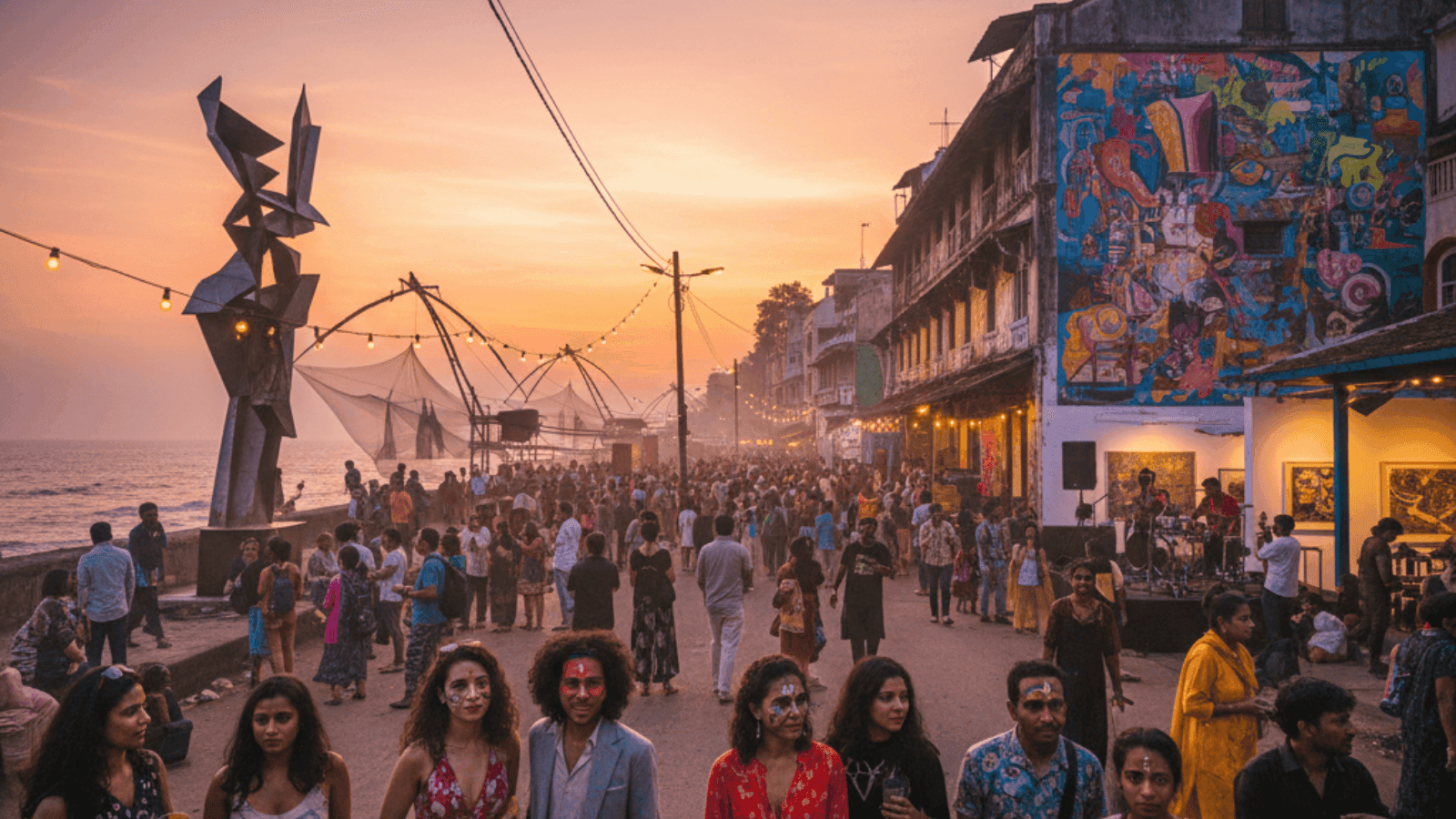
Fort Kochi Feels like a Cultural Travel Destination During the Kochi-Muziris Biennale Season
Fort Kochi Thrives in Biennale Season
The scale changes everything. What is usually a slow, sea-facing neighborhood becomes a global meeting point where artists, curators, students, and travelers move through the same narrow streets. Conversations spill from gallery halls into cafés, auto rides, and ferry queues across Kochi.
Organized by the Kochi Biennale Foundation, the event uses existing heritage structures instead of modern exhibition halls. That decision keeps the experience grounded in the character of Kerala. Art doesn’t sit apart from daily life here. It lives inside it.
Must-Visit Biennale Venues
- Aspinwall House remains the anchor. Its sea-facing courtyards and multi-level interiors host large-scale installations that use sound, light, and architecture together. Plan at least two hours here.
- Pepper House feels more intimate. Wooden floors, quiet reading rooms, and shaded courtyards give space to video works, photography, and smaller exhibitions.
- Cabral Yard often surprises visitors. Its rough industrial surfaces contrast sharply with contemporary art pieces placed inside, which makes every work feel more deliberate.
- Smaller pop-up venues appear unexpectedly. You may walk into an old residence or abandoned office and find one of the most memorable installations of your entire visit.

Top Experiences Beyond the Galleries
The streets themselves become part of the experience. Murals appear overnight. Independent performers set up in public squares. Film screenings and talks continue late into the evening.
Walk toward the Chinese fishing nets around sunset. You will see silhouettes of fishermen against the Arabian Sea while Biennale visitors pause nearby, cameras in hand. The mix of routine life and cultural activity defines the mood.
Ferries connecting Fort Kochi to Ernakulam fill with a mix of commuters and art visitors. The short ride gives you skyline views and a break from walking-heavy gallery routes.
Travel Tips for Biennale-Goers
- Start your day early. Major venues open by mid-morning, and the quiet hours before noon allow uninterrupted viewing.
- Wear comfortable footwear. You will walk several kilometers without realizing it.
- Carry water. Coastal humidity builds quickly, especially when moving between indoor and outdoor venues.
- Buy multi-day passes if available. The volume of work makes it difficult to absorb everything in one visit.
- Check daily schedules. Talks, performances, and film screenings often happen without heavy promotion.
Local food spots that pair perfectly with art walks
Kashi Art Cafe sits directly within the art circuit. Its open courtyard and rotating art displays keep the Biennale atmosphere alive even while you stop for breakfast or coffee.
Ginger House Restaurant offers waterfront seating near antique displays and sculpture pieces. It feels like an extension of the exhibition spaces rather than a separate dining stop.
Small local cafés serve fresh appam, fish curry, and banana fritters. Many visitors end up staying longer than planned, discussing installations they just experienced.
Best times to hit popular venues without crowds
Weekday mornings stay manageable. School groups and tour clusters usually arrive later in the day, especially after noon.
Late afternoons work well too. Some visitors leave early, and the changing natural light alters how certain installations feel. Outdoor works become especially striking as evening approaches. Avoid weekends if possible. Visitor numbers increase sharply, and narrow indoor spaces fill quickly.
Shopping and Souvenirs in the Mix
Jew Town and nearby streets offer handmade ceramics, textiles, prints, and small artworks created by local artists. Many shops collaborate directly with Biennale participants.
Bookstores stock exhibition catalogs, artist publications, and limited-edition prints. These often become the most meaningful souvenirs because they connect directly to what you saw.
Spice shops continue operating as they always have. The scent of cardamom and cloves remains constant, regardless of the art season.
Getting Around Fort Kochi Easily
Walking remains the best option. Distances between major venues are short, and unexpected installations appear along the way.
Auto rickshaws help cover longer stretches, especially during humid afternoons. Drivers are familiar with major Biennale locations and navigate narrow lanes easily.
Ferries provide fast connections across the harbor. Many visitors use them not just for transport but for the brief pause they offer between one cluster of exhibitions and the next.
Where to Stay Near the Action
Staying inside Fort Kochi makes a difference. Most venues sit within walking distance, and the real experience unfolds between locations rather than inside any single gallery.
Heritage homes converted into boutique stays are common here. Many retain original tile floors, wooden staircases, and open courtyards. You step out directly into streets lined with cafés, bookstores, and exhibition signs.
If Fort Kochi during the Biennale feels like somewhere you want to wake up and walk straight into, where you stay makes all the difference. Neomaxer helps you find thoughtfully located stays near the art, cafés, and coastal streets so your entire trip feels connected to the experience.









