
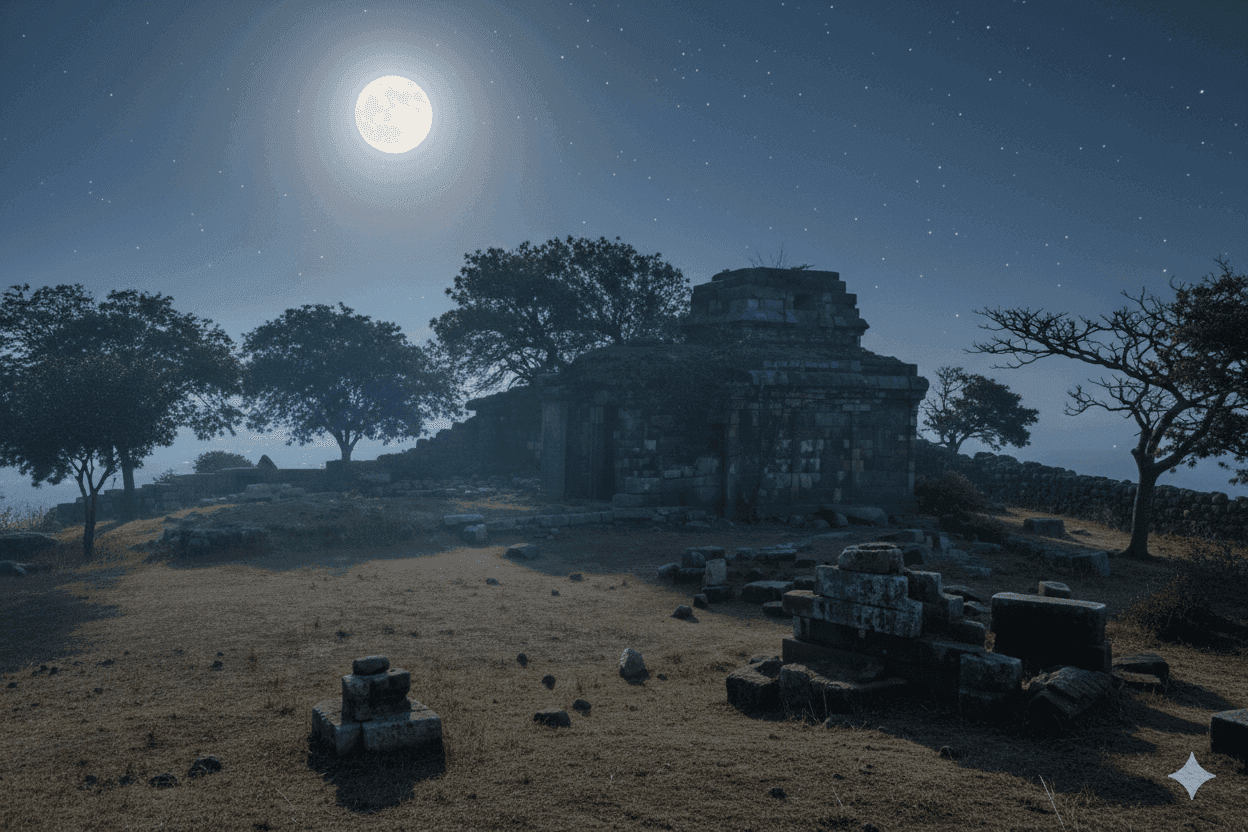
The Forest Temple in Kerala That Opens Just Once a Year
This temple does not care about weekends or travel plans. It waits for one full moon and then opens its doors inside the forest. People remember the day they reach it long after the road back fades.
Where the temple actually stands
Mangala Devi Temple sits inside the Periyar Tiger Reserve, on a forested hillock right along the Kerala–Tamil Nadu border. At 1,337 metres above sea level, the air thins slightly, the trees change character, and grasslands open up between dense forest patches.
This is not a temple you stumble upon. The last 12 kilometres are accessible only by jeep, moving slowly through protected terrain watched over by forest staff. The location explains everything that follows.
Why it stays closed most of the year
The temple remains shut for most of the calendar because it lies in an active wildlife corridor. Elephants, gaurs, Nilgiri tahrs, and predators move freely through this landscape, and human access is tightly controlled.
Opening the shrine daily would mean roads, lighting, security staff, and foot traffic that the reserve cannot absorb. Instead, the Forest Department allows entry only once a year, balancing faith with conservation.
The single day when gates open
Mangala Devi Temple opens during Chitra Pournami, the full moon day that falls in April or May. For that one day, devotees from both Kerala and Tamil Nadu are allowed to enter the reserve under strict supervision.
Rituals begin early and continue through the day, after which the forest slowly returns to silence. By nightfall, the gates close again, sometimes for another full year.
The goddess and the story she carries
The temple is dedicated to Goddess Mangala Devi, identified with Kannaki, the central figure of the Tamil epic Silapathikaram. Kannaki represents moral authority rather than divine warfare, a woman whose righteousness burns through injustice.
Legend places her journey through these forests after the destruction of Madurai, where her husband Kovalan was wrongfully executed. The forest setting gives that story weight, distance, and an unsettling calm.
A shrine shaped by old dynasties
There are no clear inscriptions dating the temple, but architectural elements point to Pandyan influence. Local belief credits Chera king Chenkuttuvan with its construction, and tradition holds that Sri Lankan king Gajabahu attended the consecration.
Granite blocks form the base, walls, and steps, hauled uphill through terrain that still feels inaccessible even today. The effort behind the construction is visible in every stone.
What remains inside the complex
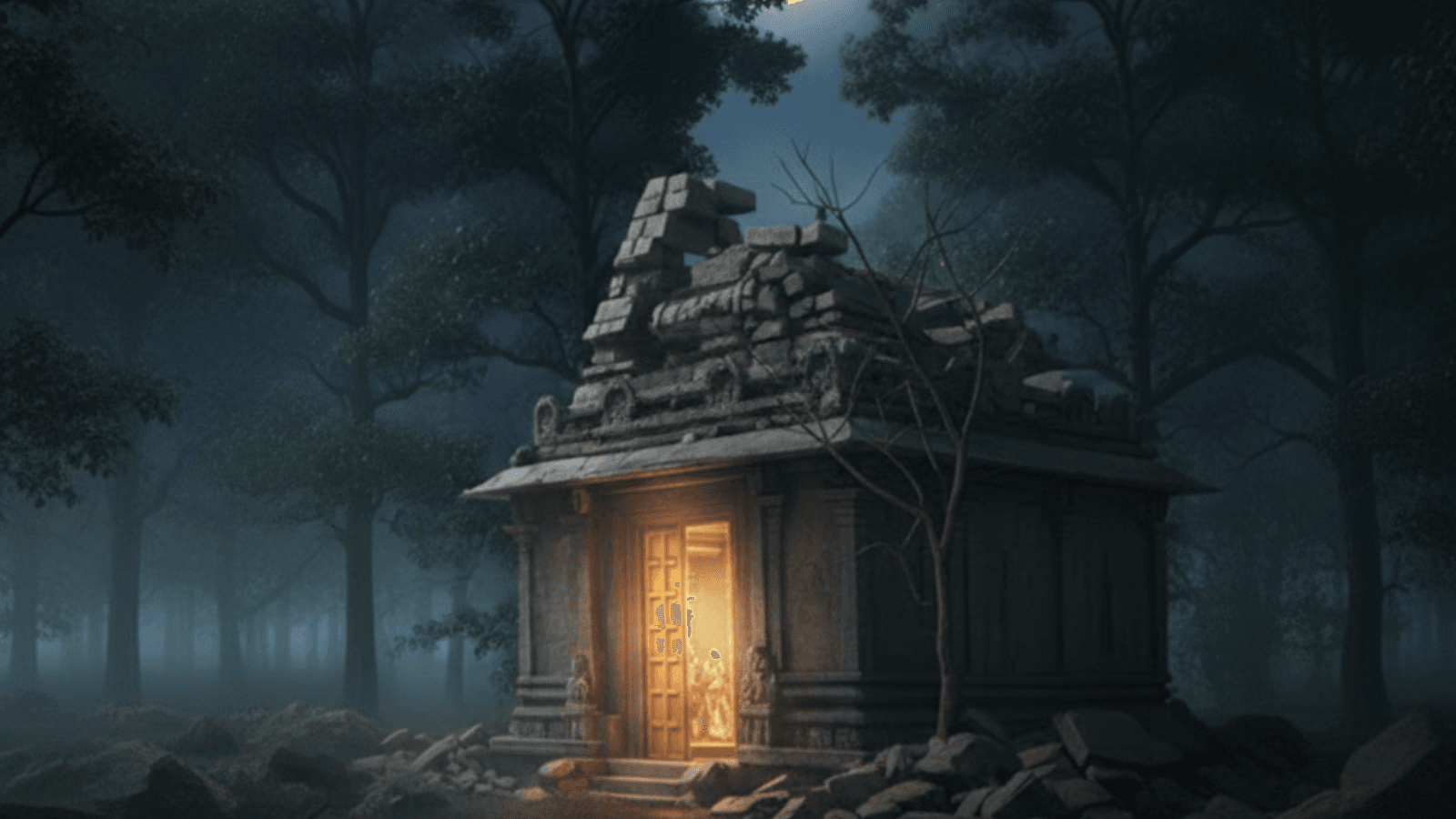
The temple complex consists of four stone structures, now partially in ruins. The first idol encountered is Karuppa Swamy, followed by shrines for Lord Shiva and Lord Ganapathy.
Sculptures still cling to the stone walls, weathered but legible. Boundary walls and staircases survive in fragments, hinting at a larger, more active past.
The idol that travels to the forest
Because the original sanctum is no longer structurally sound, the idol worshipped during Chitra Pournami is brought from Kambam in Tamil Nadu. It is crafted from panchaloha, an alloy of five metals traditionally used for sacred icons.
After the festival, the idol leaves with the priests, and the temple returns to stillness.
Myths beneath the stone floor
Local stories speak of an underground passage beneath the temple. Some claim it once led to Madurai, others say it connected directly to the Meenakshi Temple or a Pandyan palace. No excavation has confirmed this, but the persistence of the story reflects how deeply the temple is tied to larger southern legends.
What travellers see on the way up
The approach passes through high-altitude grasslands and forest corridors rich in endemic life. Nilgiri tahrs move across rocky slopes, orchids like Habenaria periyarensis bloom quietly, and bird calls replace road noise.
From the hilltop, views stretch across the Western Ghats into small Tamil Nadu villages scattered below, tiny against a sea of green.
Permissions and restrictions you must know
Entry requires prior permission from the Wildlife Warden at Thekkady. Access is regulated, numbers are capped, and private vehicles are restricted.
Photography, littering, and straying from marked paths are closely monitored, and instructions from forest officials are not negotiable.
The festival rituals observed
On Chitra Pournami, priests from both Kerala and Tamil Nadu conduct the poojas together. The goddess is adorned with flowers and silk, and rituals continue through daylight hours. Women devotees bring thali necklaces and glass bangles for blessing. Pongala, a sweet rice dish, is cooked and offered on-site as part of the observance.
How administration manages the crowd
Festival preparations are coordinated jointly by officials from Idukki district in Kerala and Theni district in Tamil Nadu. Forest officers remain involved throughout, managing vehicle movement and crowd flow. The goal is to allow worship without altering the rhythm of the forest.
What stays after everyone leaves
By evening, the jeeps descend, the last chants fade, and the forest closes in around the granite walls. Paths disappear back into grass and undergrowth. Wildlife resumes movement through the same space where prayers stood hours earlier. If places that stay untouched and quietly powerful speak to you, Neomaxer helps you stay close without disturbing their rhythm.









