
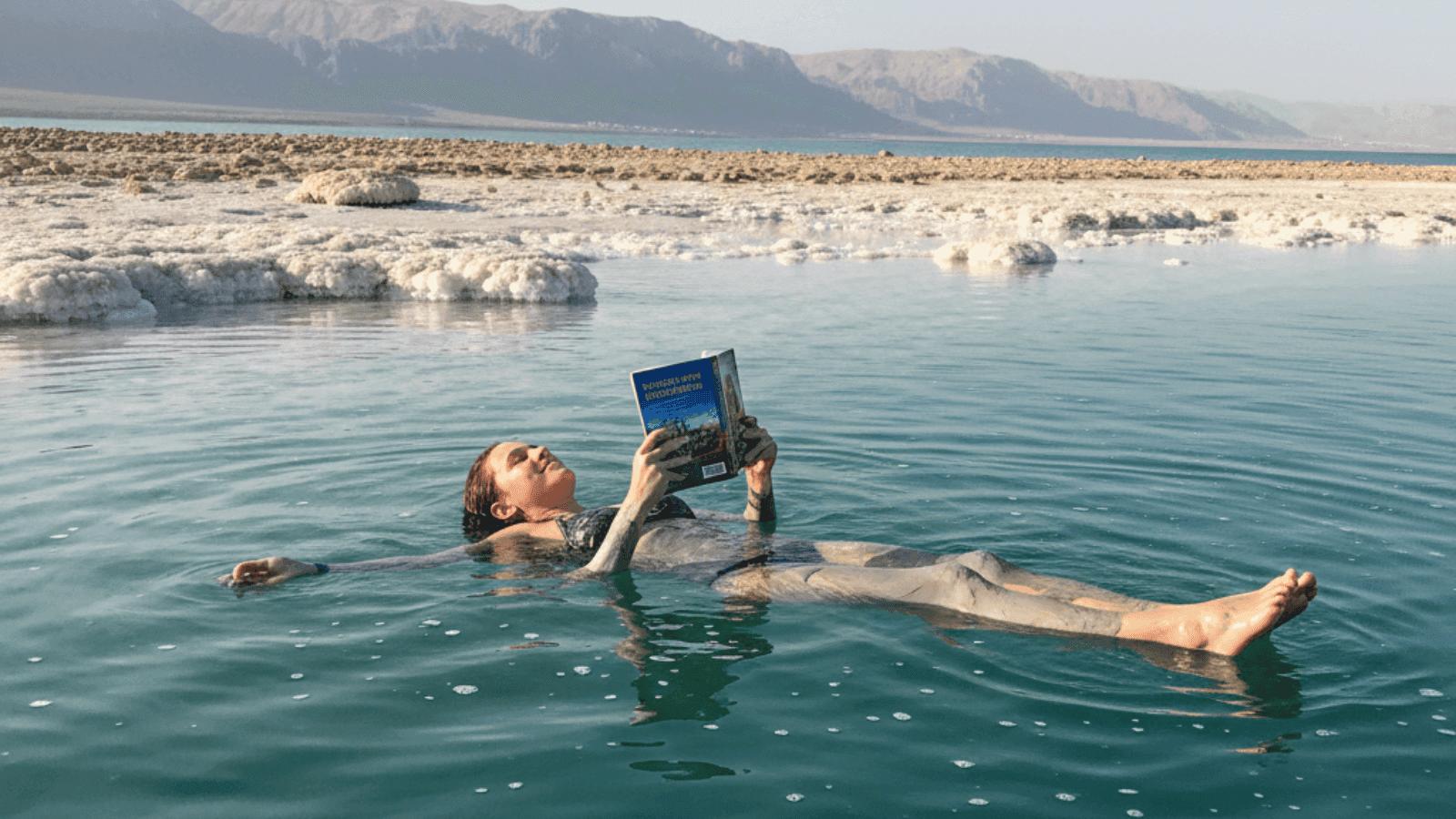
Floating in the Dead Sea: A Travel Experience Like No Other
Your body forgets gravity the moment you lean back. No strokes, no balance tricks, just water doing all the work while you float like a postcard moment come alive. It is one of those rare travel experiences where effort disappears and curiosity takes over.
Why the Dead Sea Lets You Float Without Effort
The Dead Sea sits at more than 430 meters below sea level, the lowest exposed point on Earth. What makes it feel unreal is not the altitude but the salt concentration, which is over eight times higher than most oceans. This density changes how the body behaves in water. Instead of sinking or treading, you are lifted instantly, legs, torso, shoulders, all supported at once.
People often lose balance the first time because the body floats too well. Standing upright feels awkward, while lying back feels effortless. This is why lifeguards ask visitors not to try swimming strokes. Floating is the default state here, not a skill.
What It Feels Like the First Time You Enter
The sensation is closer to being held than floating. As soon as you lean back, the water locks you in place, buoyant and still. There is no need to move your arms or legs, and doing so can actually feel counterproductive.
Any small cuts or scratches will sting on contact due to the salt. The feeling fades quickly, but it surprises most first time visitors. The water itself feels slightly oily because of the mineral content, which adds to the unfamiliar texture against the skin.

Health and Wellness Benefits
The Dead Sea has been used for therapeutic bathing for centuries. The minerals include magnesium, calcium, potassium, and bromide, each playing a role in skin and muscle health. Travelers with psoriasis, eczema, or dry skin often notice visible improvement after a few days of short, regular floats.
Muscle tension reduces quickly because the body is fully supported, similar to deep water therapy. Many visitors report better sleep on the same night. The air is rich in oxygen due to the low elevation, which makes breathing feel easier, especially for people coming from polluted cities.
Best Time of Year to Visit for Comfort
- October to April is the most comfortable period to visit the Dead Sea. Daytime temperatures range from pleasant to warm, making floating sessions enjoyable without heat exhaustion.
- Winter months still allow floating, though the water can feel cool at first.
- May to September brings extreme heat, often crossing 40 degrees Celsius.
- Floating is still possible early in the morning, but prolonged exposure can be uncomfortable and dehydrating. Sun protection becomes non negotiable during these months.
How to Reach the Dead Sea From Major Cities
From Amman, the Dead Sea is about an hour’s drive via the Dead Sea Highway. Taxis and private transfers are the most convenient options, especially for travelers carrying beach gear. Public buses exist but are infrequent and require careful planning.
If entering from Israel, access points near Ein Bokek are well developed, with public beaches, showers, and facilities. Border crossings between Israel and Jordan are commonly used by international travelers, but visa requirements should be checked in advance.
Public Beaches vs Resort Access
Public beaches offer basic access to the water and mineral mud, often at a low or no entry fee. Facilities are minimal but functional. These spots are popular with local visitors and budget travelers.
Resort beaches provide loungers, shaded areas, freshwater showers, and controlled entry points. Many resorts limit floating sessions to short intervals to prevent dehydration. For first timers, resort access can feel safer and more comfortable, especially under strong sun.
Tips Before You Float
Avoid shaving or waxing at least 24 hours before entering the water. The salt will find even the smallest irritation. Remove all jewelry, as the minerals can damage metals permanently. Do not splash or let water reach your eyes. Rinse immediately with freshwater if it happens. Keep floating sessions short, usually 10 to 15 minutes, and drink water before and after. Always float on your back, knees slightly bent, and let the water do the work.
What to Expect Around the Shoreline
The shoreline changes constantly because the water level drops every year. Sinkholes have formed in some areas, making certain stretches unsafe. Stick to designated beaches and follow local guidance.
Salt crystals form naturally along the edges, creating sharp textures underfoot. Water shoes help avoid cuts. The surrounding landscape is stark, quiet, and dramatic, with desert hills meeting still water, especially striking during early morning hours.
If floating in the Dead Sea is on your travel list, where you stay matters just as much as the experience itself. Neomaxer curates handpicked stays close to iconic destinations, making moments like this feel easy, comfortable, and well planned.









