
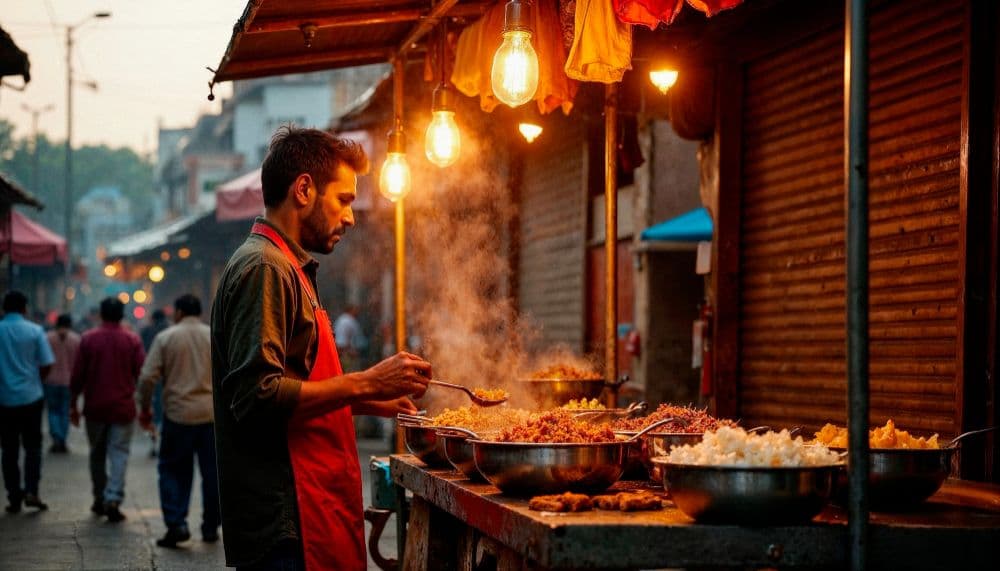
Varanasi hits you first with sound, then with smell, then with the feeling that every lane hides a story. Food here is not just something people eat, it is something they guard, debate, and swear by like old secrets. One wrong turn leads to oily disappointment, another leads to the softest kachori you will ever taste. Locals do not point you to restaurants, they point you to people, because in Varanasi trust is an ingredient.
Reading the lanes before reading the menu
The vendors are already busy before the sun's even up – by the time tourists roll out of bed, the best part's over. You can tell a spot's good when locals in office clothes grab breakfast without worrying about being late. Huge pans sizzle with fresh jalebis, and you know they're ready when the bubbling noise changes. Ask anyone what makes Varanasi special, and they won't just name one thing. They'll rattle off a dozen foods instantly, then start debating which one's actually the best.
Walk toward the Chowk and the smells thicken. Spices, smoke, ghee, incense, all layered like memories. People here judge food by routine. If a vendor stays in the same spot year after year, locals trust him. If his pot empties before noon, visitors should too. That is the unwritten rule of Varanasi tourism.
The art of avoiding the wrong plate
Not all famous spots are good spots. Some survive only on reputation. The trick is to watch the crowd instead of the signboard. Families with school bags, old men reading newspapers, sari clad women buying just enough for one meal. They will not waste time on anything mediocre.
Kachori sabzi is the morning ritual. You can hear the crunch even before you see the counter. The spice hits differently here. Not overwhelming, but certain. Tamatar chaat comes next, and it is nothing like chaat from any other city. Hot, tangy, mashed right on the pan until the air itself smells red. When people ask which state Varanasi is in, they mean it jokingly, because the city feels like its own universe.
Sweets that define patience
Lassi shops stay crowded all day. Thick, slow poured, topped with malai that almost refuses to sink. Tourists take photos, locals take refills. Then there is rabri, dense like winter evenings, sold from big metal trays. If you see a vendor who stirs without looking up, it means he has been doing it long enough to trust the consistency by sound.
When you look at the best time to visit Varanasi, most guides say winter. They are partly right. Winter sharpens the flavors. Milk tastes richer, spices hit cleaner, and the fog around the ghats makes hot food feel like comfort wrapped in smoke.

The hidden kitchens of the ghats
Near the ghats, kitchens run on rhythm. Dough rolled, fried, stacked, sold. Tourists eat with urgency. Locals eat with memory. Langar style counters appear during festivals, feeding anyone who walks by. Some places are known for purity, some for quantity, some for stubborn traditions. You cannot rush these lanes. They decide when you get fed.
Evening brings its own map of snacks. Thandai with saffron, malai toast on tiny coal stoves, banarasi paan sealed with silver leaf. Walking through these lanes after aarti feels like stepping into a kitchen lit by flames and faith.
Following people, not trends
The safest strategy is simple. Follow the regulars. They know which milk to avoid on humid days and which jalebi shops fry in clean ghee. They know which thandai sellers grind bhang only during festivals and which ones mix it all year. They know where the water is trusted and where you should stick to packaged bottles.
Food in Varanasi is half instinct and half observation. Every corner smells different depending on the hour. Every vendor carries decades of reputation. And every bite feels like part of a city that does not try to impress you, only to feed you right. When you finally end up with the meals that make you stop walking for a moment, choosing the right stay becomes part of the experience too, and Neomaxer lets you settle into Varanasi with comfort so you can focus on the lanes, the stories, and the food instead of the chaos around you.









