
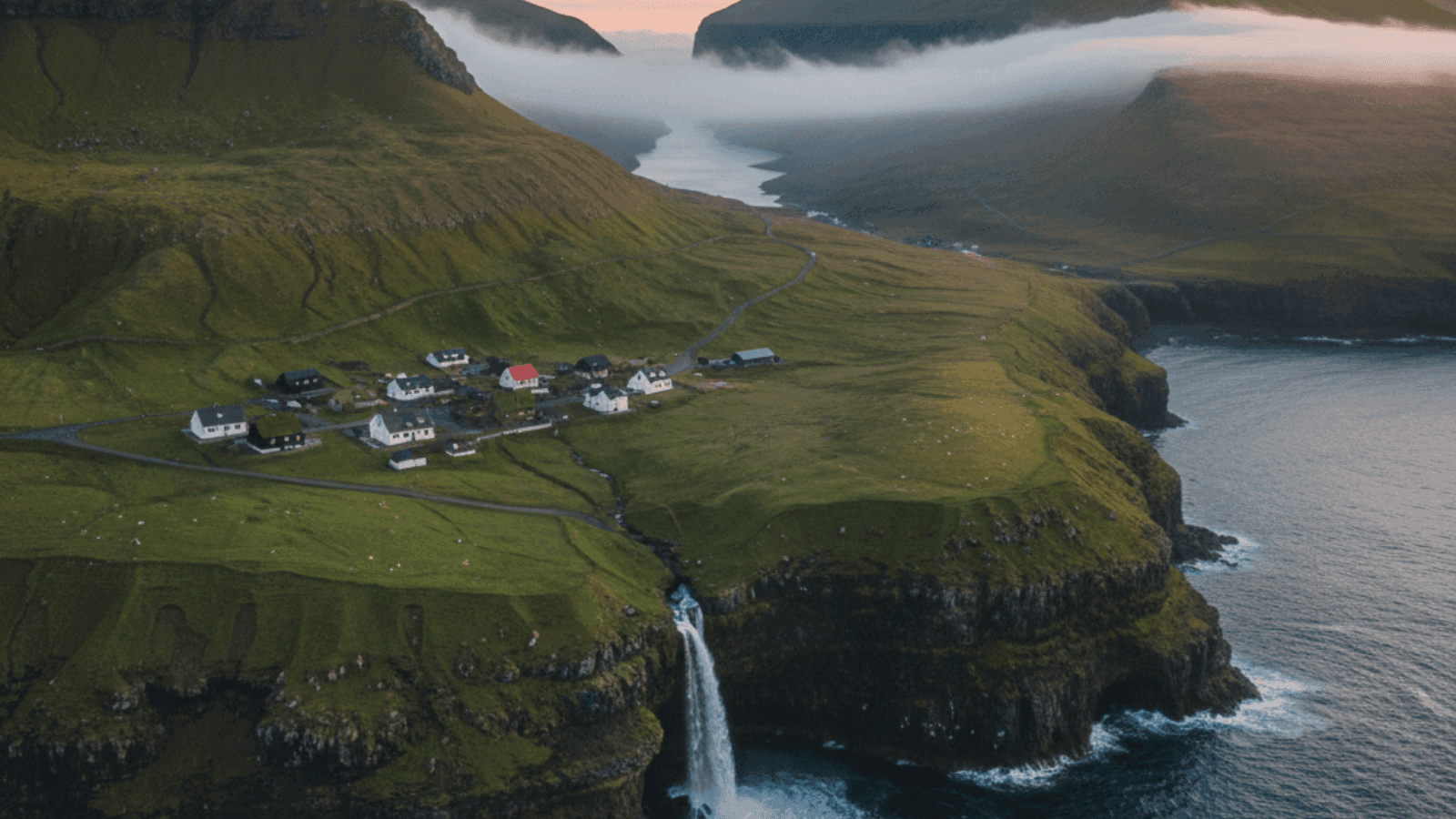
Faroe Islands Waterfalls Falling Into Atlantic Ocean View
The Faroe Islands treat waterfalls like everyday neighbors. In Gásadalur, one of them walks past the last house and steps straight into the Atlantic. It happens so casually, you almost expect the ocean to greet it by name.
Mulafossur Falls Direct Into Ocean
Mulafossur drops straight off a cliff behind the village of Gásadalur. The water falls clean into the Atlantic without touching rock shelves below. On windy days, the falling stream bends sideways before reaching the sea.
The viewing path begins inside the village and takes less than five minutes to reach. Sheep graze freely nearby, often standing closer to the cliff edge than visitors.
Torsá Waterfall Hike from Gasadalur
The trail to Torsá begins near the same village but quickly leaves behind paved paths. The ground turns soft and uneven. The ocean stays visible the entire time.
Torsá appears suddenly along the coastal stretch. It falls from a narrow stream over a dark cliff directly into open water. Few people continue far enough to see it.
The hike itself feels exposed, with no trees or barriers for cover. Wind gusts can arrive without warning, pushing hard from the ocean side. Waterproof boots help maintain balance on wet grass.
How to Reach Faroe Islands from Billund
Atlantic Airways operates direct flights from Billund to Vágar Airport. The flight takes about 50 minutes and often flies low over open ocean. Return fares can be around DKK 800 when booked early.
From Vágar Airport, buses connect to Tórshavn in about 40 minutes. The ride passes through underwater tunnels and steep coastal roads. Tickets usually cost around DKK 80.
Rental vehicles provide access to smaller villages and northern roads. Routes toward Eiði and remote coastal areas can be narrow and exposed. Weather conditions may require careful driving.

Waterfalls Exist Everywhere Across the Islands
Streams form naturally along the steep slopes after rainfall. Many of them flow only a short distance before reaching cliff edges. The islands contain hundreds of unnamed waterfalls.
Driving between villages reveals waterfalls beside roads and behind houses. Some appear only after heavy rain and disappear within days. Others remain constant throughout the year.
The lack of trees keeps the landscape open and visible. Nothing blocks the view between mountain and ocean. Water always finds the fastest way down.
Best Months for Waterfall Views Minus Fog
May through August provides longer daylight and clearer visibility. Waterfalls remain strong due to consistent rainfall from previous months. Trails also become easier to walk.
Fog appears frequently in colder seasons. It can hide entire cliffs and waterfalls from view. Clear mornings often provide the best visibility.
Weather changes quickly throughout the day. A clear sky can turn into heavy mist within minutes. Visitors often wait for clouds to shift.
Packing for Slippery Coastal Trails
- Waterproof boots provide grip on wet grass and rock
- Trekking poles help maintain balance in strong wind
- Layered thermals protect against sudden temperature drops
- Avoid cotton because it stays wet and cold
- Rain jackets with sealed seams perform better
Local Travel and Movement Between Islands
- Vágar airport bus reaches Tórshavn in about 40 minutes
- Ferries connect islands like Vágar and Streymoy daily
- Rental vehicles allow access to remote waterfall locations
- Road tunnels make travel faster between regions
- Coastal roads remain open but require careful driving
Villages remain small, with houses built low against wind exposure. Waterfalls often appear directly behind these settlements. They feel like part of everyday life here.
Dried fish is commonly eaten after long walks along coastal cliffs. It provides energy and stores easily in cold air. Locals have relied on it for generations.
If standing beside oceanbound waterfalls sounds like your kind of journey, where you stay makes it even more meaningful. Neomaxer connects you with beautiful stays near these coastal villages.









