
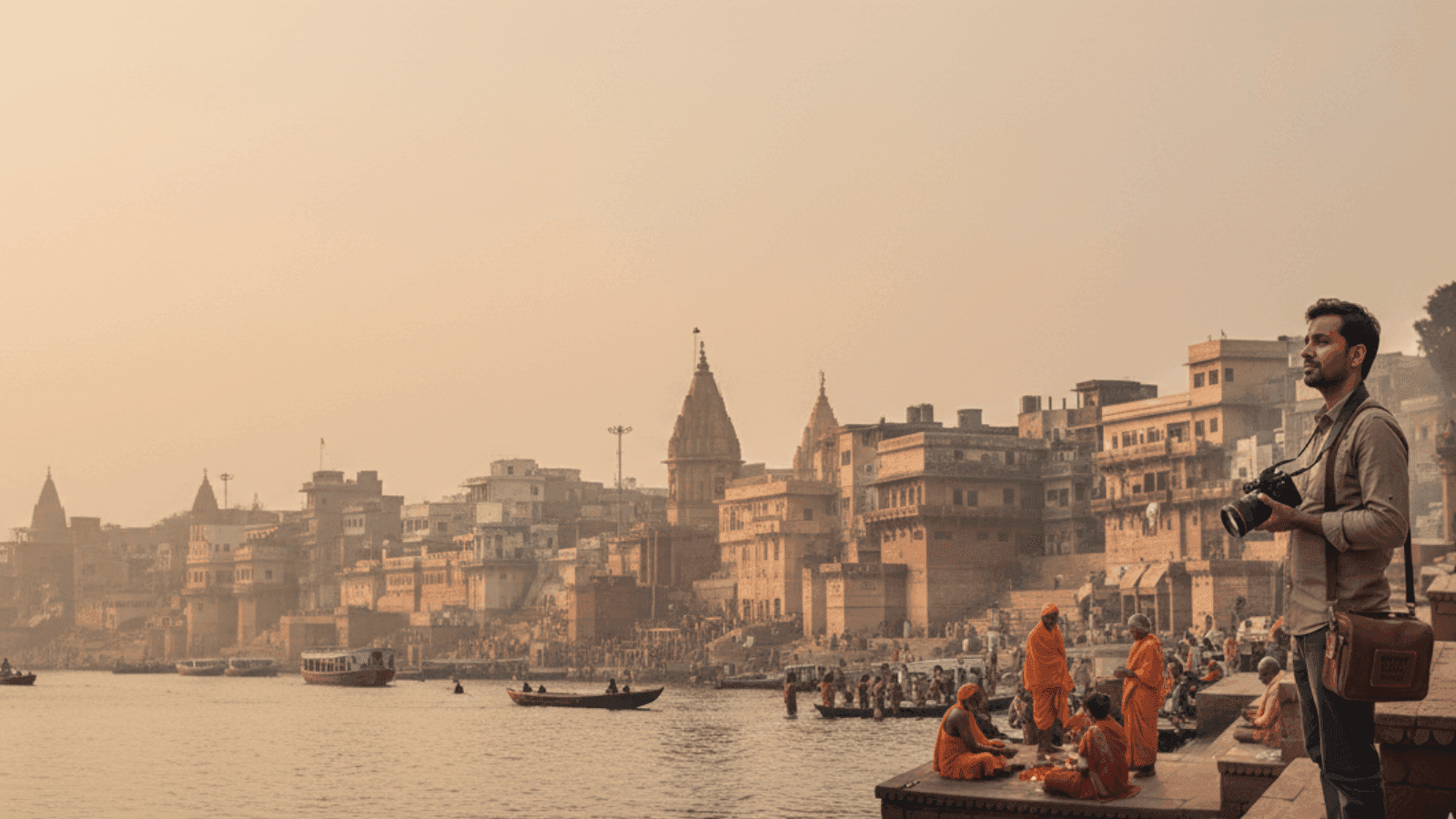
Exploring Varanasi with a Camera and Local Sensitivity
A camera feels lighter in Varanasi until you raise it. One step closer can turn a quiet moment into a crowded one. Knowing when to shoot and when to pause matters more here than getting the perfect frame.
Where photography is welcome and where it isn’t
Varanasi is not a backdrop that switches off between shots. Many parts of the city function as working religious spaces, not visual attractions. Ghats like Dashashwamedh are active from before sunrise until late night with rituals, baths, and offerings happening in overlapping layers.
Photography on public ghats is generally accepted, but proximity matters more than permission. Standing a few steps back often makes the difference between blending in and interrupting. Early mornings are calmer, with locals accustomed to photographers who keep their distance and move slowly.
Temples and inner courtyards
Most temples restrict photography inside, even if phones appear to be in use. This doesn’t make it acceptable. The rule is simple: if you see signs asking you not to shoot, follow them even when others don’t. At places like Kashi Vishwanath Temple, phones are usually not allowed beyond security checkpoints.

Photographing people without turning them into subjects
Varanasi attracts photographers because of its people, not despite them. Sadhus, priests, flower sellers, boatmen, washerfolk, and pilgrims are not performing roles for a lens. The safest approach is direct acknowledgment. Eye contact before raising the camera signals intent. A slight gesture with the camera often gets a response, positive or negative. Both should be respected equally.
Portraits versus scenes
Candid street photography works better when faces are not isolated. Wide frames that include surroundings feel less intrusive and often tell better stories. Close-up portraits should be intentional and consensual.
Cremation ghats require restraint, not bravery
Manikarnika and Harishchandra Ghats are not neutral photography zones. They are spaces of mourning, ritual, and finality.
Photography here is deeply sensitive. Long lenses used from boats are common, but that does not make the practice universally acceptable. Close-range photography of funeral rites is widely considered disrespectful, especially without permission.
Some photographers choose to put the camera away entirely at cremation ghats. Others limit themselves to wider environmental frames that avoid faces and moments of grief. Both choices are valid. What isn’t is arguing that documentation overrides dignity.
Light, timing, and patience over speed
Varanasi rewards those who wait. The best light appears during the early morning boat rides between Assi and Dashashwamedh Ghats, when mist, lamps, and river movement create natural layers.
Afternoons are harsh and busy. Evenings bring dramatic light during Ganga Aarti, but the crowd density makes respectful photography harder. Elevated positions help avoid blocking views and reduce physical intrusion.
Moving with the flow
Walking against foot traffic with a camera invites friction. Move in the same direction as locals. Stop only where others naturally pause. This rhythm keeps interactions smooth and attention minimal. Small lanes near Bengali Tola and Madanpura open into domestic life. Laundry lines, kitchens, and children at play are not public exhibits. A camera here should stay low or stay off.
Gear choices that reduce attention
Large telephoto lenses attract attention in tight spaces. Compact mirrorless cameras or even fixed-lens setups feel less imposing and are easier to carry through crowded alleys.
Tripods are impractical and often disruptive on ghats and streets. Handheld shooting encourages flexibility and reduces obstruction.
Silent shutter modes are useful during prayers, chants, and early morning rituals. The click of a shutter carries far in quiet moments.
Interactions after the photograph
Showing the image after taking it builds trust. Many locals are curious to see how they appear and appreciate the gesture. Some may ask for a copy, especially boatmen and vendors. Carry small change if you plan to photograph people regularly. Not as a bribe, but as acknowledgment when someone gives you time or space.
Cultural awareness matters more than technical skill
- White clothing, shaved heads after rituals, and specific forehead markings often signal mourning or recent rites.
- These are moments of personal significance, not visual elements to frame.
- Festivals like Dev Deepawali and Kartik Purnima bring heightened emotion, dense crowds, and fast-moving rituals.
- Knowing the sequence helps you anticipate moments without pushing into them or interrupting flow.
Ethical storytelling beyond social media
Images from Varanasi travel far and shape how the city is perceived. Sensational shots of pyres or distressed faces may gain attention but often strip context.
Photographs that show routine, repetition, and coexistence reflect the city more honestly. A boatman waiting, a priest adjusting lamps, a family sharing tea on the steps.
Varanasi does not need to be captured urgently. It allows itself to be noticed slowly, especially by those who understand when to lift the camera and when to let it hang by the strap.
If you want to stay close to the ghats, morning rituals, and quiet lanes without worrying about comfort or location, Neomaxer helps you find stays that fit the rhythm of Varanasi.









