
A European Lake That Appears and Disappears With Rain
Some lakes sit quietly and behave themselves. Lake Cerknica prefers to keep people guessing, showing up as a wide lake one month and turning into a walkable meadow the next. Timing your visit here feels like arriving just in time for a performance that nature runs on its own schedule.
Lake Cerknica Fills After Heavy Rains
Rainfall controls everything here. When storms move across the region, water drains from surrounding hills into underground limestone channels. These hidden passages eventually fill, forcing water back to the surface through natural springs scattered across the valley floor.
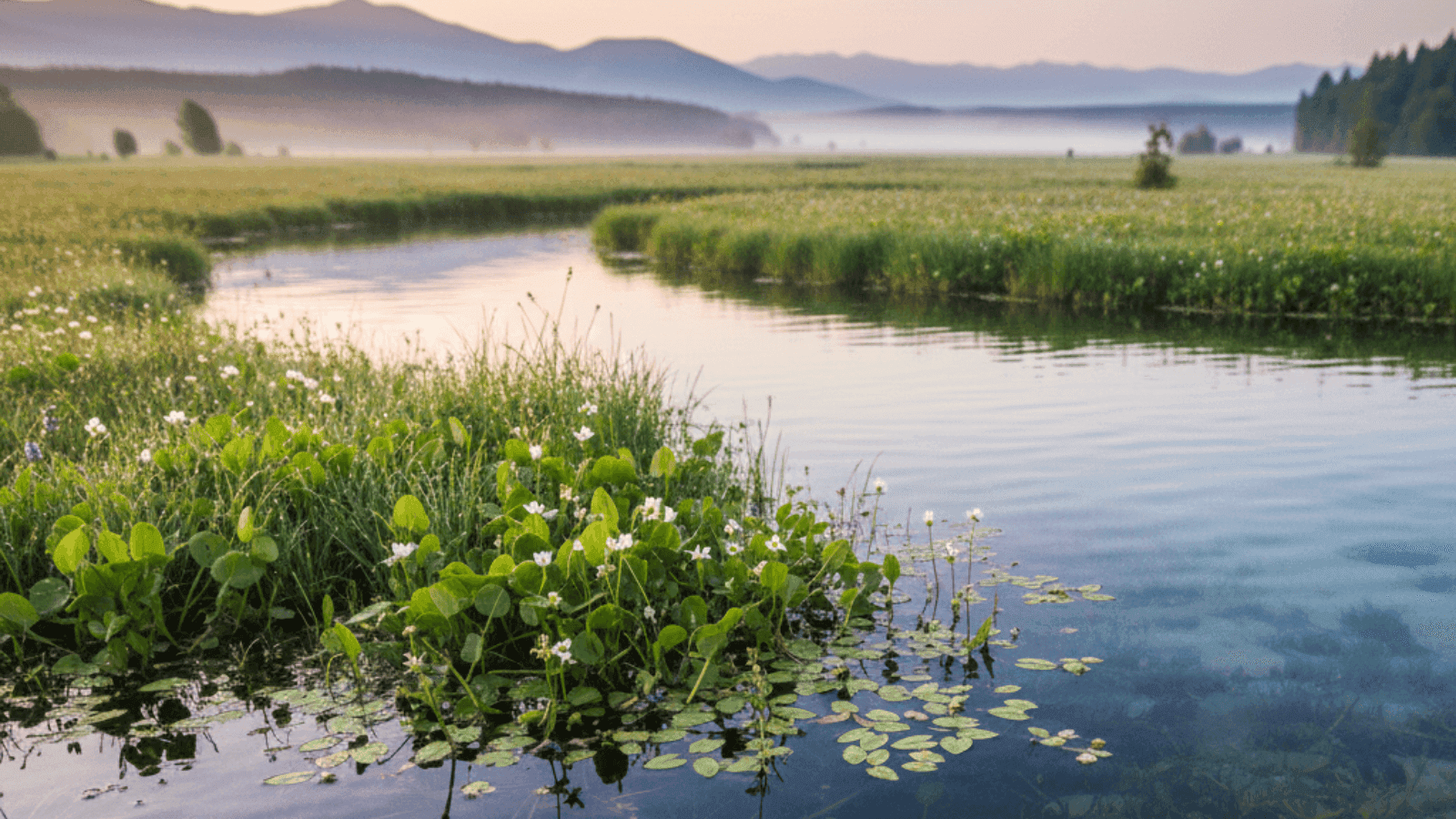
The flooding happens gradually at first. Shallow pools form in low spots, then widen and merge until the entire basin becomes a continuous lake. At its fullest, Lake Cerknica can cover nearly 38 square kilometers, making it the largest intermittent lake in Europe.
From nearby hills, the transformation looks unreal. Trees appear rooted in water, and old farm fences disappear beneath the surface. Fishermen launch small boats into areas where livestock grazed only weeks earlier.
Dry Bed Walks vs Full Lake Kayaks
When the lake is full, kayaking becomes the best way to experience its scale. The water stays calm because the basin is shallow, and there is little boat traffic. Paddling across the surface feels quiet and slow, with birds flying low and fish visible beneath the water in clear sections.
When the lake drains, the experience changes completely. Trails appear across the exposed lakebed, allowing visitors to walk through open meadow dotted with wildflowers and reeds. Locals bike across routes that were underwater not long ago, and the vast flatness makes the surrounding hills feel even larger.

How to Reach Notranjska from Ljubljana
- From Ljubljana airport, GoOpti shuttle services run directly to Postojna in about 1 hour, costing around €25
- Trains connect Ljubljana to Cerknica via Borovnica, with a journey time of about 1.5 hours through forested countryside
- Driving offers the most flexibility, with the A1 highway leading south and exits toward Cerknica taking roughly 45 minutes
- Local buses operate from Postojna, including routes that stop near the lake’s edge and nearby villages
Best Months for Lake vs Meadow Views
Late autumn and early spring are the most reliable times to see the lake filled. Rainfall is heavier during these months, and underground drainage systems cannot empty fast enough. The lake expands, and the valley becomes a reflective surface stretching between forested slopes.
Summer often brings the opposite scene. With less rainfall, water drains away, revealing grassland and walking trails. This period is ideal for hiking and photography, especially in early morning light when mist hangs low over the exposed basin.
Winter varies depending on snowfall and temperature. Some years bring shallow frozen sections, while others resemble late autumn with partial flooding.
Packing for Wet Trails and Bird Hides
- Waterproof hiking shoes are essential because ground conditions can change quickly and become muddy even when the lake appears dry
- A lightweight rain jacket helps with sudden weather shifts common in karst regions
- Binoculars are useful for spotting water birds, especially during flooded months
- Insect repellent becomes important in warmer months when the lakebed turns into meadow
- A small backpack with water and snacks is helpful since facilities near the lake are limited
Local Trout Taverns Post-Hike
Villages around Cerknica and nearby Postojna serve simple, traditional meals shaped by the region’s freshwater ecosystem. Trout is the most common specialty, usually grilled and served with potatoes or seasonal vegetables. Many of these taverns source fish from nearby rivers and streams connected to the same karst system that feeds the lake.
If watching a lake appear where grass stood weeks earlier sounds like your kind of trip, staying close to it makes all the difference. Neomaxer helps you find thoughtfully located stays









