
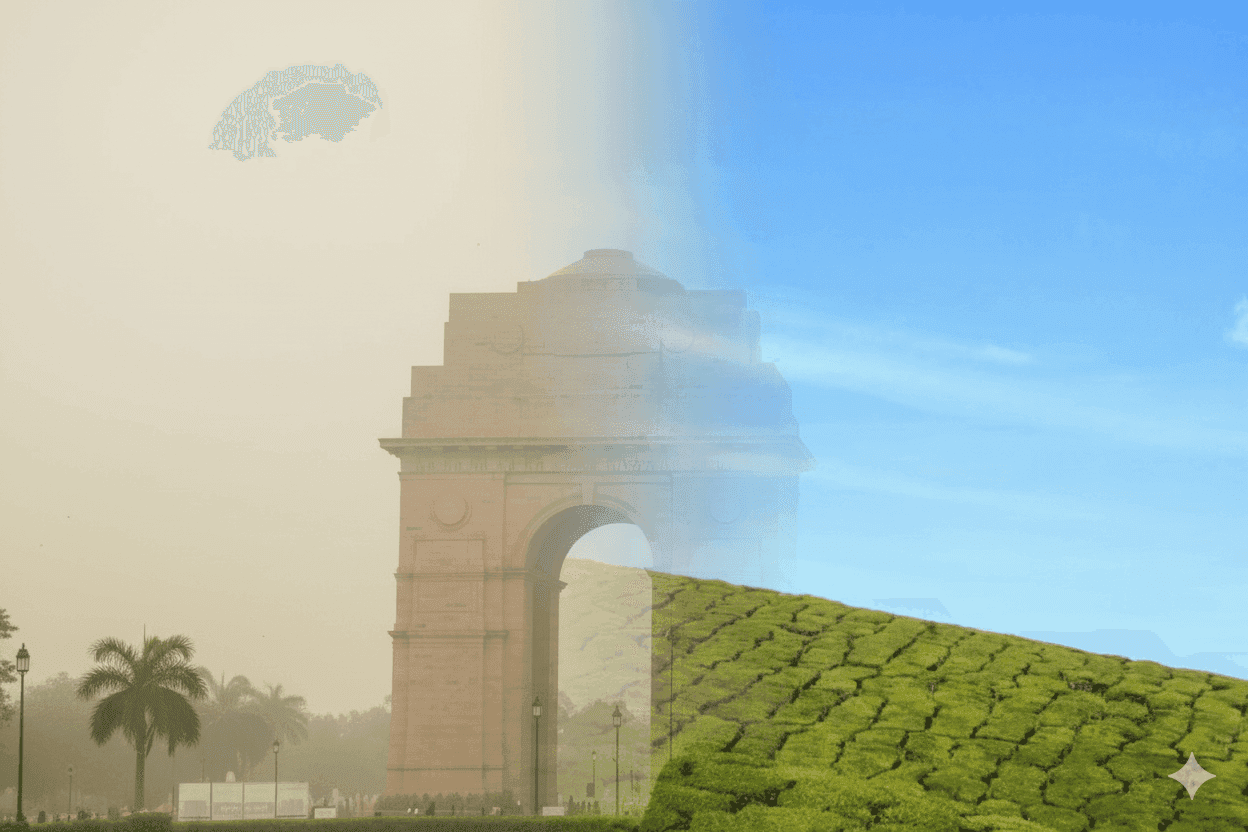
Delhi’s air has gotten so bad that people are actually packing up and leaving. When the city's air quality hit a scary 400, Narela wasn't far behind at 418. Suddenly, travel websites buzzed with families booking quick getaways, some heading straight for Kerala's lush tea gardens. People are choosing health over hustle, leaving streets quiet and flights empty. Outside, the air feels like soup, thick with PM2.5 particles that make you rethink every breath. Fancy air purifiers? They're working overtime, their filters turning charcoal-dark within weeks. Trains creep along cautiously, and morning drives feel like navigating through a ghostly haze where even familiar streets become disorienting.
What has happened to AQI in Delhi?
People keep asking, “What’s the AQI in Delhi?” but the answers are almost always alarming. Ideally, Delhi’s air quality should sit below 50. Lately, it’s been ten times higher. The numbers stay locked in the “very poor” or “severe” zones, making something as simple as breathing a real hazard, especially for older folks and kids.
Schools are shifting back to online classes because the playground has basically become a gas chamber. Parents are increasingly worried about the long-term developmental impact on children who are growing up with restricted lung capacity due to the constant inhalation of toxic particles.
Check your weather app anywhere in NCR, and you’ll see deep purple or maroon news. Those colors mean hazardous air quality, and that’s when the strictest rules kick in: construction stops, coal plants get restricted, and trucks can’t enter, but it hardly makes a dent. Nothing moves when the wind crawls along at less than 10 kmph.
The pollution just sits there, trapped by a layer of cold air that refuses to lift. This meteorological phenomenon, known as temperature inversion, acts like a lid on a pot, keeping all the smoke from stubble burning and vehicle exhaust at ground level where people actually live and breathe.
Wondering if Delhi’s polluted? You don’t need to check the data, just step outside. Burning eyes, itchy throats, and doctors comparing the worst days to chain-smoking are the new normal. Hospital admissions for breathing problems and chest pain have shot up by 30%. And the longer this goes on, the more people risk chronic lung and heart issues that could stick with them for life. Even healthy adults are reporting fatigue and "brain fog" as the body struggles to process oxygen in such a compromised environment.
Travel trends due to high AQI in Delhi
It’s not just about comfort anymore; the air is actually changing how people travel. Instead of sightseeing up north, families are grabbing “clean air” getaways in Munnar and Coonoor. It’s not a vacation, it’s survival.
Escaping to the Western Ghats has become a yearly ritual, all because of the smog. Many are looking for spots with high altitude and dense tree cover where the AQI stays under double digits. Travel agencies are now marketing "O2-rich" packages specifically targeting residents of the National Capital Region.
Remote work makes it easier. People log in from Kerala’s green hills or beachside shacks in Varkala and stay put until northern winds finally clear things up. Hotels in Munnar are packed with guests who’d rather breathe easy in the forest than cough their way through another city winter.
Work-from-mountain setups are being replaced by work-from-plantation stays. More and more tourists are heading south to dodge the choking, crowded lowlands. This seasonal migration is creating a new economy for homestays in the south that offer high-speed internet alongside mountain air.
For those who can’t leave, daily life gets tough. High-grade N95 masks are a must outside, but honestly, the best move is to stay in with an air purifier running on max. Keep windows shut, ditch the candles, and avoid incense or anything that adds to the mess inside.
Wrapping up
Delhi’s toxic air has turned winter into a survival test for anyone who likes being outdoors. The AQI is a constant topic at home, at work, and even in the gym. These days, people plan their year around the smog, and December has become the month when everyone who can gets out to escape the city’s suffocating air. The dream of a white winter has been replaced by the reality of a grey one, driving a massive migration toward the blue skies of the south. The city that was once known for its beautiful autumns is now defined by the heavy, metallic scent of winter smoke.









