
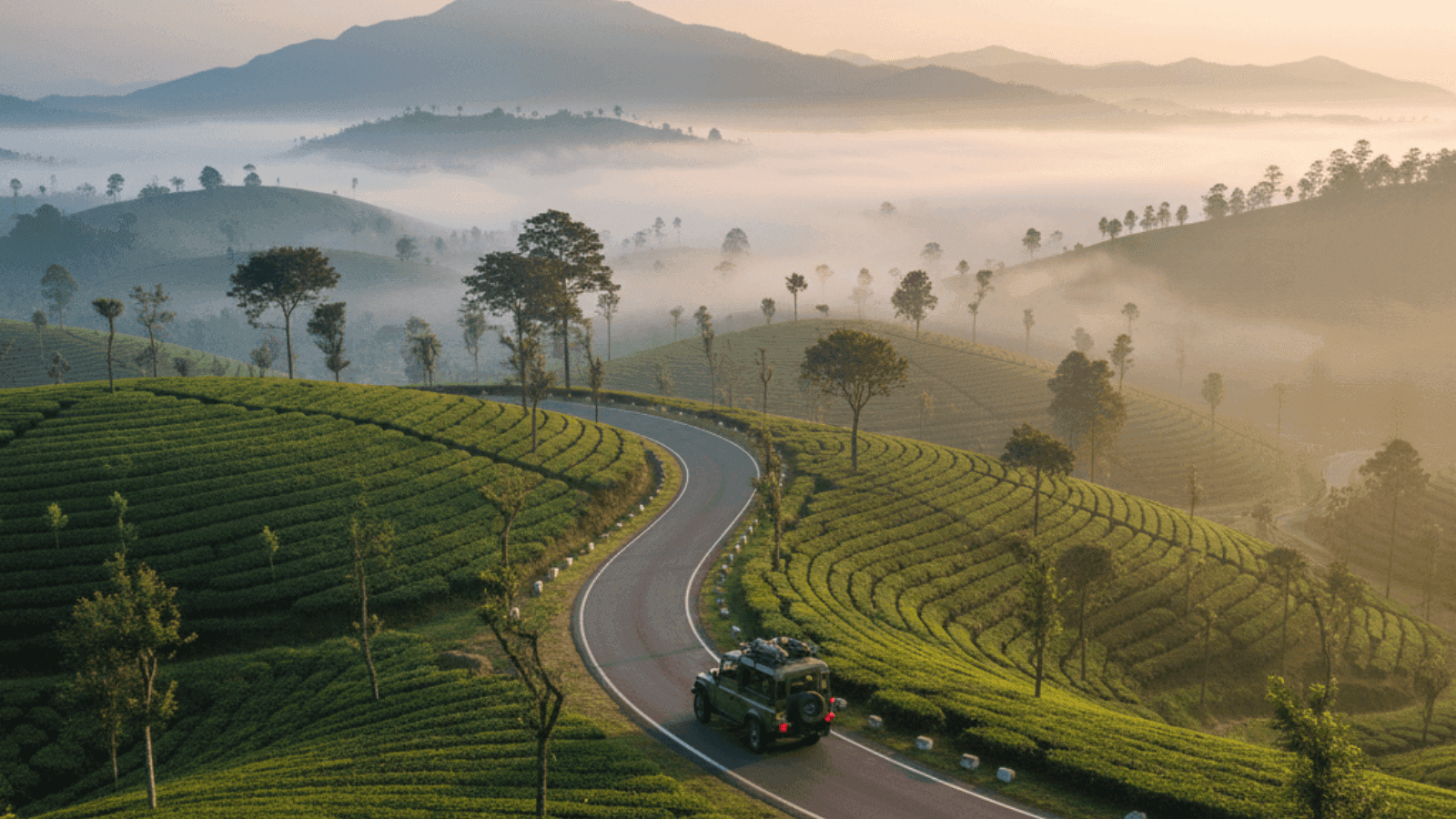
Driving Valparai’s Forest Routes Without Breaking Rules
Valparai roads don’t reward hurry, horns, or hero driving. They reward people who know when to slow down, stay quiet, and wait without complaining. Get that balance right, and the drive feels less like a route and more like a privilege.
What this route actually cuts through
The Valparai–Athirapally road passes straight through the Anamalai Tiger Reserve and the Vazhachal Forest Division, connecting Tamil Nadu’s tea country with Kerala’s rainforest belt. This is a live forest, not a buffer zone. Elephants move between feeding grounds, macaques patrol known fruiting trees, and gaur wander out of estates without warning.
The shift is immediate once you leave the tea gardens. The light drops, the canopy thickens, and the road narrows into something that feels borrowed rather than built.
Forest check posts are not optional pauses
Every vehicle entering this stretch must stop, register, and exit within the allotted window. There is no flexibility built into the system for delays caused by photos, meals, or curiosity.
Where you’ll be stopped
On the Kerala side, Vazhachal and Malakkappara handle entries and exits. On the Tamil Nadu side, the Sethumadai–Valparai check post records departures. Your vehicle number, passenger count, entry time, and visible plastic items are noted.
Transit slips are common, and you will be expected to hand them over at the exit check post.

Timing rules that are enforced
- Day travel is usually allowed only between 6:00 AM and 6:00 PM, depending on forest department updates
- Night travel is strictly banned due to wildlife movement, safety concerns, and repeated incidents in the past
- Vehicles are given a limited transit window of around 2 to 2.5 hours to cross the forest stretch
- The time cap applies to roughly 45 km of forest road, and delays can lead to questioning at the exit check post
Driving pace matters more than skill
Speed limits inside the forest are low for a reason. Animals do not react like highway traffic, and sudden acceleration or braking can trigger panic.
Stick under 30 km/h. Let faster vehicles pass only where visibility is clear. Honking around bends is discouraged because sound carries far in dense forest and startles animals long before you see them.
Wildlife encounters are common, not rare
This road is known for elephant crossings, especially near Sholayar and interior forest patches. Herds move slowly and often include calves, which changes how adults respond to vehicles.
Lion-tailed macaques appear near Puthuthottam and Varattuparai, often watching traffic more closely than drivers watch them. Gaur step out of tea estate edges without sound. Malabar giant squirrels glide across gaps in the canopy, sometimes dropping debris onto the road.
Leopards exist here, mostly unseen, and their presence shapes how other animals behave.
What to do when animals block the road
Stay inside and stay quiet
If an elephant or bison is on the road, switch off the engine and wait. Do not rev, honk, or edge forward. Forest staff have documented multiple incidents where patient drivers avoided harm simply by staying put.
Earlier incidents on this route have stranded travellers for hours. The ones who waited were the ones who left safely.
Distance keeps everyone safe
Maintain at least 100 metres from large animals. If an elephant shows agitation - ear flapping, trunk swinging, mock charges - reverse slowly without turning abruptly. Windows should remain closed around monkeys. Food attracts attention faster than curiosity, and learned behaviour creates long-term problems for the forest.
Stopping rules are stricter than most expect
Pulling over for photos, videos, or “just a minute” breaks the transit rule. Even stationary vehicles count as lingering, and enforcement officers patrol this stretch regularly.
There are no legal picnic points, tea stalls, or rest areas inside the forest zone. Any stop should be limited to forest staff instructions or unavoidable wildlife crossings.
Music systems that feel low inside the car can travel hundreds of metres through the forest. Animals hear frequencies humans don’t register easily, and repeated disturbance pushes them closer to the road at unpredictable times.
This is one of the reasons honking is discouraged even on blind curves.
Vehicle readiness is not a formality
Breakdowns inside the forest are treated as safety risks, not inconveniences. Ensure fuel levels are adequate before entering. Check brakes and tyres, especially during monsoon months when hairpin bends become slick. There are no repair points, fuel stations, or tow services once you pass the check post.
Litter checks are routine
- Forest staff may inspect visible plastic items during entry.
- What you carry in must come out.
- Discarded bottles and food wrappers attract animals to the road edge, increasing collision risk.
- Even biodegradable waste alters animal movement patterns when dumped repeatedly in the same spots.
Local drivers read signs tourists miss
Estate workers notice broken fences, fresh pug marks, and unusual silence before spotting animals. Forest staff wave vehicles through or hold them back based on patterns that aren’t written on boards. When instructed to wait, wait. When waved forward, move steadily and without stopping. This road functions on shared understanding more than signage.
If you’re planning to stay around Valparai and want places that respect the forest rhythm as much as you do, Neomaxer helps you find stays that fit the journey.









