
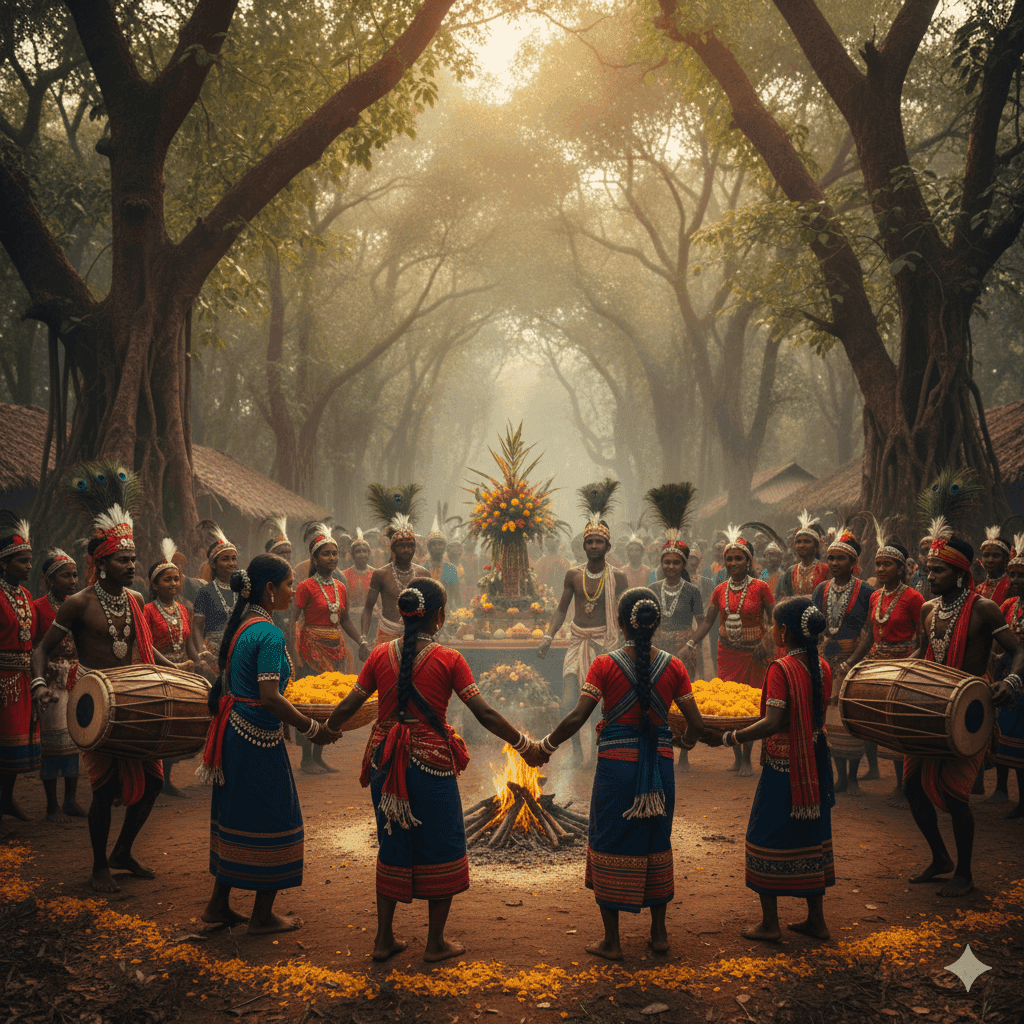
Odisha's secret harvest fairs are not announced with banners or invitations. They unfold slowly, guided by the land and the people who have listened to its rhythms for generations. Travelers expecting grand entries or fixed schedules soon realise these gatherings cannot be approached like typical festivals. They appear when the crops, forests, and villages align, not when tourism calendars demand them. The clues are subtle. A decorated pot near a courtyard. A sudden practice beat of the dhol in the distance. A trail of millet powder on a mud path before sunrise. These are the early signals that a fair is rising.
Following the Signs
Villagers speak in signals, not schedules. A sudden gathering near a sal tree. Fresh rangoli dust spread across the mud path before sunrise. Drummers test rhythms long before the crowd arrives. These are the hints that Odisha's secret harvest fairs are about to begin, subtle markers that replace posters and publicity. Travelers accustomed to big spectacles learn that this region does not celebrate loudly. Here, an Odisha festival today can feel almost hidden until you are close enough to hear the beat of wooden drums echoing through the fields. People know when the time has come by observing the forest, the crops, and the community.
Entering the Rhythm
The land shapes the experience. You may be walking through rice paddies shimmering in the afternoon light, and ten minutes later, you stand in the middle of an Odisha harvest festival where the energy shifts. The soundscape changes. Voices soften. Steps slow. This is not a staged cultural show. It is lived celebration, woven with farming cycles and ancestral rituals. Visitors hear locals whisper about the Odisha famous festival, linked to their region, each carrying its own stories. Some fairs begin with a quiet offering of grain. Others start with a flute note that rises like smoke from a village courtyard. The signals vary, but the feeling is constant. You do not find the fair. The fair allows you to enter.
Movement of the Community
Tribal groups gather with a sense of purpose that feels older than the settlements themselves. Dancers move in circles that mirror the shape of harvested fields. The rhythm is repetitive, deep, and steady. It resembles the footsteps of people who have worked this soil for generations. Outsiders watch, careful not to interrupt patterns that have existed long before tourism arrived. Women decorate pots with natural dyes. Men carry tall bamboo poles wrapped in cloth. Children run with baskets filled with seasonal fruits. No one stands still. The village breathes as one unit. These are the moments that define Odisha's secret harvest fairs, not grand performances but fluid movements guided by tradition.

Markets Hidden in Plain Sight
Temporary stalls appear like they were always meant to be there. Handmade knives are arranged on a jute mat. Smoke curls from clay ovens where millet bread is crisping. Necklaces made of seeds strung by hand. The market feels unplanned, yet every item has a place that locals understand instinctively. Prices are not shouted. Negotiations happen quietly. Elders inspect grains with practiced eyes. Children tug at travelers, inviting them to taste wild honey. Drumming grows louder as the sun lowers, not because the festival is building toward a finale but because dusk is when the rhythm deepens.
Firelight, Forest, and Memory
As night falls around the village, fires are lit in clusters. Their glow stretches across the ground in uneven patches. Dancers continue, but their silhouettes blur with the smoke. You hear the forest blend with the drums, cicadas, and leaves, creating a backdrop that feels like part of the ceremony. Stories rise with the sparks. Elders speak of past harvests, years of drought, years of abundance, and years when outsiders first arrived in their land. These stories carry warnings, hope, and humor. They are told without hurry because time here bends around the fair, not the other way around. Travelers who follow these trails learn that Odisha's secret harvest fairs are not events to be captured or neatly mapped. They are meetings between land, people, and season, shifting quietly in the background and returning only when the soil decides the moment is right.









