
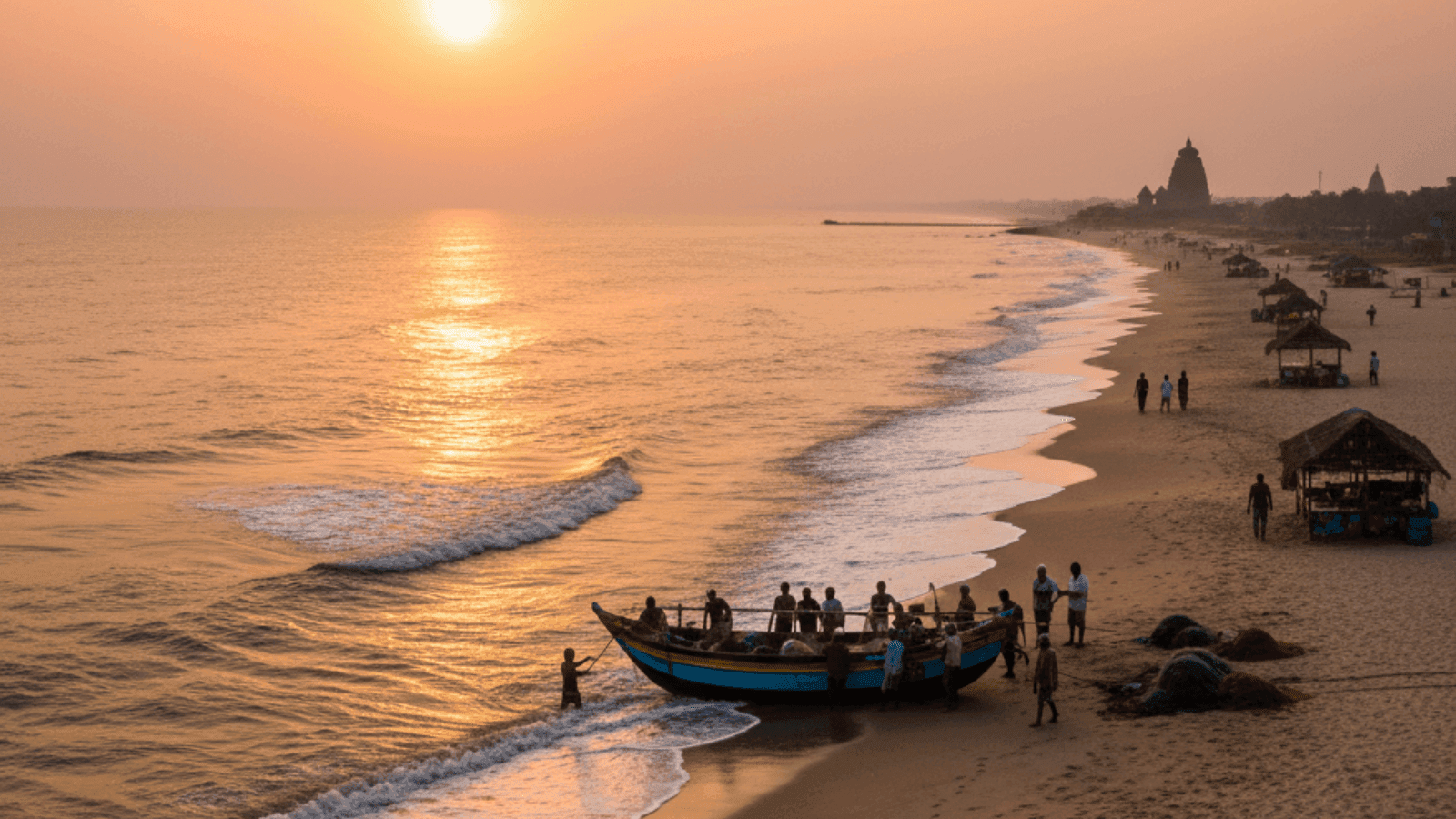
This Disappearing Beach Exists in the Shadow of Odisha’s Sun Temple
The sea here keeps perfect timing. Arrive at the right hour, and it gently pulls back, leaving behind a wide, shining path of sand that wasn’t there before. Just minutes from Konark’s famous stone chariot, Chandrabhaga Beach turns tide timing into something you can actually walk across.
Chandrabhaga Beach Vanishes Daily
This isn’t a trick of light or a rare event. It’s the tide, working on schedule.
The Bay of Bengal rises and falls here with noticeable range. Because the seabed slopes gently instead of dropping sharply, when the tide recedes it exposes a broad sandbar. The beach doesn’t just get a little wider. It stretches outward in a way that feels almost theatrical.
There’s no sudden moment when it happens. The water just keeps retreating until you realize how far you can walk.
Timing Low Tide for a Full Sand Walk
If you want to experience the exposed sand properly, timing matters. Low tide shifts daily, so checking a tide chart the night before makes a difference. Arriving an hour before the lowest point gives you time to watch the shoreline change.
The sand during peak low tide is usually firm enough to walk on without sinking. Early mornings are especially good. The air is cooler, the light softer, and the beach far less crowded. Once the tide turns, the water doesn’t rush back dramatically. It creeps in, forming thin silver streams that slowly reconnect.
How to Reach Konark from Bhubaneswar
- Bus: Direct TCOPRL buses run from Bhubaneswar toward Konark and take around 1.5 hours. Fares are usually about Rs 100. It’s simple and budget-friendly.
- Train: On the Puri–Balasore line, you can get off at Konark Road station. From there, local transport completes the journey. Expect around 3 hours total depending on connections.
- Taxi: The distance from Bhubaneswar is about 65 km. A round trip taxi generally costs close to Rs 2000 and gives you flexibility with tide timing.
- Cycle rentals: From the Sun Temple complex, Chandrabhaga Beach is just 3 km away. The road is flat, and renting a cycle makes the short ride easy and pleasant.

Pairing the Sun Temple with the Tide Walk
Most travelers visit the temple first. The carved stone wheels and detailed panels take time to absorb, especially in the morning light. From there, heading to the beach feels like stepping into open space after being surrounded by sculpture and symmetry.
The contrast works well. One place feels permanent, heavy with history. The other changes shape every few hours. If you plan it right, you can finish exploring the temple and reach the beach just as the tide begins to pull back.
Nearby Seafood Shacks at High Tide
- Small roadside eateries along the coastal stretch serve freshly cooked fish and prawn curry. The menus are simple and usually depend on the day’s catch.
- Near Ram Mandir, you’ll find stalls selling chhena poda. Slightly charred on the outside and soft inside, it’s an easy post-walk snack.
- Off Marine Drive, a few local joints are known for their prawn dishes cooked with mustard and local spices. Nothing fancy, but reliably good.
Best Months for Tide Exposure
October through February offers the most comfortable conditions. The weather is cooler, skies are clearer, and walking on the exposed sand is far more pleasant.
Summer still brings the disappearing shoreline, but the heat builds quickly once the sun is high. During the monsoon, tides are stronger and the sea rougher, which can limit how much of the sandbar is safely accessible.
Safety Tips for Sandbar Walks
- Check the day’s tide timings before heading out.
- Avoid venturing too far once the water starts returning.
- Watch for uneven patches where shallow channels form.
- Stay aware of how quickly the shoreline is changing around you.
- Visit during daylight for better visibility.
If you want to time your visit with Chandrabhaga’s shifting tides, Neomaxer helps you book comfortable stays close to Konark and the coast.









