
Dhanushkodi, Where the Land Ends and Two Seas Move Differently
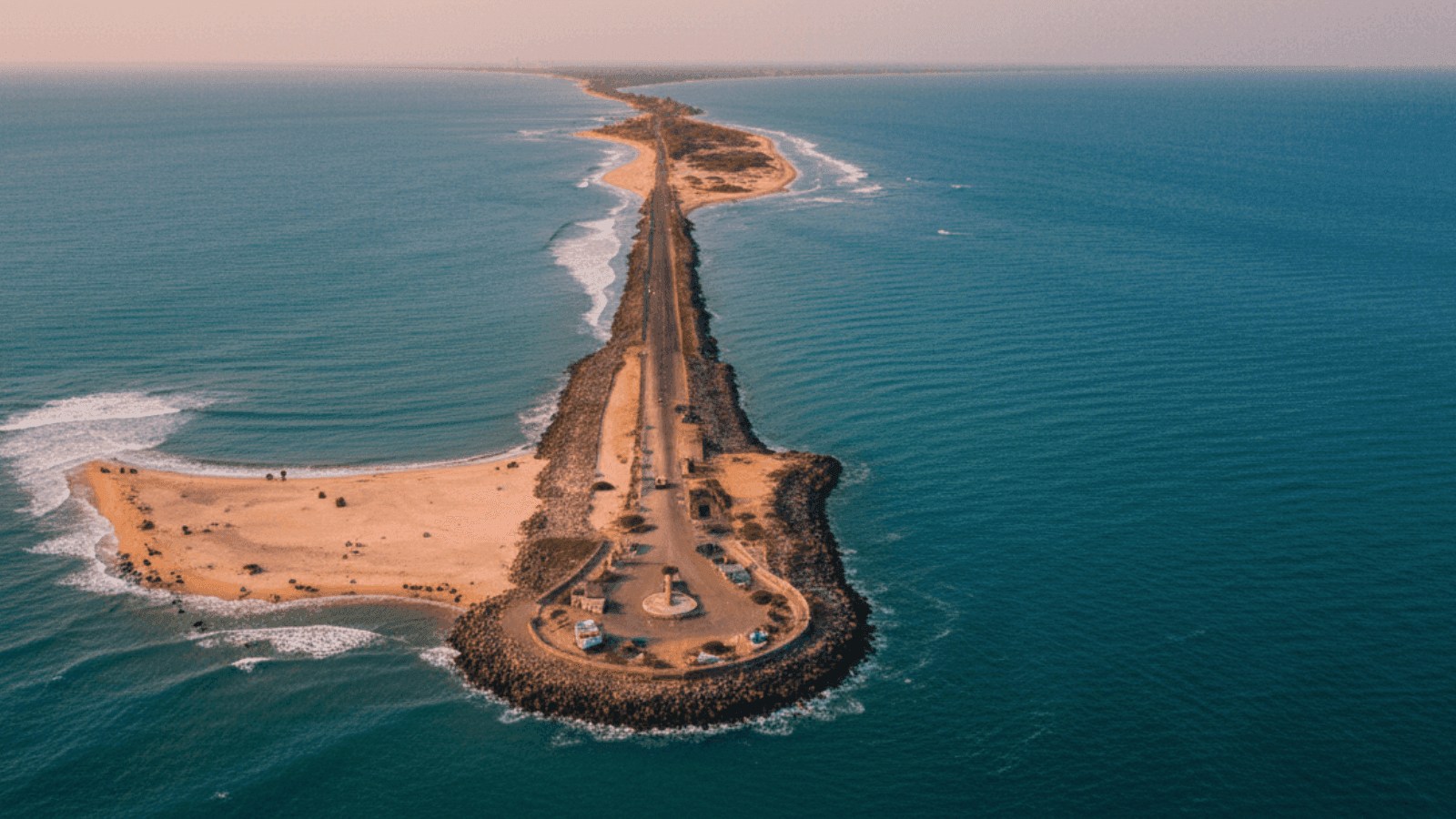
The road narrows until there is nothing left to narrow into. On either side of you, water stretches out in opposite moods, one side restless, the other oddly calm. This is Dhanushkodi, the last strip of land at the edge of India, where the Bay of Bengal and the Indian Ocean move alongside each other but never truly blend.
What the Surroundings Feel Like
The air is heavier here, filled with salt and wind that never fully stops. There are no dense buildings, no cluttered streets, just ruins that look like they were placed carefully and then forgotten.
A broken church stands facing the sea, its roof long gone, its walls worn smooth by decades of wind. Nearby, skeletal remains of a railway station and post office still exist, their purpose erased but their presence stubborn.
Fishing boats line the shore in quiet rows. On the calmer side facing the Gulf of Mannar, the water looks almost gentle, barely disturbing the sand beneath it. On the opposite side, waves arrive harder, faster, more impatient.
At the very end lies Arichal Munai, where the land stops without ceremony. Beyond that, there is nothing but water between India and Sri Lanka.

From Rameswaram, a single coastal road leads directly to Dhanushkodi. It was rebuilt only in recent years. Before that, the only way forward was by modified jeeps navigating unstable sand paths.
The best way to explore is slowly. Stop often. Walk toward the water. Notice how the sand feels different in each section, sometimes firm, sometimes swallowing your steps.
Early mornings and late evenings are when the place feels most alive. Midday flattens everything under harsh light, making distances harder to judge.
Things to Do in Dhanushkodi
- Walk to Arichal Munai and stand at the final point where land ends
- Visit the ruins of the old church, railway station, and post office
- Watch local fishermen prepare their boats along the quieter coastline
- Observe the visible difference between the two seas on either side
- Drive the narrow coastal road that cuts through open sea on both sides
- Visit viewpoints associated with Rama Setu, believed to connect India and Sri Lanka
The Story That Never Fully Left
Dhanushkodi was once a functioning town. It had a railway station, customs office, schools, and homes. Ferries connected it to Sri Lanka, and trains brought passengers to its shores.
In December 1964, a cyclone arrived without restraint. Winds crossed 250 km per hour. A passenger train approaching the town was swept away entirely. Hundreds died within hours.
By morning, the town was declared unfit for habitation. Survivors moved away. Buildings were left behind exactly as they were. Nature did not rebuild. It simply continued. Some fishermen eventually returned, building small homes near the coast. But the original town never came back.
How to Plan Your Visit
- Ideal duration is half a day, though spending a full day allows slower exploration
- Best months to visit are October to March when heat and humidity are manageable
- Carry water, sun protection, and essentials because facilities are limited
- Mobile networks can be unreliable closer to the land’s end
- Check weather conditions before visiting, especially during monsoon or cyclone alerts
- Start early in the morning or visit late afternoon for better light and fewer crowds
What Most Travellers Miss
Most visitors drive straight to the end point and leave too quickly. The real experience exists in the spaces between. The quiet sections where there are no vehicles, only wind and distant waves.
On one side, the sea moves in restless layers. On the other, it flattens itself into something calmer, almost lake-like. The difference is subtle but constant. Footprints do not last long here. Wind removes them faster than expected. Every visit rearranges the land slightly.
If Dhanushkodi stays on your mind long after you leave, Neomaxer helps you stay close to its quiet shores with thoughtfully chosen coastal stays.









