
Why Chidambaram Natarajar Temple Feels Different to Visit
Why this temple occupies a rare place in Indian cultural geography The temple is dedicated to Shiva as Nataraja, the cosmic dancer, shown mid-movement rather than seated or still. This form is not symbolic art alone but a philosophical position, where creation, preservation, destruction, illusion, and release are expressed through motion.
Chidambaram is also tied to the concept of space rather than matter. Among the Pancha Bhoota temples, this one represents Akasha, the element of ether or space, which cannot be seen or held. The idea shapes the temple’s layout, rituals, and even the way worship is performed.
Unlike many temples where the deity is visually central, Chidambaram places importance on what is concealed. The Chidambara Rahasyam refers to the belief that the formless truth exists behind a curtain, revealed briefly during specific rituals. Devotees wait not for spectacle but for absence, which feels counterintuitive until witnessed in person.
Architecture that reflects philosophy
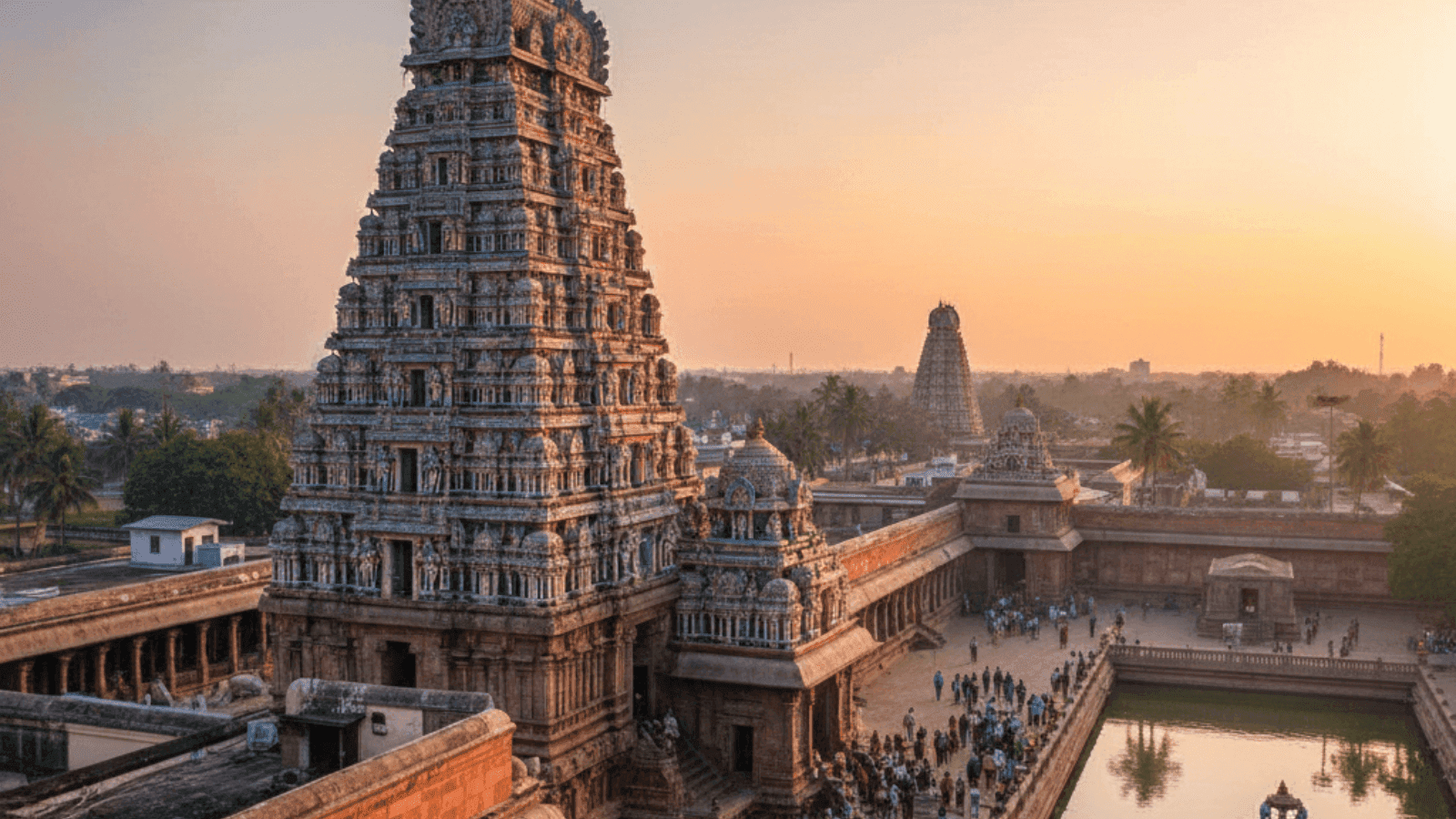
The temple complex is vast, but its design resists grandeur for its own sake. The four towering gopurams mark the cardinal directions, reinforcing the idea of cosmic balance rather than royal dominance.
The Chit Sabha, where Nataraja is worshipped, is built with a roof of 21,600 gold tiles, traditionally linked to the number of breaths a human takes in a day. Numbers here are rarely decorative. They are mnemonic devices meant to align human life with cosmic rhythm.
Other halls, like the Kanaka Sabha and Deva Sabha, were built for ritual movement and music rather than silent prayer. Chidambaram has always been a lived space, not a museum of belief.

The living tradition of dance and sound
Bharatanatyam traces its spiritual lineage directly to this temple. The 108 karanas carved into the temple walls are not frozen poses but instructions, almost like a manual etched in stone.
Temple rituals still follow rhythms rooted in these movements. Drums, bells, and chants are timed, not ornamental. Sound functions as a form of measurement here, marking transitions rather than filling silence. For travellers, this becomes noticeable during daily abhishekams, when the temple feels less like a monument and more like a rehearsed performance with centuries of continuity.
When to visit and what the seasons change
- November to February brings cooler weather and manageable crowds, making it easier to move between the sabhas and observe rituals without haste
- March to May can be punishingly hot, though early mornings remain active and spiritually intense
- June to September sees fewer tourists, occasional rain, and a quieter town rhythm that locals prefer
Festivals that change the town itself
- Arudra Darshanam celebrates Shiva’s cosmic dance and draws dancers, scholars, and devotees from across Tamil Nadu
- Natyanjali turns the temple into a gathering point for classical dancers paying homage through performance
- Maha Shivaratri brings extended night rituals that alter sleep patterns across the town
Practical realities travellers often miss
Footwear queues move slowly, and security checks are stricter during festival days. Photography rules change depending on the inner hall, and assumptions can lead to awkward moments.
Dress codes are observed more carefully here than at many tourist-facing temples. Modest clothing is not a suggestion but a shared expectation, especially near the Chit Sabha.
Priests follow a Dikshitar lineage with specific rights and responsibilities. Their rituals are precise, and interruptions, even well-meaning ones, are discouraged.
Geographic location and its quiet influence
Chidambaram sits closer to the coast than many expect, and the surrounding landscape is flat, humid, and agricultural. This geography supports the temple’s association with space and openness rather than elevation or isolation.
Unlike hill temples that demand ascent, Chidambaram invites horizontal movement. You walk through it, circle it, and gradually understand it, often without realizing when that shift happens.
The town does not separate sacred and ordinary zones cleanly. Tea stalls, homes, schools, and shrines overlap, and temple timings influence daily schedules more than clocks do.
Some journeys stay with you well after you leave the temple gates. Neomaxer helps you choose stays that fit the pace, mood, and intent of travel like this.









