
Chamarel’s Coloured Earths and What Makes Them Enduring
The ground here holds its colour even after rain.
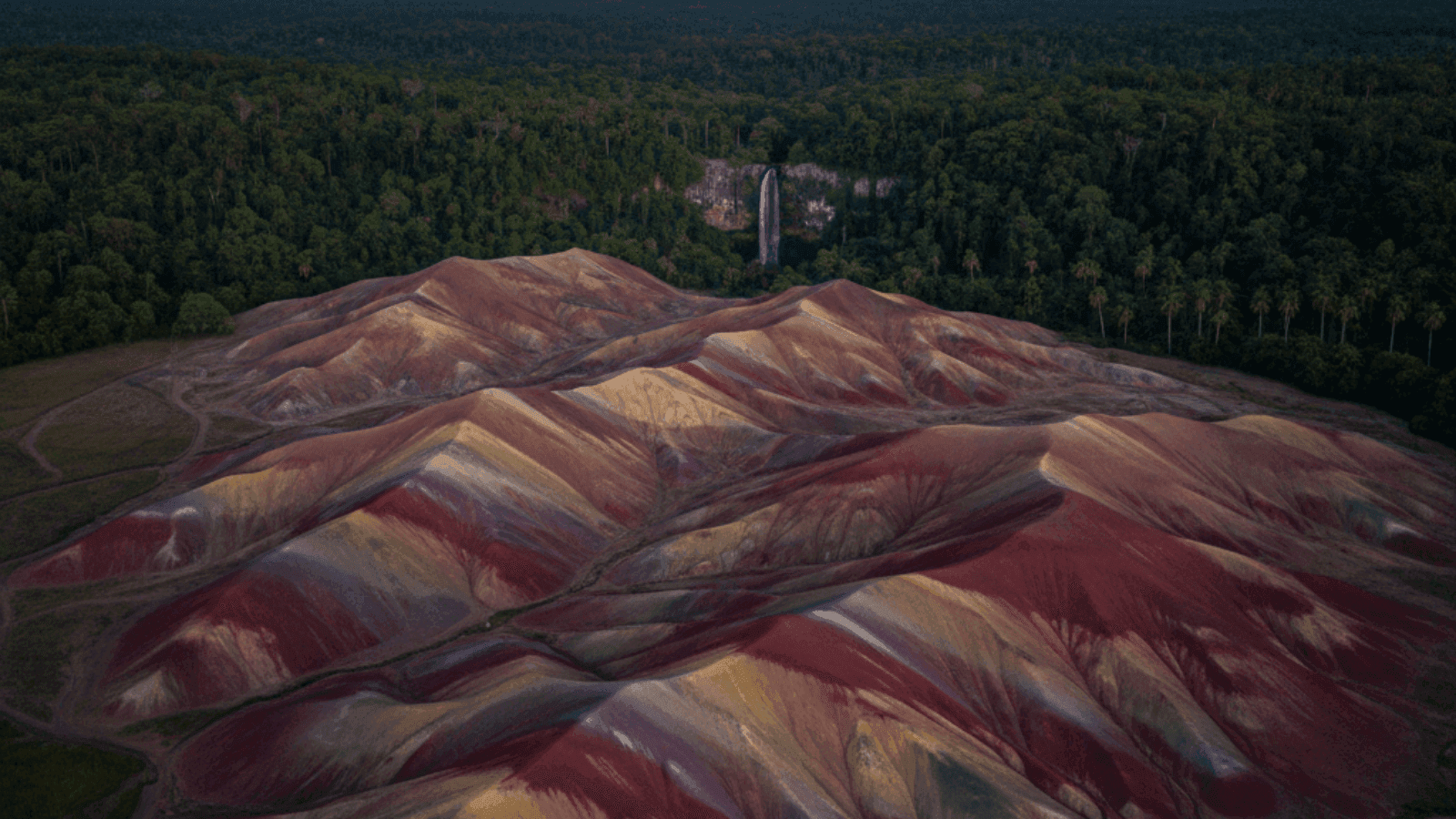
Chamarel’s Coloured Earths sit on a gentle slope in southwest Mauritius, looking deceptively simple until you stop and actually watch how the soil behaves. The reds, browns, violets, yellows, and greys sit side by side without bleeding into each other, even when it pours. This isn’t paint or mineral dumping or clever landscaping. It is soil that refuses to mix.
Where Chamarel’s Coloured Earths Are Located
The site lies within the Chamarel village area, roughly an hour’s drive from Port Louis. The road winds through sugarcane fields, forested stretches, and small settlements before opening into a protected park. Most travellers combine this stop with Chamarel Waterfall, which is only a short drive away and visible from a nearby viewpoint.
Parking is organised, entry is ticketed, and paths are clearly marked, making it accessible without guides.
How Volcanic Soil Created These Colours
The colours come from volcanic ash that cooled at different temperatures and oxidised unevenly over time. Iron-rich minerals produced reds and browns, aluminium influenced blues and purples, and varying moisture levels locked those hues in place.
What makes Chamarel unusual is that the particles repel each other. If you scoop different colours into a jar and shake it, they separate again. Rain doesn’t blur the bands. Gravity doesn’t flatten them. The chemistry keeps each shade intact.

Why the Colours Do Not Fade or Mix
Sun exposure, heavy rainfall, and foot traffic usually degrade natural formations. Here, none of that changes the layout. The soil grains have different densities and magnetic properties that prevent blending. Over decades of observation, scientists and conservation authorities have confirmed that erosion changes the surface slightly, but the colour integrity remains.
This is why the site is roped off. Touching doesn’t destroy it instantly, but repeated interference does dull the contrast.
When to Visit for the Best Experience
- Early morning offers softer light and fewer tour groups, especially between 8 am and 10 am
- Late afternoon sharpens colour contrast but brings heavier crowds
- Dry months from May to November give clearer views and easier walking paths
- Avoid peak midday hours if you want uninterrupted photographs
- Cloud cover actually helps. Overcast skies reduce glare and make the colours appear deeper and more defined.
Things Inside the Park Worth Slowing Down For
- The elevated viewing platform overlooking the main colour dunes
- The giant tortoise enclosure near the entrance, home to Aldabra tortoises
- Informational panels explaining soil composition and volcanic history
- Small jars of layered soil displayed near the exit, showing natural separation
- Many visitors rush through in under 20 minutes. Staying longer lets your eyes adjust and notice subtle colour shifts that don’t show up immediately.
How Long to Plan for This Stop
Most travellers spend 30 to 45 minutes here, but that’s the minimum. Add extra time if you plan to visit Chamarel Waterfall, walk the surrounding paths, or simply sit and observe. The site isn’t large, but it rewards slow movement rather than checklist sightseeing.
Photography Tips That Actually Work Here
Direct sunlight washes out the lighter tones, especially yellows and greys. A slightly angled light source brings out depth between colour bands. Wide shots show contrast, but closer framing reveals texture and layering. Avoid stepping beyond barriers for angles. The best views are already positioned along the paths. Phones do fine here, but patience matters more than equipment.
Why This Place Matters Beyond Photos
Chamarel’s Coloured Earths are one of the few geological sites in the world where soil chemistry is visible without excavation. It is used as a teaching reference for volcanic processes, oxidation, and mineral separation. Local conservation efforts focus on preserving the formation as a natural archive rather than a spectacle.
For Mauritius, it represents something older than plantations and ports. It is land history made visible.
Practical Tips Before You Go
- Wear shoes with grip; paths can get slippery after rain
- Carry water, especially during warmer months
- Respect barriers even when the area seems quiet
- Combine this visit with nearby viewpoints to reduce backtracking
- There are basic facilities inside, but food options are limited, so plan meals before or after.
How It Fits into a Larger Mauritius Itinerary
Chamarel works best as part of a southwest circuit including Black River Gorges, Le Morne viewpoints, and coastal stops. It’s not a standalone half-day attraction, but it anchors the route with something distinctly different from beaches and lagoons. If Chamarel is on your Mauritius route, where you stay changes how the day feels. Neomaxer helps travellers choose stays that keep places like this easy to reach, unhurried, and well-timed.









