
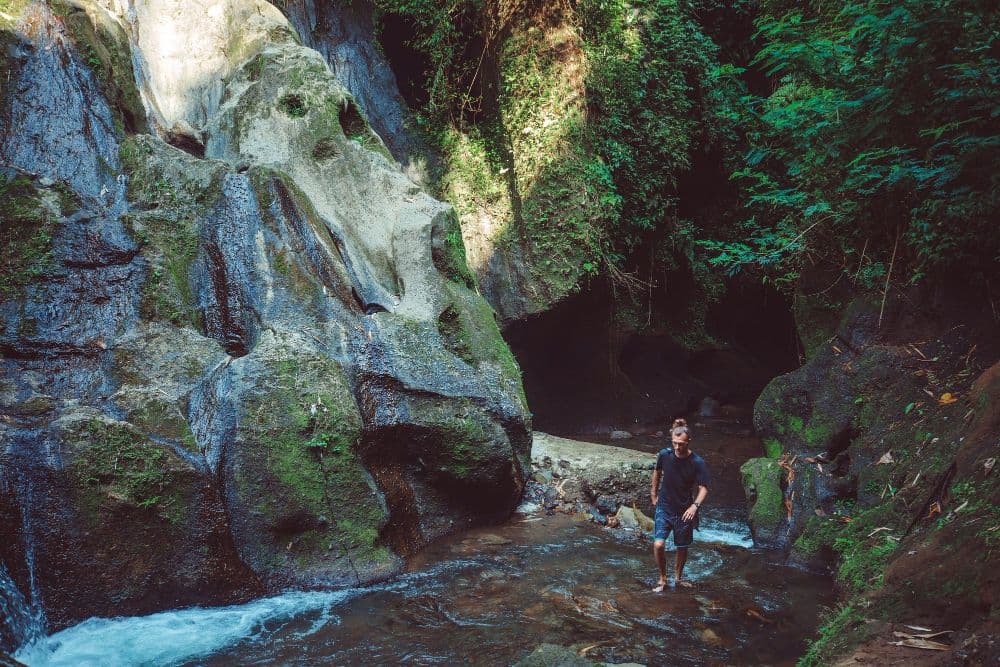
The first time you slide sideways into a rock slit below Kavaledurga and your headlamp catches the damp sheen of lichen and bat wings, you understand this fort is less about viewpoints and more about the dark spaces it hides.
Reading the hill before you hunt for caves
Old villagers below the hill do not talk about “caving”. They talk about signs. A fresh scrape on damp rock where a porcupine or civet passed. Mud pushed aside at a cave mouth after heavy rain. The way mist refuses to lift from one side of the ridge long after the sun has found the other.
Above, mossy steps of the Kavaledurga fort tell you where water runs in the monsoon and where it dries first. Crumbling walls with roots cutting through them warn you that everything man built here is slowly being reclaimed. Before you go looking for hollows, you learn to read this shared land as both fort and forest.
Getting to Kavaledurga from Bangalore and beyond
Most people heading to Kavaledurga from Bangalore either drive or grab an overnight bus towards Thirthahalli in Shivamogga district. From there, it's just a quick ride to the base village. Once you turn off the highway, the road gets narrow, like real narrow with areca and paddy fields crowding in on both sides. And if you squint through the areca trees, you’ll catch your first peek of those crumbling old walls up ahead.
The hill sits within a web of Western Ghats routes. A day trip link from Kavaledurga to Kuppalli takes you to the home of poet Kuvempu, winding through forest edges and mist-prone curves. Knowing how these roads breathe in different seasons is part of the same awareness that later keeps you steady in confined rock.
Kavaledurga trek: fort, temple, and stone shadows
The Kavaledurga trek itself is short on paper but steep underfoot. Steps cut into rock, mud paths under tree cover, sudden clearings where bastions appear like teeth against the sky. The ruined palaces and granaries sit on terraces, each level holding its own echoes.
Near the top, there's this little Kavaledurga temple just sitting there all quiet, you know? The courtyard feels like this weirdly still little bubble where bells used to echo through the fog. And if you wander a bit further down, past crumbled walls and those half-fallen water tanks, you'll start spotting cracks in the rock. Locals used to hide in them, sneak through them... like secret tunnels or something. You do not see a big cave entrance with a tourist board. You see:
- Low, narrow cracks where cool air breathes out
- Overhangs where rock has slipped and created crawl spaces
- Short tunnels linking one courtyard to another below the visible path
These shadows are the real test for thrill seekers.
What kinds of caves you will actually enter
The cavities at Kavaledurga are mostly:
- Crawl through slits between boulders where you move sideways, pack off, feeling each foothold by hand
- Short, steep chimneys that drop a few meters and demand you trust your grip on damp stone
- Shallow, wide overhangs used by animals that you enter only far enough to see, never to claim
They are not showing caves with railings. They are incidental spaces formed by rockfall and old construction, half natural, half engineered by gravity and neglect.

Safety rituals inside the rock
You treat these hollows like someone else’s house. Headlamp on, but voice low. Stick or hand first, body later. If you smell strong ammonia from bat guano or hear a rustling that is not water, you should reconsider. Simple rules:
- One person moves at a time through tight squeezes
- No loose hanging gear that can snag on unseen projections
- No scratching names into rock or lighting fires inside
You watch the ceiling as much as the floor, noting roots pushing through, damp streaks that suggest active seepage, and cracks that have widened since the last monsoon. Caving here is not a sport in isolation; it is an extension of how respectfully you treat the ruin above.
Linking Fort Caves with the wider Ghats
The stone puzzles at Kavaledurga are cousins of other granite and laterite formations all over the Ghats. Learning to read one helps you move smarter in the others.
After a morning in its hollows, driving Kavaledurga to Kuppalli or deeper into the Agumbe belt shows you the same rock in different moods. Roadside cuttings reveal layers that feel familiar from cave ceilings. Overhangs above streams echo the shelter you crawled under near the fort.
If this kind of close, cautious exploration is the way you want to meet hill forts and Ghats, under and around their walls instead of just on top of them, keep following the ground-level stories on this blog and get to know more about the Ramnagara trail by Neomaxer so your hands and eyes can first learn granite’s grip and gaps before you ask them to trust the darker, narrower spaces inside Kavaledurga.









