
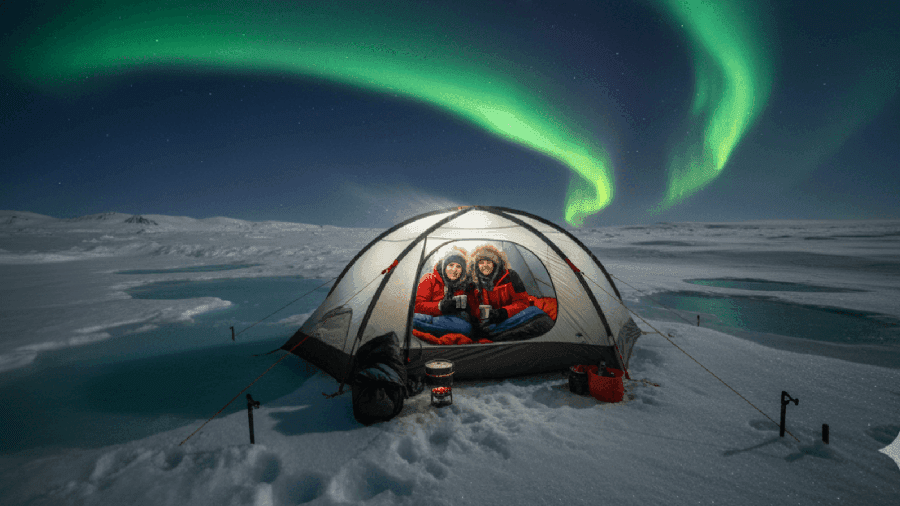
Survive a Night Camping on the World's Largest Ice Sheet
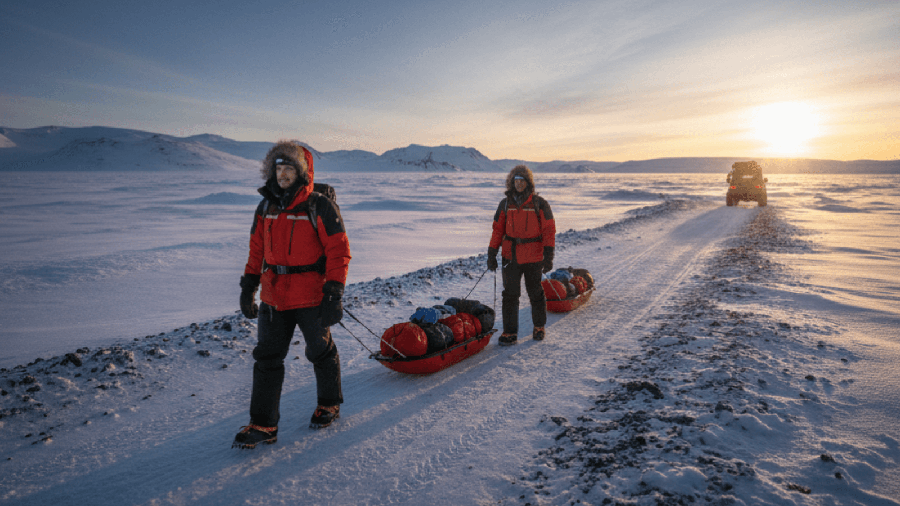
The wind hits you first - sharp and unforgiving, carrying snow that stings your face like tiny needles. You're standing on a surface that's been frozen for millions of years, pulling a sledge loaded with everything you'll need to survive the next 24 hours. Behind you, the land stretches endlessly: white on white on white, broken only by ridges of ice that shimmer under the Arctic sun. This is the Greenland Ice Sheet, and you're about to spend the night on it.
What It’s Like to Stand on the Greenland Ice Sheet
The Greenland Ice Sheet covers 1.7 million square kilometers - roughly 80% of the entire island. In some places, the ice reaches depths of three kilometers. Some of the basal ice has been dated to more than two million years, meaning it was around long before humans walked the Earth.
But here's what really gets you when you're standing out there: the silence. There's no hum of traffic, no distant airplane engines, no rustling leaves. Just you and the ice and a quiet so profound it almost rings in your ears.
How You Actually Get There
Most camping trips start from Kangerlussuaq, a small town on Greenland's west coast. Back in 1999, Volkswagen built a 35-kilometer dirt road out to the ice edge to test their vehicles in brutal winter conditions. Today, that bumpy road serves as the gateway for adventurers like you.
The drive alone is worth the trip, you'll spot musk oxen and reindeer along the way, massive animals perfectly adapted to this harsh environment. Here's something sobering: when that road was built, it led right to the ice. Now, the ice has retreated so much that you need to walk about a kilometer from the road's end before you even reach the sheet.
Your First Walk on the Ancient Ice!
At the ice edge, everything changes fast. Your guide will help you strap on crampons (metal spikes that attach to your boots) and show you how to walk without face-planting. The ice isn't flat - it rises and falls in waves, carved by wind and melt patterns.
Everyone pulls their own pulk (a sledge loaded with tents, sleeping bags, food, and safety gear). It's lighter than it sounds - usually around 10 kilograms per person. Though after the first hour of hauling it uphill, your arms might disagree.
Making Camp Where Few Dare
The hike to your camp spot takes about an hour. Your guide will pick a spot with natural shelter from the wind - usually a dip between ice ridges - and then it's time to work. You're screwing ice pegs deep into the frozen surface to anchor your tent so it doesn't blow away in the middle of the night.
This isn't glamping. But once your personal sleeping tent is up and you're inside your Arctic-rated sleeping bag, you realize something: you're actually comfortable. The bags are designed for temperatures well below freezing, and they work.
Adventures on the Ice
Once camp is established, the real exploration begins. The ice isn't just white - look closer and you'll see every shade of blue imaginable:
- Deep navy in the crevasses
- Turquoise in the melt pools
- Powder blue where fresh snow has settled If you're visiting in summer, you'll encounter shallow lakes formed by meltwater. They glow this impossible shade of turquoise under the midnight sun. Some brave souls actually swim in them. The water is cold - not just cold, but "make you gasp and question your life choices" cold.
For the truly adventurous, your guide might offer the chance to rappel into a moulin - a vertical shaft where meltwater drains into the ice. Even dropping a few meters into the blue throat of the ice is an adrenaline rush you won't forget.
Sleeping Under the Midnight Sun
Here's a wild fact: the ice beneath you is constantly moving. Not fast enough to feel, but it's flowing toward the ocean like an incredibly slow river. You're camping on something alive in its own ancient, glacial way.
If you visit between June and early July, the sun never sets. Bring an eye mask or you'll be staring at the tent ceiling at 2 AM wondering if it's morning yet. But the upside? You can hike at midnight under soft golden light that makes the whole ice sheet shimmer.
Dinner is surprisingly good - freeze-dried trekking meals that you just add hot water to. After a day of hauling sledges and exploring, you'll inhale them. Your group gathers in the communal tent, swapping stories and warming hands around hot drinks, while outside the wind howls and the ice creaks.
What's Really at Stake
It's impossible to spend time on the Greenland Ice Sheet without thinking about climate change. Greenland is losing about 266 billion tons of ice per year. If the entire ice sheet were to melt, it would raise global sea levels by about 7.4 meters.
This isn't meant to be depressing - it's meant to make you appreciate where you are right now. You're witnessing something that future generations might only see in photographs.
Things You Should Know Before Planning This Trip
Fitness Level: Be comfortable hiking 8+ kilometers with some gear. The altitude and cold make everything harder. When to Go:
- April-May: Colder, chance for Northern Lights
- June-August: Midnight sun, warmer temps (0°C to -5°C)
- September: Autumn colors, fewer crowds
- Safety Requirements: You can only visit with a qualified and registered guide. The risks are real - crevasses and extreme weather don't give second chances. Cost: Overnight camping trips typically start around €500-800 per person.
The Morning After
Dawn arrives with hot coffee and instant oatmeal. You'll pack up camp, leaving nothing behind but footprints, and make the trek back to the ice edge. Your legs are sore, your face is windburned, and you smell like freeze-dried food and effort.
But as you take that last look back at the ice sheet, something shifts. You've experienced something most people never will. You came here as a tourist. You're leaving as someone who's experienced one of Earth's last truly wild places.
What You Actually Need to Know Before Going
- Fitness Level: You don't need to be an Olympic athlete, but you should be comfortable hiking 8+ kilometers with some gear. The altitude (you're camping around 660 meters above sea level) and cold make everything a bit harder.
- When to Go: Trips run from April through September. Summer (June-August) brings the midnight sun and warmer temperatures (around 0°C to -5°C during the day). Spring and fall are colder but offer chances to see the Northern Lights.
- What to Pack: Your tour operator will provide a detailed list, but expect to bring extreme cold-weather gear, sunglasses (the glare is brutal), high-SPF sunscreen, and an eye mask if you're visiting during midnight sun season.
- Cost: This isn't a budget adventure. Overnight camping trips typically start around €500-800 per person, but prices vary by operator and season. You're paying for safety, expertise, and access to one of the planet's most restricted environments.
- Safety: Due to the scale of the ice sheet, the ferocity of the climate, and the harshness of the terrain, travelers can only visit with a qualified and registered guide. This isn't negotiable - the risks are real and the consequences of getting lost or falling into a crevasse are serious.
At Neomaxer, we connect travelers with the world's most extraordinary destinations and once-in-a-lifetime experiences. Whether you're dreaming of camping on ancient ice sheets or exploring hidden corners of the globe, we'll help turn those dreams into reality. Start planning your next great adventure today.









