
Barren Island: India’s Only Active Volcano at Sea
The Location and What Makes It an Active Volcano
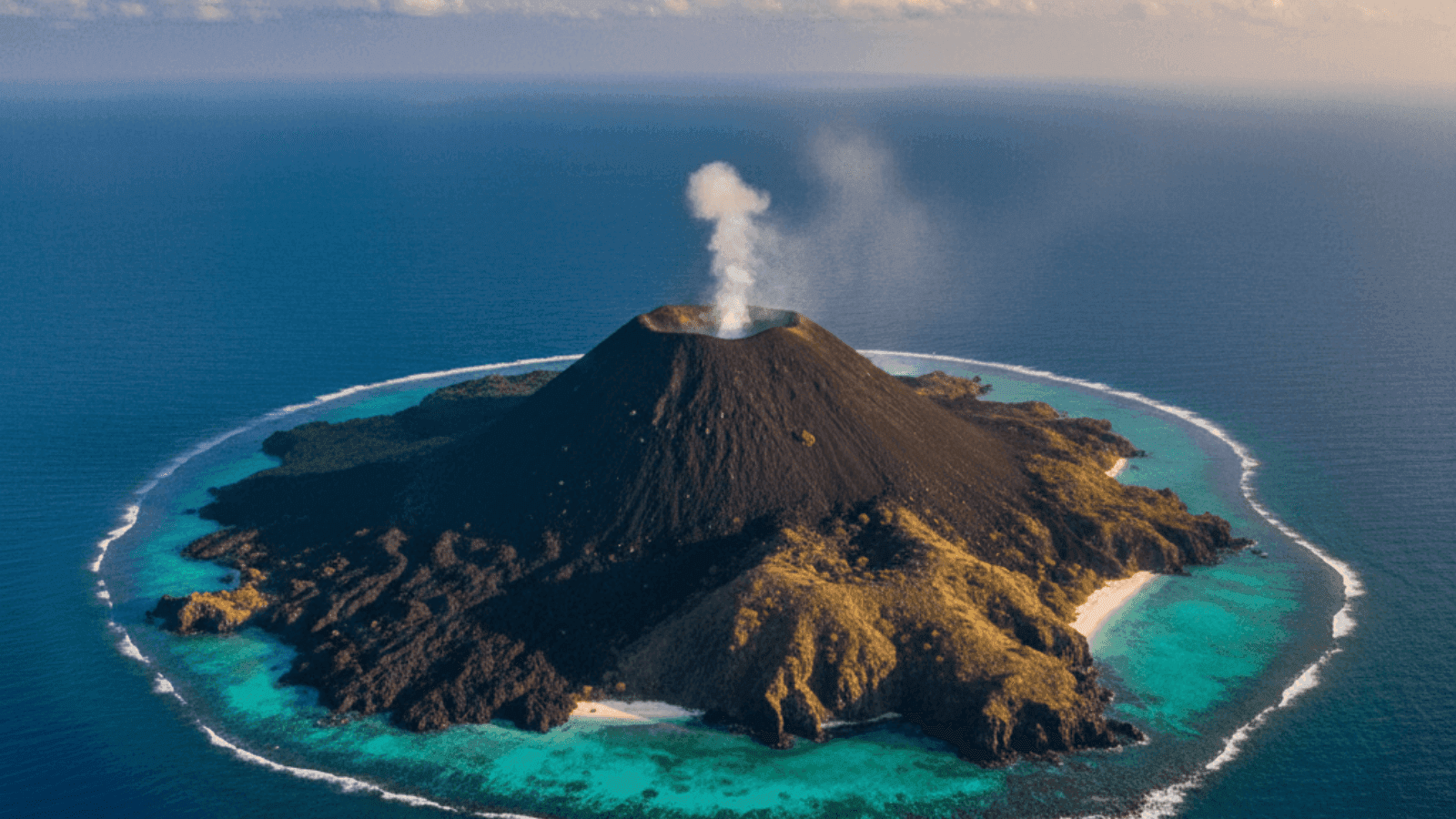
Barren Island sits about 135 kilometres northeast of Port Blair, isolated in the Andaman Sea and cut off from regular human access. It is part of the Andaman and Nicobar archipelago but feels geologically separate, younger, rawer. The island is India’s only confirmed active volcano, formed by subduction activity where the Indian Plate moves beneath the Burma Plate.
Barren Island has erupted intermittently since 1787, with recorded activity continuing into the 21st century. Most eruptions are strombolian in nature, releasing lava flows, ash clouds, and gas without catastrophic explosions. Activity levels change year to year, sometimes visible as glowing lava at night, sometimes limited to smoke drifting above the crater.
Ecosystem Built Around Fire
The land surface is mostly volcanic ash and basalt, yet patches of hardy vegetation cling to older slopes. Grasslands and shrubs appear where lava has cooled long enough for soil to begin forming.
Below the waterline, the story changes completely. Coral reefs surround parts of the island, nourished by mineral-rich volcanic runoff. Reef fish, rays, reef sharks, and schools of pelagic species thrive in these waters. Divers often note how quickly marine life rebounds around volcanic islands compared to mainland reefs.
Marine Life and Diving Conditions
Barren Island is considered one of the most dramatic dive sites in India. Visibility can exceed 30 metres on calm days, with lava formations extending underwater like frozen waves. Divers encounter trevallies, barracudas, nudibranchs, and occasionally hammerhead sharks in deeper waters.
Strong currents are common, making dives suitable only for experienced divers. Operators usually offer drift dives rather than static reef dives. Even snorkelling from boats reveals coral growth along submerged lava rocks.

What You Can and Cannot Do There
Visitors are not allowed to set foot on Barren Island. No hiking, no crater walks, no beach landings. All exploration happens from the water or from boats circling the island.
Most trips involve sailing around the island, watching smoke plumes, photographing lava-streaked cliffs, and stopping at designated dive or snorkel points offshore. Night approaches are rare and depend on sea conditions and permissions.
How to Reach Barren Island
Trips begin from Port Blair, usually as part of a multi-day cruise or a long day expedition. Travel time by boat ranges from 4 to 6 hours one way, depending on vessel type and sea conditions.
There is no public ferry. Access is only through licensed operators authorised by the Andaman administration. Weather plays a major role, and trips are often cancelled at short notice if conditions shift.
Permits and Regulations
Visiting Barren Island requires special permits issued through registered tour operators. Independent applications are not accepted. The permit covers boat access only, not landing rights.
Authorities limit the number of vessels around the island at any given time to reduce environmental impact and ensure safety. Drones are prohibited. Fishing near the island is restricted.
Best Time to Visit
The ideal window runs from November to April, when seas are calmer and visibility is higher. March and April are popular with divers due to warmer water temperatures and stable conditions.
The monsoon season from May to September makes access unpredictable, with rough seas and frequent cancellations. October is a transition month and varies year to year.
Photography and Viewing Tips
Early morning light reveals the texture of lava flows better than midday glare. Overcast skies often enhance the visibility of smoke plumes against the sea.
Telephoto lenses help capture crater activity from a safe distance, while wide-angle lenses work best for combining volcanic cliffs with surrounding water. Salt spray protection is essential.
Responsible Travel Considerations
Barren Island is protected precisely because it is fragile despite appearing indestructible. Volcanic landscapes recover slowly on land and quickly underwater, but only when left undisturbed. Responsible operators maintain distance, limit engine noise, and avoid anchoring near sensitive reef areas. Choosing such operators directly affects how long this place remains visitable at all.
If seeing a live volcano from the sea and staying close to rare natural wonders is your kind of travel, Neomaxer makes it easy to plan the stay around it.









