
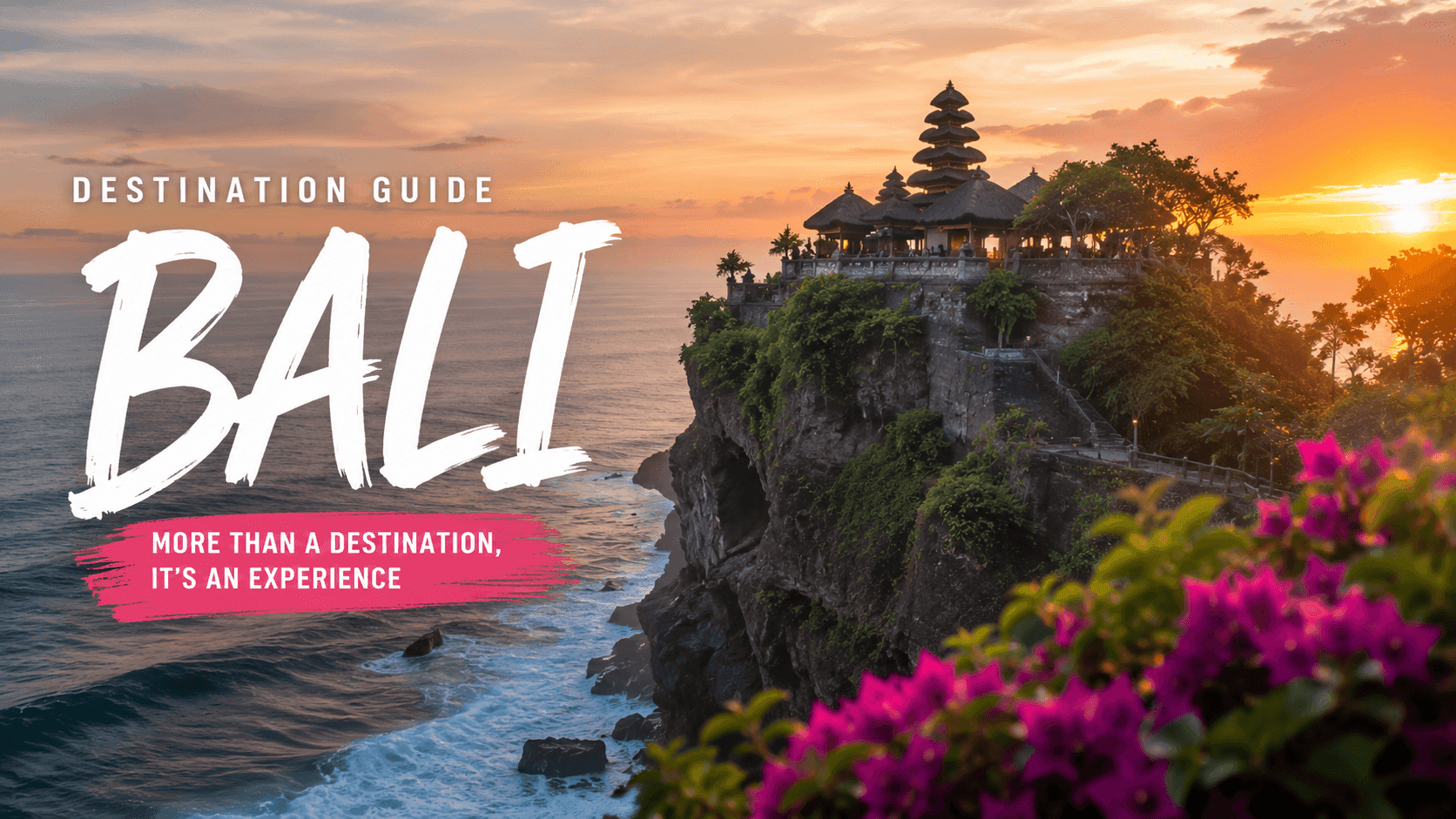
There are destinations you visit once, check off your list, and move on from.
Then there is Bali.
The Indonesian island has become one of the most photographed places on the planet, yet somehow it continues to surprise people who arrive expecting nothing more than beaches and Instagram spots. The first thing many travelers notice is that Bali never feels like a single destination. It feels like several completely different worlds stitched together into one island.

One morning you might be sipping coffee overlooking emerald rice terraces in Ubud while temple chants drift through the valley. By afternoon you're standing on a dramatic limestone cliff in Uluwatu watching waves explode against the rocks below. A day later you're snorkeling beside coral reefs around Nusa Penida or wandering through ancient temples surrounded by volcanic landscapes.
This is what makes a Bali trip so addictive. Every region has its own personality, its own rhythm, and its own reason for drawing visitors back year after year.

Why Bali Remains One of the World's Most Popular Travel Destinations
Few places offer the variety that Bali does within such a compact area. Travelers come for the beaches and quickly discover volcanoes, waterfalls, temples, jungle retreats, surf towns, luxury resorts, traditional villages, and some of Southeast Asia's most vibrant food scenes.
The island has also mastered something many destinations struggle with. It caters to almost every travel style without losing its identity. Backpackers can comfortably explore Bali on a modest budget, while luxury travelers can stay in world-class cliffside villas and private resorts. Families find calm beaches and cultural attractions, honeymooners discover romantic escapes, and digital nomads often end up extending their stay for months.
Despite welcoming millions of visitors every year, Bali still manages to offer moments that feel deeply personal. A sunrise hike up Mount Batur or an evening walk through the rice fields outside Ubud can feel surprisingly untouched by tourism.
The Best Time to Visit Bali
One of the most common questions travelers ask is when they should visit Bali. The truth is that Bali is a year-round destination, although each season offers a slightly different experience.
The dry season, which runs roughly from April through October, is considered the ideal time for most visitors. Sunny skies, comfortable humidity levels, calmer seas, and excellent visibility for diving make this period particularly attractive. It's also the busiest time of year, especially during July and August when visitors arrive from Europe, Australia, and other parts of Asia.

The wet season often gets overlooked, which is a mistake. While rain is more frequent between November and March, it rarely means nonstop storms. Tropical showers usually arrive for a few hours before sunshine returns. During this period the island becomes incredibly lush, waterfalls are at their most impressive, and hotel rates often become much more attractive.
For travelers seeking a balance between good weather and manageable crowds, May, June, and September are often considered the sweet spot.
Ubud: The Cultural Heart of Bali

If there's one place that captures the essence of Bali, it's Ubud. Nestled among lush valleys, emerald rice terraces, jungle-covered hills, and centuries-old temples, Ubud offers a completely different experience from Bali's beach towns. This is where travelers come to slow down, reconnect with nature, immerse themselves in Balinese culture, and experience the island beyond its coastline.
Unlike Seminyak or Canggu, where life revolves around beaches and sunsets, Ubud is all about art, spirituality, wellness, nature, and traditional Balinese life. It is one of the most popular places to visit in Bali, yet despite its popularity, many parts of Ubud still feel peaceful and deeply connected to local traditions.
Whether you're spending two days or an entire week here, Ubud offers enough attractions, experiences, and hidden corners to keep you exploring from sunrise to sunset.
Tegalalang Rice Terraces: Bali's Most Iconic Landscape
Few places represent Bali more than the Tegalalang Rice Terraces. Located about 20 minutes north of central Ubud, these stunning layered rice fields have become one of the island's most photographed attractions.
The terraces showcase Bali's centuries-old Subak irrigation system, a UNESCO-recognized water management network that continues to support local farming communities today.
Opening Hours: 6:00 AM to 6:00 PM
Entry Fee: IDR 25,000-50,000 ($2-$4)
Best Time to Visit: 6:30 AM to 9:00 AM
Early mornings offer cooler temperatures, fewer crowds, and beautiful golden light rolling across the terraces. During sunrise, mist often lingers between the hills, creating the classic Bali landscapes seen across travel magazines and social media.
Many visitors also try the famous Bali Jungle Swing, which allows riders to swing high above the rice fields.
Swing Pricing: IDR 200,000-600,000 ($13-$40) depending on package and photo options.
Sacred Monkey Forest Sanctuary
One of Ubud's most famous attractions, the Sacred Monkey Forest Sanctuary, combines wildlife, ancient temples, and lush jungle landscapes into a unique experience.
The sanctuary is home to over 1,000 long-tailed macaques that roam freely among giant banyan trees, moss-covered statues, and centuries-old temple structures.
Opening Hours: 9:00 AM to 6:00 PM
Entry Fee:
- Adults: IDR 100,000 ($6-$7)
- Children: IDR 80,000 ($5)
Visitors often spend 1-2 hours exploring the forest's pathways and temple complexes.
Important Tip: Avoid carrying visible food and keep phones, sunglasses, and hats secure. The monkeys are known for their curiosity and occasionally steal unattended items.
Campuhan Ridge Walk
For travelers looking to escape the crowds, the Campuhan Ridge Walk offers one of the most peaceful experiences in Ubud.
This scenic trail winds through rolling hills, tropical vegetation, and open valleys, providing a refreshing contrast to the busier attractions in town.
Opening Hours: Open 24 Hours
Entry Fee: Free
Best Time: Sunrise or late afternoon
The walk itself takes approximately 1-2 hours depending on pace and how often you stop for photos.
It's one of the best places in Bali to simply slow down and appreciate the island's natural beauty.
Tirta Empul Temple
Located approximately 30 minutes from central Ubud, Tirta Empul Temple is one of Bali's most significant spiritual sites.
The temple is famous for its sacred spring water, where locals and visitors participate in traditional purification rituals believed to cleanse the body and spirit.
Opening Hours: 8:00 AM to 6:00 PM
Entry Fee: IDR 75,000 ($5)
Sarong Rental: Usually included or available for a small additional fee.
Visitors are welcome to participate respectfully in the purification ceremony after understanding local customs and guidelines.
Ubud Palace and Traditional Dance Performances
Situated in the center of town, Ubud Palace offers a glimpse into Bali's royal heritage. While the palace itself is relatively small, its intricate architecture and traditional carvings are worth seeing.
The real highlight comes after sunset when the palace hosts traditional Balinese dance performances featuring colorful costumes, live gamelan music, and ancient storytelling traditions.
Performance Timings: Usually 7:30 PM onwards
Ticket Price: IDR 100,000-150,000 ($6-$10)
These performances provide one of the most accessible introductions to Balinese culture.
Tegenungan Waterfall
Located around 20 minutes from central Ubud, Tegenungan Waterfall remains one of Bali's most popular waterfall experiences.
Unlike some of Bali's more remote waterfalls, it is relatively easy to access and suitable for most travelers.
Opening Hours: 6:30 AM to 6:30 PM
Entry Fee: Approximately IDR 30,000 ($2)
Best Time: Before 9:00 AM
Visiting early helps avoid crowds and provides better lighting for photography.
Swimming is usually possible depending on seasonal water conditions.
Wellness, Yoga, and Spa Experiences
Ubud has earned a global reputation as one of Asia's leading wellness destinations.
Travelers come from around the world to participate in yoga retreats, meditation sessions, holistic healing programs, and traditional Balinese spa treatments.
Popular wellness centers include:
- The Yoga Barn
- Radiantly Alive
- Alchemy Yoga
- Intuitive Flow
Yoga Class Pricing: IDR 130,000-250,000 ($8-$16)
Spa Treatments: IDR 250,000-1,000,000 ($16-$65)
Even travelers who aren't particularly interested in wellness often find themselves booking at least one massage while in Ubud.
Ubud Art Market
Shopping in Ubud feels very different from Bali's modern shopping districts.
The Ubud Art Market focuses on local craftsmanship, handmade goods, textiles, wood carvings, woven bags, paintings, jewelry, and souvenirs created by local artisans.
Opening Hours: 8:00 AM to 6:00 PM
Bargaining is common, although always done respectfully.
The market is one of the best places to purchase authentic Balinese handicrafts while supporting local businesses.
How Much Does a Day in Ubud Cost?
One of Ubud's strengths is that it caters to every budget.
A typical day may include:
- Breakfast at a café: IDR 80,000-150,000
- Temple entry: IDR 50,000-75,000
- Rice terrace visit: IDR 25,000-50,000
- Lunch: IDR 75,000-200,000
- Spa treatment: IDR 250,000-500,000
- Dinner: IDR 150,000-500,000
Most travelers spend anywhere between $35 and $150 per day, depending on accommodation, dining choices, and activities.
Seminyak and Canggu: Where Modern Bali Comes Alive

If Ubud is Bali's cultural heart, Seminyak and Canggu represent its modern, energetic side. These neighboring beach towns have evolved into some of the island's most popular destinations, attracting surfers, food lovers, digital nomads, luxury travelers, and nightlife enthusiasts from around the world. While both sit along Bali's southwest coast, each offers a slightly different experience. Seminyak leans toward upscale resorts, fine dining, and sophisticated beach clubs, while Canggu embraces a more relaxed surf-town atmosphere filled with trendy cafés, coworking spaces, and laid-back beach bars.
Whether you're planning your first Bali trip or returning to explore a different side of the island, Seminyak and Canggu are often where visitors spend the majority of their time.
Seminyak Beach: Bali's Sunset Playground
The golden sands of Seminyak Beach stretch for several kilometers, offering one of the island's most iconic sunset experiences. Every evening, travelers gather along the shoreline as surfers ride the final waves of the day and the sky transforms into shades of orange, pink, and purple.
Best Time to Visit: 5:00 PM to sunset
Entry Fee: Free
The beach itself is ideal for long walks, beginner surfing, and simply relaxing with a coconut while watching the ocean. The atmosphere becomes particularly lively during sunset when nearby beach clubs and cafés begin filling up.
Tip: Arrive at least an hour before sunset to secure a good spot, especially during peak travel months.
Potato Head Beach Club
One of Bali's most famous lifestyle destinations, Potato Head Beach Club combines oceanfront dining, an infinity pool, live music, and spectacular sunset views. Even travelers who don't usually visit beach clubs often make an exception for this iconic venue.
Opening Hours: 9:00 AM to Midnight
Entry: Usually free, although minimum spends may apply for premium seating.
Average Spend: IDR 250,000-1,000,000 ($15-$65) depending on food, drinks, and seating.
The architecture alone makes it worth visiting, while the beachfront setting provides one of the best sunset experiences in Seminyak.
Ku De Ta
Before Bali's beach club boom, there was Ku De Ta. This legendary oceanfront venue remains one of the island's most popular dining and sunset destinations.
Best For:
- Sunset cocktails
- Romantic dinners
- Oceanfront dining
Average Meal Cost: IDR 300,000-800,000 ($20-$50) per person
For travelers seeking a more refined atmosphere than some of Bali's larger beach clubs, Ku De Ta continues to be a favorite.
Café Hopping in Canggu
Canggu has developed one of Southeast Asia's most impressive café scenes. It is entirely possible to spend an entire day moving between specialty coffee shops, brunch spots, smoothie bowl cafés, and coworking-friendly eateries.
Popular favorites include:
Crate Café Known for generous portions and excellent coffee.
Milk & Madu A favorite among families, remote workers, and long-term visitors.
The Avocado Factory Famous for creative avocado-based dishes and healthy breakfasts.
Typical Cost: IDR 80,000-180,000 ($5-$12) per person
Many travelers consider café hopping one of the most enjoyable activities in Canggu.
Batu Bolong Beach
At the heart of Canggu lies Batu Bolong Beach, a lively stretch of coastline where surfers, beachgoers, and sunset seekers gather throughout the day.
Entry Fee: Free
Best Time: Late afternoon through sunset
Surfboard rentals are readily available along the beach.
Board Rental: IDR 50,000-150,000 ($3-$10)
Surf Lessons: IDR 300,000-700,000 ($20-$45)
Even non-surfers often enjoy the atmosphere, thanks to the numerous cafés, bars, and restaurants lining the beachfront.
Tanah Lot Temple
Located approximately 20 minutes from Canggu, Tanah Lot Temple is one of Bali's most recognizable landmarks. Built atop a rocky offshore formation, the temple appears to float above the ocean during high tide.
Opening Hours: 6:00 AM to 7:00 PM
Entry Fee:
- Adults: IDR 75,000 ($5)
- Children: IDR 40,000 ($3)
Best Time: One hour before sunset
The temple is particularly stunning during golden hour when the setting sun illuminates the surrounding coastline.
Shopping in Seminyak
Seminyak is one of Bali's best shopping destinations. Stylish boutiques, designer stores, home décor shops, and local artisan outlets line streets such as Jalan Kayu Aya and Jalan Petitenget.
Popular purchases include:
- Handmade jewelry
- Resort wear
- Leather goods
- Home décor
- Local artisan products
Even travelers who don't plan on shopping often enjoy wandering through the area's beautifully designed stores and cafés.
Nightlife in Seminyak and Canggu
As the sun goes down, both towns take on a different personality.
Seminyak offers a more polished nightlife experience with upscale cocktail bars, rooftop lounges, and beachfront venues.
Popular spots include:
- La Favela
- ShiShi
- Motel Mexicola
Canggu, meanwhile, delivers a more relaxed and social atmosphere with live music venues, beach bars, and community-driven events.
Popular choices include:
- The Lawn
- Old Man's
- Finns Beach Club
Average Drink Prices: IDR 70,000-180,000 ($5-$12)
How Much Does a Day in Seminyak or Canggu Cost?
One of the reasons these areas remain so popular is their flexibility across budgets.
A typical day might include:
- Breakfast at a café: IDR 80,000-150,000
- Surf lesson: IDR 300,000-700,000
- Lunch: IDR 100,000-250,000
- Beach club drinks: IDR 150,000-500,000
- Dinner: IDR 150,000-800,000
Budget travelers can comfortably explore for $30-$50 per day, while luxury travelers can easily spend $150-$300+ daily enjoying premium resorts, fine dining, and beach clubs.
Uluwatu: Bali's Most Dramatic Coastline
Some destinations impress you immediately.
Uluwatu is one of them.

Perched on the southern tip of Bali, Uluwatu is where towering limestone cliffs meet the endless blue waters of the Indian Ocean. While many visitors initially come for the famous temple and sunsets, they quickly discover that Uluwatu offers some of the island's best beaches, luxury resorts, surf breaks, beach clubs, and ocean views. Compared to the busier streets of Seminyak and Canggu, Uluwatu feels more relaxed, scenic, and naturally beautiful.
The region has become one of the most sought-after destinations in Bali tourism, attracting everyone from surfers and honeymooners to photographers and luxury travelers seeking some of the island's most spectacular coastal landscapes.
Uluwatu Temple: Bali's Most Iconic Sunset Spot
The crown jewel of the region is Uluwatu Temple (Pura Luhur Uluwatu), an ancient sea temple dramatically positioned on a cliff approximately 70 meters above the ocean. Dating back to the 11th century, the temple is considered one of Bali's six key spiritual pillars and remains one of the island's most important cultural landmarks.
Opening Hours: 7:00 AM to 7:00 PM
Entry Fee:
- Adults: IDR 50,000 ($3-$4)
- Children: IDR 30,000 ($2)
Best Time to Visit: 4:30 PM to sunset
The real magic happens during the evening. As the sun begins sinking into the Indian Ocean, the cliffs glow in shades of gold and orange while waves crash against the rocks below. It's easily one of the most photographed scenes in Bali.
Visitor Tip: Keep a close eye on personal belongings. The temple's resident monkeys are famous for snatching sunglasses, hats, phones, and water bottles.
Kecak Fire Dance: Bali's Most Famous Cultural Performance
Every evening, an open-air amphitheater near Uluwatu Temple hosts the legendary Kecak Fire Dance. Unlike traditional performances that use musical instruments, the show relies on rhythmic chanting by dozens of performers while retelling scenes from the Hindu epic Ramayana.
As the sun sets behind the cliffs and the sky changes color, the performance becomes one of Bali's most memorable cultural experiences.
Show Timings:
- First Show: 6:00 PM
- Second Show (Peak Season): Around 7:00 PM
Ticket Price:
- Approximately IDR 150,000 ($10)
Tip: Arrive at least 45 minutes early during peak season as tickets often sell out before sunset.
Padang Padang Beach
Hidden between towering limestone cliffs, Padang Padang Beach gained international fame after appearing in the movie Eat Pray Love. Reached through a narrow rock passageway, the beach offers crystal-clear water, soft sand, and excellent swimming conditions during calmer months.
Opening Hours: 7:00 AM to 6:00 PM
Entry Fee: Approximately IDR 15,000 ($1)
Best Time to Visit: Early morning before crowds arrive.
The beach is particularly popular among beginner and intermediate surfers due to its manageable waves during certain seasons.
Suluban Beach and Blue Point
For travelers looking for dramatic scenery, Suluban Beach delivers one of Bali's most unique coastal experiences. Access requires descending through caves and narrow rock formations before emerging onto a hidden stretch of coastline surrounded by towering cliffs.
The nearby Blue Point viewpoint offers some of the most spectacular ocean views in Bali.
Entry Fee: Free
Best Time: Morning or late afternoon
Tip: Wear comfortable footwear as access involves multiple staircases and uneven surfaces.
Surfing in Uluwatu
Uluwatu is widely regarded as one of Asia's premier surf destinations. Experienced surfers travel from around the world to ride the powerful reef breaks found along this coastline.
Popular surf spots include:
- Uluwatu
- Padang Padang
- Bingin Beach
- Dreamland Beach
- Impossible Beach
Surfboard Rental:
- IDR 100,000-250,000 ($7-$15) per day
Surf Lessons:
- IDR 350,000-800,000 ($20-$50) depending on duration and instructor
Even non-surfers often spend hours watching experienced riders tackle the impressive waves from cliffside cafés.
Beach Clubs with Million-Dollar Views
Uluwatu is home to some of Bali's most stunning beach clubs, many built directly into the cliffs overlooking the ocean.
Single Fin
Perhaps the most famous surf bar in Bali, Single Fin is known for sunset views, live music, and a relaxed atmosphere overlooking Uluwatu's surf breaks.
Savaya Bali
One of Bali's most luxurious beach clubs, featuring an infinity pool, world-renowned DJs, and breathtaking cliffside views.
Typical Spend:
- Drinks: IDR 80,000-250,000 ($5-$15)
- Daybeds: IDR 500,000-3,000,000 ($30-$190) depending on season and location.
Best Beaches Around Uluwatu
Uluwatu's coastline is packed with beautiful beaches, each offering a different experience.
Melasti Beach is famous for its winding cliff road, turquoise water, and white sand.
Dreamland Beach offers a wider beach with excellent surf and sunset views.
Bingin Beach attracts travelers looking for a quieter atmosphere and picturesque coastal scenery.
Most beaches charge small entrance or parking fees ranging from IDR 10,000-20,000 ($1-$2).
How Much Does a Day in Uluwatu Cost?
A typical day exploring Uluwatu can be surprisingly affordable.
- Temple Entry: IDR 50,000
- Kecak Dance: IDR 150,000
- Beach Access & Parking: IDR 20,000-50,000
- Meals & Drinks: IDR 150,000-500,000
- Private Driver from Seminyak/Canggu: IDR 600,000-900,000 per day
Most travelers spend between $30 and $100 per person, depending on transportation choices and whether beach clubs are included.
Nusa Penida: The Island Everyone Dreams About

When travelers search for the most iconic places to visit in Bali, many of the breathtaking images they discover actually come from Nusa Penida. Located about 45 minutes by fast boat from Sanur Harbour, this rugged island has become one of the most popular day trips from Bali, thanks to its dramatic cliffs, turquoise waters, hidden beaches, and world-class snorkeling spots.
What makes Nusa Penida special is its raw, untamed beauty. Unlike the more developed areas of mainland Bali, the island still feels wild and adventurous. Towering limestone cliffs plunge hundreds of feet into the Indian Ocean, winding roads lead to secluded viewpoints, and every corner seems to reveal another postcard-worthy landscape.
Kelingking Beach: The View That Put Nusa Penida on the Map
No attraction in Nusa Penida is more famous than Kelingking Beach. The viewpoint overlooks a spectacular cliff formation resembling a T-Rex head, making it one of the most photographed locations in Indonesia.
Timings: Open 24 hours, best visited between 7:00 AM and 10:00 AM.
Entry Fee: Included in Nusa Penida island entrance fee (approximately IDR 25,000 or $2).
Tips:
- Arrive early to avoid crowds and harsh afternoon sunlight.
- Wear sturdy footwear if attempting the steep hike down to the beach.
- Carry water, especially during warmer months.
The viewpoint itself is breathtaking, while the challenging descent to the beach below can take 45-60 minutes each way and is recommended only for reasonably fit travelers.
Angel's Billabong & Broken Beach
Located close to each other on the island's western coast, these two natural attractions are usually visited together.
Angel's Billabong is a naturally formed rock pool filled with crystal-clear seawater during calm conditions. Nearby, Broken Beach features a dramatic circular cove connected to the ocean through a natural rock arch.
Timings: 6:00 AM to 6:00 PM
Entry Fee: Usually included within the island entrance fee.
Tips:
- Avoid entering Angel's Billabong during high tide or rough sea conditions.
- Morning visits offer the best photography opportunities.
- Allow at least 1-2 hours to explore both attractions comfortably.
Crystal Bay: Relaxation and Snorkeling
For travelers seeking a more laid-back experience, Crystal Bay offers one of Nusa Penida's most accessible beaches. Calm waters, swaying palm trees, and clear visibility make it a favorite for swimming and snorkeling.
Timings: Open throughout the day.
Snorkeling Cost: Approximately IDR 150,000-300,000 ($10-$20) depending on equipment and tour operator.
Crystal Bay is also one of the best places on the island to catch a sunset if you're staying overnight.
Snorkeling with Manta Rays
One of the biggest reasons travelers visit Nusa Penida is the chance to snorkel alongside giant manta rays. Tours typically visit locations such as Manta Point, Crystal Bay, Gamat Bay, and Wall Point.
Tour Duration: 2-4 hours
Average Cost: IDR 250,000-600,000 ($15-$40) per person
Best Time: April to October for calmer sea conditions.
While sightings can never be guaranteed, Nusa Penida remains one of the best places in Indonesia to encounter these graceful marine giants.
How Much Does a Nusa Penida Day Trip Cost?
Most visitors choose organized day tours that include transfers, sightseeing, and transportation around the island.
Typical costs include:
- Fast Boat Round Trip: IDR 250,000-500,000 ($15-$30)
- Shared Day Tour: IDR 500,000-900,000 ($30-$55)
- Private Car with Driver: IDR 700,000-1,500,000 ($45-$95)
- Snorkeling Add-On: IDR 250,000-600,000 ($15-$40)
A comfortable full-day experience usually costs between $40 and $100 per person, depending on the level of comfort and activities chosen.
Food in Bali: More Than Just Smoothie Bowl

Food in Bali is much more than a meal between sightseeing stops. The island's culinary scene ranges from traditional Balinese warungs to award-winning fine dining restaurants, making food an experience in itself.
For first-time visitors, Nasi Goreng is a must-try. This iconic Indonesian fried rice dish is served everywhere from local eateries to luxury resorts, typically costing IDR 35,000-80,000 ($2-$5). For an authentic local meal, visit Warung Babi Guling Ibu Oka in Ubud.
Another Balinese classic is Babi Guling, a slow-roasted suckling pig seasoned with traditional spices and known for its crispy skin. Popular spots such as Ibu Oka (Ubud) and Pak Malen (Seminyak) serve generous portions for IDR 60,000-120,000 ($4-$8).
Seafood lovers should head to Jimbaran Bay, where beachfront restaurants like Menega Café and Made Bagus Café grill fresh fish, prawns, lobster, squid, and crab right by the ocean. Expect to spend IDR 250,000-600,000 ($16-$40) per person while enjoying one of Bali's most memorable sunset dining experiences.
Bali's café culture is equally famous. Areas such as Canggu, Ubud, and Seminyak are packed with stylish cafés serving specialty coffee, smoothie bowls, and creative brunch menus. Favorites include Crate Café, Milk & Madu, and Kynd Community, where meals typically cost IDR 80,000-180,000 ($5-$12).
For fine dining, Bali ranks among Southeast Asia's top culinary destinations. Locavore NXT in Ubud offers innovative tasting menus focused on Indonesian ingredients for IDR 1.5-3 million ($95-$190) per person, while Merah Putih in Seminyak elevates traditional Indonesian cuisine in a stunning setting, with meals ranging from IDR 400,000-800,000 ($25-$50) per person.
Whether you're eating street food, enjoying a beachfront seafood feast, or dining at one of Asia's top restaurants, Bali makes it easy to discover a memorable meal every day.
Should You Visit Bali?

The better question might be why so many people return.
Some destinations offer beautiful scenery. Others offer culture, adventure, luxury, or relaxation.
Bali somehow combines all of them.
Whether you're hiking a volcano before sunrise, wandering through centuries-old temples, watching surfers from a cliffside café, or simply enjoying the sound of distant waves from a beachfront resort, Bali creates the kind of travel memories that stay with people long after they return home.
That is why Bali tourism continues to thrive year after year. Not because the island is perfect, but because it offers something increasingly rare in modern travel: the feeling that there is always more left to discover.









