
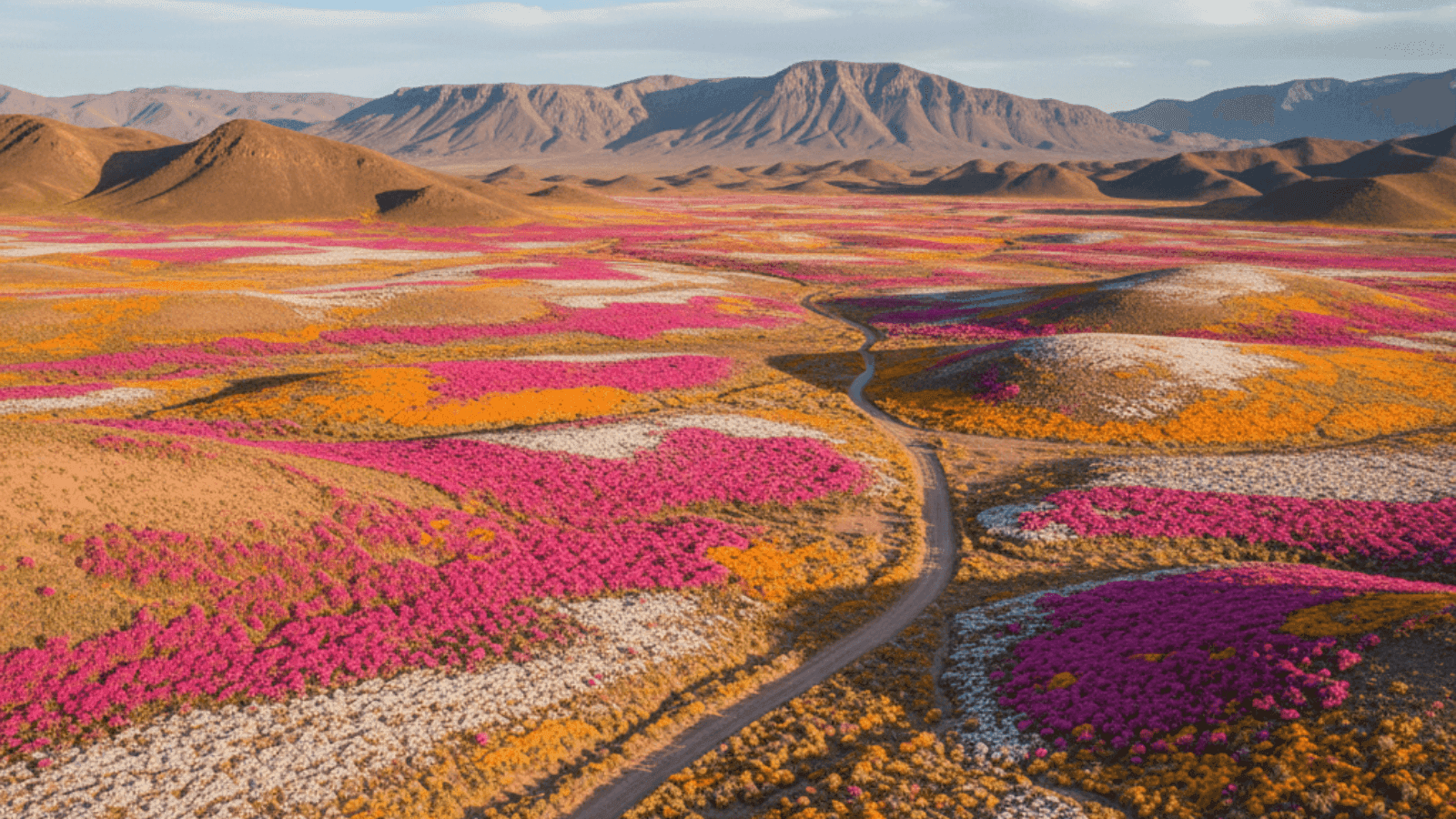
Atacama Desert Bloom Turns Chile’s Driest Land Colorful
The ground in the Atacama Desert can stay bare for years, then suddenly turn into a carpet of violet, pink, and yellow flowers almost overnight. What looks like lifeless dust begins breathing again, quietly, without warning.
Atacama's Desert Bloom Triggers Now
Rare Rainfall Patterns
Rain almost never falls here. Some weather stations in northern Chile have recorded decades without measurable precipitation. But when Pacific moisture drifts inland or El Niño conditions shift rainfall patterns, even a few millimeters can change everything.
The water seeps into the soil, waking seeds that have been waiting patiently. Within days, green shoots appear. Within weeks, entire valleys turn colorful.
Seeds That Wait for Years
Many of the desert’s flowering plants survive as dormant seeds. They remain inactive beneath the surface, protected by thick coatings that prevent damage from heat and salt. These seeds can survive for years, even decades. They only respond when rainfall reaches a specific threshold. This timing prevents wasteful growth during weak or short rains.
Top Wildflower Spots This Season
- Around Calama, roadside plains often show early blooms because the elevation allows cooler air and slightly better moisture retention
- The route toward San Pedro de Atacama reveals scattered flower clusters against volcanic backdrops
- Coastal stretches near Antofagasta experience fog-driven moisture, supporting rare species
- The outskirts of Valle de la Luna offer dramatic contrasts between rock formations and sudden patches of color
- High plains along Route 23 show isolated blooms where underground moisture collects

How to Reach Bloom Zones from Calama
Flights and Road Routes
Most travelers arrive through Calama because it serves as the main gateway to the desert. Direct flights from Santiago operate daily, with LATAM Airlines and regional carriers connecting northern routes.
Shared vans leave Calama airport regularly and reach San Pedro in about 90 minutes. Bus routes also connect Antofagasta overnight, passing through changing landscapes that shift from coastal haze to dry inland terrain.
Driving Considerations
Renting a 4x4 allows access to remote bloom areas. Some flower clusters appear far from paved highways, especially north of small settlements like Chiu Chiu.
Fuel stations are limited outside major towns. Drivers often fill tanks early and carry extra water, because distances between services can be long and empty.
Best Months for Superbloom Drives
Most blooms appear between August and October, following winter rainfall in the Southern Hemisphere. Early rains produce scattered flowers, while sustained rainfall leads to denser coverage.
Peak bloom windows can last just a few weeks. Flower density changes quickly depending on sunlight, temperature, and soil moisture.
Weather Variability
Cloud cover helps preserve blooms longer by reducing evaporation. Strong heat can shorten bloom periods dramatically.
Wind also plays a role. Gentle winds help distribute seeds, while strong gusts can strip petals quickly.
Packing for Dust and Sudden Rain
- Lightweight jacket for temperature drops after sunset
- Sunglasses to protect against intense desert glare
- Closed shoes to avoid sharp rocks and dry soil cracks
- Refillable water bottles since dehydration happens quickly
- Camera protection to prevent dust entering lenses
- Small backpack for snacks and emergency supplies
Stargazing Camps After Petal Views
The same dry air that limits rainfall also creates incredibly clear skies. With almost no humidity or artificial light, stars appear unusually bright and sharp. The Milky Way stretches clearly across the sky. Travelers often stay overnight just to watch how the desert transforms again after dark.
Where to Camp Safely
Designated campsites near San Pedro provide safe overnight options. These areas balance accessibility with protection from sensitive flower zones. Remote camping is possible but requires preparation. Temperatures drop sharply after sunset, and wind exposure increases in open plains. If seeing the Atacama bloom is on your radar, where you stay shapes the entire experience, especially in remote regions like San Pedro and Calama. Neomaxer helps you find beautiful, well-located stays so you wake up close to the flowers.









