
Where Arunachal Locals Help Hornbills Return Each Year Again
Pakke Kessang Villagers Guard Hornbill Nests March-June
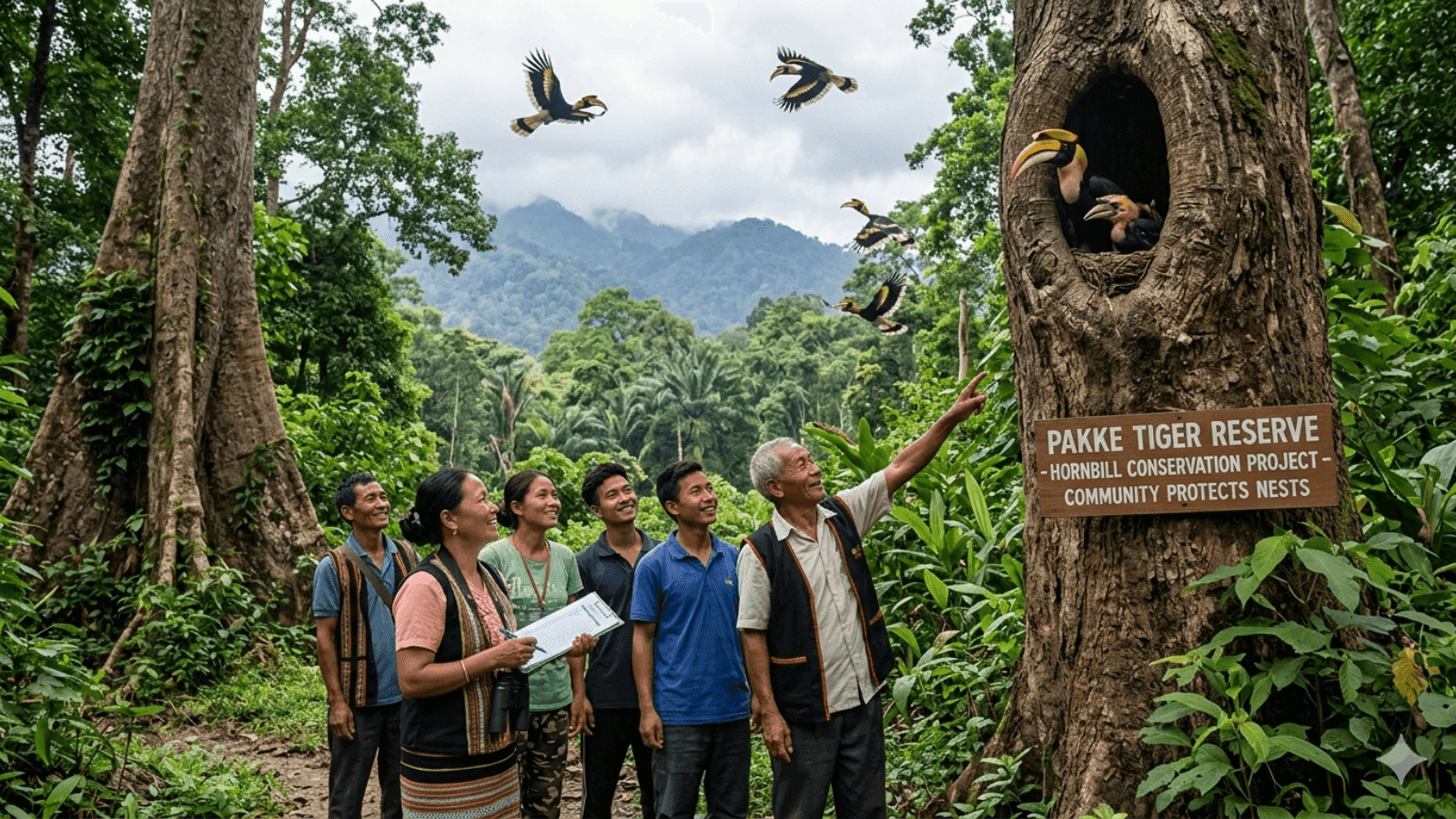
In the forests around Pakke Tiger Reserve in Arunachal Pradesh, nest trees are no longer anonymous parts of the canopy. Each one has a guardian from a nearby village in Pakke Kessang who checks on it daily. The responsibility is simple but demanding. Watch the tree, note movement, and make sure nothing disturbs the nesting hornbill.
This effort grew through collaboration with the Nature Conservation Foundation, which helped villagers turn their knowledge of the forest into active conservation. Hornbills seal themselves inside tree cavities to raise their young, leaving only a narrow slit through which the male delivers food. If the tree is cut or disturbed, the chick does not survive. Villagers now treat these trees as living commitments, often returning to the same nest season after season.
Nest Adoption Treks Run Dawn Patrols Daily
Walking with a nest protector is different from regular forest trekking. They do not rush. They stop often, scanning branches for fruit clusters and listening for wingbeats that sound like distant cloth flapping in the wind. Hornbills are large birds, and when they fly low through the trees, you feel it before you see it.
These patrol routes pass through riverbanks, bamboo groves, and old-growth patches that villagers know intimately. Some trees have been used by hornbills for decades. The guardians recognize them instantly, sometimes by scars in the bark or the shape of the opening. For travelers, these walks reveal a forest shaped as much by memory as by geography.

Hornbill Festival Draws Birders to Seijosa Basecamp
Seijosa, a small settlement near the reserve, has become a quiet base for people hoping to see hornbills in the wild. Seijosa sits at the edge of dense forest, where mornings begin with mist rising off the Pakke River. Homestays here are modest but welcoming, and conversations often revolve around which trees are active this season.
Birders gather before sunrise, guided by villagers who know feeding routes and fruiting cycles. Hornbills prefer figs and other seasonal fruits, and certain trees attract them repeatedly. Standing beneath these trees, visitors watch adult birds deliver food to sealed nests. The moment is quiet, precise, and brief.
How to Reach Pakke Tiger Reserve from Tezpur
- Shared sumo taxis leave from Tezpur and reach the reserve area in about three hours via Balipara
- State buses run toward Seijosa, followed by short auto or jeep transfers to forest entry points
- Private jeeps can be arranged through homestays for direct pickup and drop
- Motorbike riders use NH15 and connecting roads, which remain smooth through most of the year
- The nearest airport is Tezpur, with onward road travel required to reach the reserve boundary
Packing Mosquito Nets for Riverside Camps
- Lightweight mosquito net or hammock netting
- Leech socks or full-length trekking socks
- Torch or headlamp with spare batteries
- Quick-dry clothing suited for humid forests
- Waterproof covers for cameras and phones
- Reusable water bottle and purification tablets
Community Guides Spot Hornbills at Fruiting Trees
Guides rarely rely on chance. They track hornbills by following fruiting patterns that shift week to week. When a fig tree ripens, it becomes a gathering point not only for hornbills but also barbets, pigeons, and macaques. The forest feels briefly crowded, then empties again as fruit disappears.
Visitors who wait patiently see the rhythm unfold. A hornbill lands heavily, pauses, then plucks fruit with careful movements. Sometimes it carries several pieces at once, flying back toward a nest tree hidden deeper inside. These movements reveal how much territory a single bird covers to sustain its family.
Village Walks Spot Hornbills Feeding Fledglings
By late May and June, chicks begin to emerge. Villagers recognize this phase immediately because feeding activity increases. Adults arrive more frequently, and fledglings appear at nest openings, hesitant and unsteady.
Walking through village edges and forest margins during this time brings unexpected sightings. Hornbills perch on tall trees overlooking clearings, adjusting to open space after weeks inside cavities. People pause their work to watch. No one speaks loudly.
If you want to wake up near hornbill forests and stay close to the people who protect them, Neomaxer helps you find homestays and riverside camps in Arunachal.









