
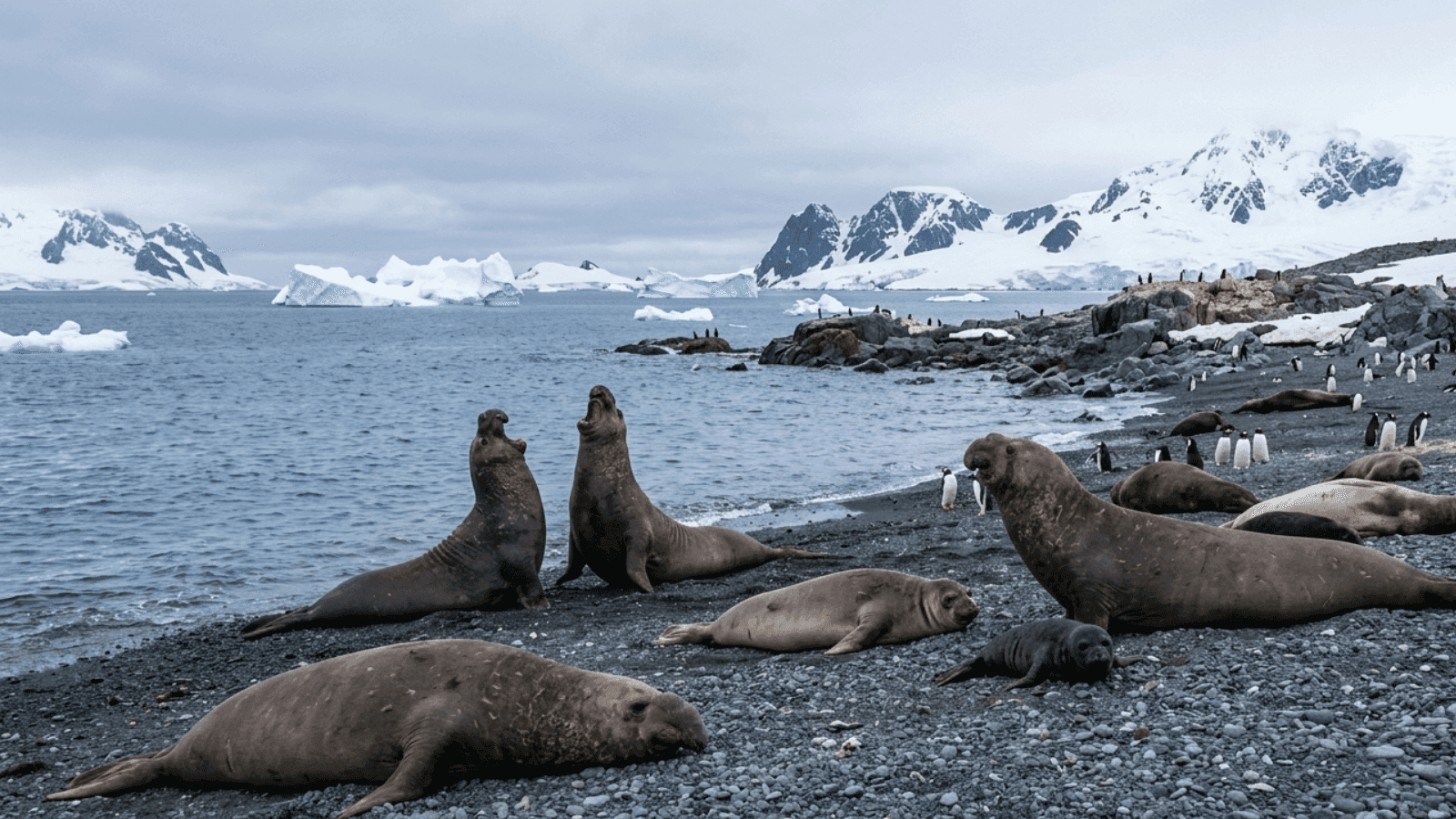
The Antarctic Destinations Where Elephant Seals Dominate Entire Beaches
The beach is already taken. Four-tonne residents are napping shoulder to shoulder, occasionally lifting their heads to announce who runs the shoreline. In this part of Antarctica, elephant seals set the rules and everyone else walks around them.
Southern Elephant Seals Pack Cuverville Island Beaches October–March
On Cuverville Island along the Antarctic Peninsula, southern elephant seals haul out in loose, heaving piles that seem to breathe as one. Between October and March, you will find adults molting, juveniles resting between swims, and the occasional territorial clash that sends sand and pebbles flying.
The scale surprises most visitors. These seals can stretch over six meters long, and dominant males, called beachmasters, may tip the scale at close to four tonnes. When they lift their heads and inflate their proboscis to roar, the sound carries across the bay.
Largest Breeding Males at 4 Tons Each
The South Shetland Islands are where breeding colonies take over entire stretches of shoreline. Bulls arrive first in spring, staking claims and gathering harems of females. By the time pups are born, the beaches look less like empty polar coasts and more like living, shifting carpets of blubber and sand.
Females nurse for about three weeks before abruptly weaning their pups and heading back to sea. The young seals, left to fend for themselves, form tight groups near the waterline, practicing short swims while enormous males continue their battles inland.
Elephant Island and the Wild Edge
Elephant Island sits farther northeast and feels raw even by Antarctic standards. Its steep beaches are often crowded with seals during breeding season, and the combination of surf, ice fragments, and massive bulls makes landings here weather-dependent.
This is also a place layered with exploration history, but for most travelers today, the draw is biological drama. Elephant seals share space with chinstrap and gentoo penguins, creating a coastline that feels almost overstimulating in its noise and movement.

How to Reach the Antarctic Peninsula from Ushuaia
Most journeys begin in Ushuaia, Argentina, the southernmost city commonly used as a gateway to Antarctica. From the port, expedition ships cross the Drake Passage, a journey that usually takes about a day and a half depending on sea conditions.
A typical expedition cruise from Ushuaia to the Antarctic Peninsula ranges around USD 8000 and up, with some operators offering extended itineraries. Hurtigruten voyages may include routes toward Elephant Island with return fares starting near USD 7000.
Fly cruise options cut out the Drake Passage by flying to King George Island in roughly two hours before boarding a ship, though prices often begin around USD 12000. A taxi from Ushuaia airport to the port takes about 20 minutes and costs roughly ARS 5000.
Best Months to See Pups, Molting Adults, and Peak Activity
Breeding season begins in September and peaks through October. If your priority is witnessing newborn pups and the most intense territorial displays, late spring in the Southern Hemisphere is the time to go.
By January and February, many adults are molting, shedding fur in ragged patches while lying in dense clusters. This period offers a different spectacle, less dramatic but visually striking, with beaches lined by animals that appear half-finished, their new coats emerging beneath peeling skin.
How Many Days to Plan
Most Antarctic Peninsula itineraries run 10 to 12 days round trip from Ushuaia. That usually allows for several landings in seal-heavy areas like Cuverville Island or parts of the South Shetlands, weather permitting.
Shorter fly cruise options can compress the experience into 8 days, though fewer sea days mean a tighter landing schedule. Travelers focused specifically on wildlife photography often opt for longer voyages that maximize shore time.
Packing for -5C Beach Walks and Zodiac Spray
Cold on the Antarctic Peninsula rarely feels abstract. Even in summer, beach walks hover around -5C to 5C, and Zodiac rides bring spray that seeps into unprotected layers.
- Waterproof outer shell jacket and trousers
- Insulated mid layers such as fleece or down
- Thermal base layers
- Waterproof gloves and spare liners
- Neck gaiter and warm hat
- Dry bag for camera gear
Tips for Watching Elephant Seals Safely
Elephant seals may look sluggish, but they can lunge surprisingly fast over short distances. Always maintain the minimum distance set by your expedition team, typically several meters, and never position yourself between a mother and her pup.
- Move slowly and avoid sudden gestures
- Keep low voices near resting groups
- Yield space if a seal shifts toward you
- Follow guide instructions without improvising routes
If standing a few metres away from a roaring beachmaster is your kind of story, Neomaxer curates stays and travel planning that bring you closer to rare wildlife moments.









