
The 300-Year-Old Luxury Hotel That Never Left the Farm
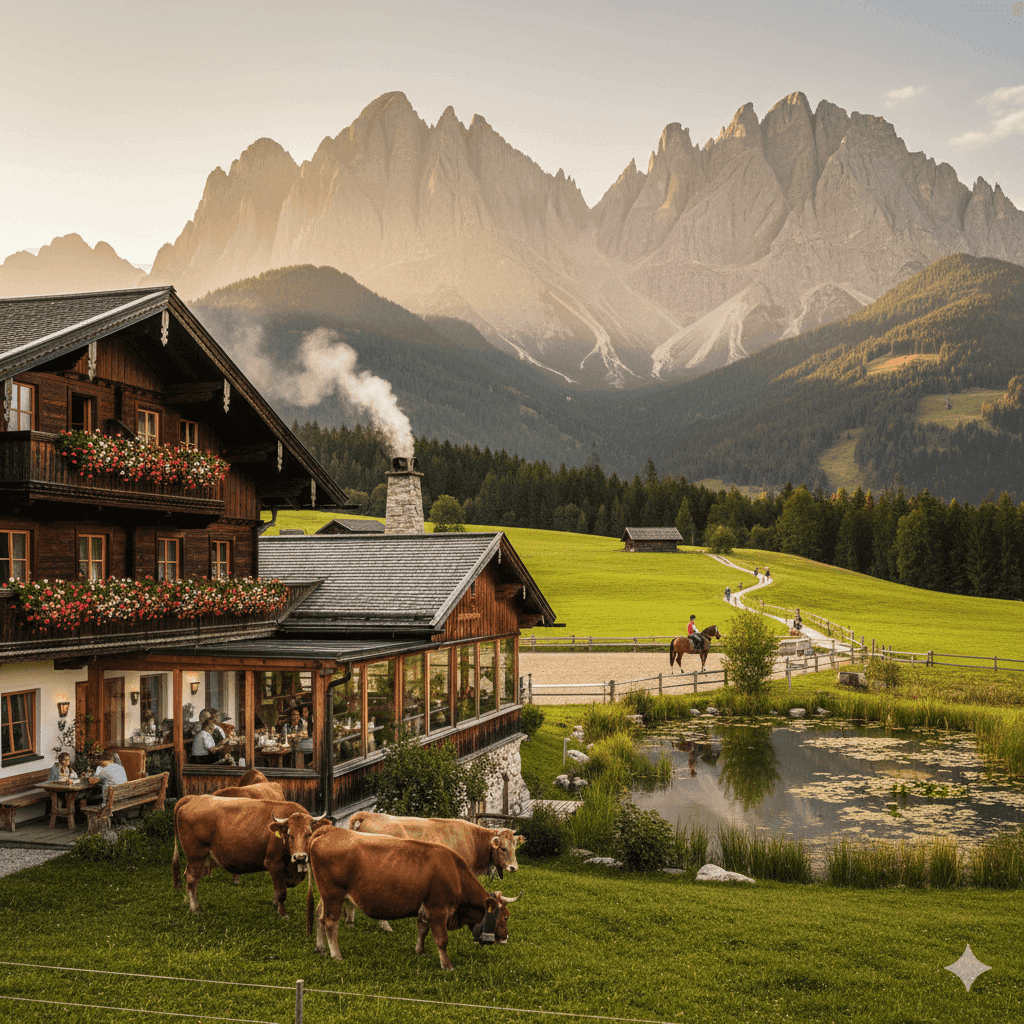
Some hotels make an impression the moment you arrive. Others take time. They reveal themselves slowly, through routines, landscapes, and the way life continues around you even as you check in. High in Austria’s Tyrolean Alps, beneath the limestone peaks of the Wilder Kaiser mountains, Stanglwirt belongs firmly to the second category. At first glance, it looks like a traditional alpine inn. Wooden balconies overflow with flowers, cows graze nearby, and the air carries the clean scent of pine. Stay a little longer, though, and it becomes clear that this is not a hotel designed around trends or temporary ideas of luxury. Stanglwirt is more than 300 years old. It has lived through empires, wars, industrialisation, and the rise of modern tourism. Through all of it, one thing has remained unchanged. It has never stopped being a working farm.
A 300-Year Story Rooted in the Tyrolean Alps
Stanglwirt’s history begins in 1567 as a tavern serving miners and traders moving through the region. By around 1720, it had grown into a full-fledged inn, offering food, shelter, and rest along Alpine routes that were far more demanding than they are today. In 1722, the Hauser family took over the property. They have run it ever since. That continuity is not just a historical detail. It shapes the way the place feels. The land is treated with familiarity rather than novelty. Decisions are made with decades in mind, not seasons. This is not a hotel created to capitalise on a location. It is a place that evolved naturally, generation after generation, shaped by its surroundings and the people who depended on them. Balthasar Hauser, the current family patriarch, describes it simply: Stanglwirt is not a hotel with a farm. It is a farm that happens to welcome guests.
Why Stanglwirt Is Still a Working Farm
The property covers around 132 hectares of farmland, pastures, and forest. Cattle are raised on-site. Milk is collected daily. Cheese is made just steps from where it is served. Much of what ends up on guests’ plates begins its life on the same land they wake up to each morning. This is not a symbolic farm or a curated attraction. Agricultural work continues here year-round, regardless of who is staying at the hotel. For travellers, that means the rhythms of real farm life are part of the experience, not hidden behind fences or timed demonstrations. You will see animals being moved, fields being tended, and food being produced at a pace that follows the seasons, not schedules.
How the Hotel Produces Its Own Food
Food at Stanglwirt is shaped by proximity. Milk, yoghurt, cheese, and beef are produced on-site. The remaining ingredients are sourced almost entirely from nearby farms and producers in the Tyrol region. A walk through the hotel’s cheese cellar makes this approach tangible. Cheese made from raw cow’s milk is aged just long enough to reach its peak, then served while it is still fresh and expressive. Because production is limited to what the hotel needs, nothing is rushed, stored for long periods, or transported across borders. The result is food that feels immediate and grounded. It is rich without being heavy, generous without excess. For travellers used to hotel menus built around logistics, the difference is noticeable from the first meal.
Sustainability Built Into Everyday Operations
Long before sustainability became a marketing phrase, Stanglwirt was already practicing it out of necessity and respect for its environment. In the 1980s, the hotel installed a bark-powered biomass heating system, making it one of the earliest hotels in the world to generate renewable energy on-site. That commitment has only deepened over time. In late 2024, Stanglwirt introduced a wood-gas energy system that converts wood chips from naturally fallen local timber into electricity and heat. The process also produces biochar, which is returned to the soil as a nutrient-rich enhancer. Today, the entire property runs on its own renewable energy without sacrificing comfort. Rooms are warm in winter, pools remain heated, and daily operations continue seamlessly. Sustainability here is not framed as an initiative. It is simply how the hotel functions.
Architecture Shaped by the Alpine Environment
The materials used throughout Stanglwirt come directly from the surrounding region. Swiss pine, a durable wood that grows at higher altitudes, is used extensively across the property. Its natural scent lingers in the rooms, often described as calming and grounding. Much of the timber used in expansions over the decades was reclaimed wood sourced from nearby farms, long before reuse became fashionable. White stucco walls, carved wooden details, and wide windows ensure that the mountains remain the focus, no matter where you are on the property. The design does not compete with the landscape. It supports it.
What Staying in the Rooms Actually Feels Like
Guest rooms at Stanglwirt avoid statement design or theatrical luxury. Instead, they feel lived-in and warm. Handcrafted furniture, soft linens, crocheted cushions, and generous windows create spaces that feel comfortable rather than curated. Staff move through the hotel with ease and familiarity. Many have worked here for years. Service feels natural and unforced. Even after a short stay, it becomes easy to forget that you are in a hotel at all.
Wellness, Horses, and Outdoor Experiences on the Property
Beyond the rooms, the property opens into a self-contained world. Stanglwirt maintains its own Lipizzaner stud and riding school, something few hotels anywhere in the world can claim. Guests can watch training sessions or take lessons with the mountains rising behind the stables. Wellness facilities are equally rooted in nature. The hotel features multiple swimming pools, including a natural bathing pond fed by its own spring. The water is filtered through plants rather than chemicals, giving it a soft, lake-like quality. Sauna rituals follow traditional Alpine and Central European practices. During aufguss sessions, a saunameister pours essential oils onto hot stones and directs waves of heat through the room. It is intense, communal, and deeply relaxing.

Dining Options Across the Hotel
Dining at Stanglwirt ranges from refined to rustic, often within the same day. Guests can eat at:
- A fine dining restaurant focusing on seasonal regional cuisine
- The original tavern, which dates back centuries
- The Kuhstall Stube, or Cowshed Tavern, where diners sit near windows overlooking a working barn
In the Cowshed Tavern, cows often peer back at diners enjoying steak or beef goulash. It is unusual, yes, but also entirely fitting for a place where farming is still central to daily life. Around 75% of ingredients used across the hotel come from the region. The hotel brews its own light pilsner, served fresh on-site, while other local products are sourced from nearby producers.
Why the Hotel Attracts Famous Guests - and Why That’s Secondary
Photographs of well-known past guests line some of the hallways. Names like Arnold Schwarzenegger, Audrey Hepburn, Muhammad Ali, and others appear quietly on the walls. But fame feels incidental here. Ask the Hauser family what guests talk about today, and the conversation quickly turns to food production, energy systems, and why the place feels so grounded despite its luxury. It reflects a broader shift in travel priorities, and helps explain why Stanglwirt continues to resonate with travellers who value substance over spectacle.
Hiking to the Stanglwirt Mountain Hut
One of the most memorable experiences offered by the hotel involves leaving it behind. Guided hikes take guests into the Wilder Kaiser mountains, following routes locals have walked for generations. At around 5,000 feet above sea level sits a simple mountain hut owned by the hotel. After the climb, guests are welcomed with mountain cheese, smoked sausages, cold beer, and herbal schnapps, all produced on-site or nearby. The meal is simple and deeply satisfying, especially after the effort it takes to get there. It captures what Stanglwirt does best: connecting people to land, tradition, and a slower sense of reward.
Planning Your Stay at Stanglwirt
Location
- Going am Wilden Kaiser, Tyrol, Austria
- Around 90 minutes from Munich
- About 75 minutes from Innsbruck
Best Time to Visit
- December to March for skiing and winter sports
- June to September for hiking and outdoor activities
- Spring and autumn for fewer crowds and seasonal scenery
Room Rates
- Rooms start at approximately €398 per night
- Breakfast included
- Seasonal pricing applies
Things to Know Before Booking
- Advance booking is essential, especially during ski season
- Family-friendly with extensive children’s facilities
- Dogs allowed on request (approx. €40 per day)
- Dinner reservations required at Gasthof Stangl
- Guided mountain hikes can be arranged through the hotel
- Power plant tours offered on select days
Getting There
- Fly into Munich or Innsbruck
- Car rental recommended
- Train connections to Kitzbühel with hotel pickup options
Worth Noting
- This is a working farm; farm sounds are part of daily life
- Some spa areas are clothing-optional for adults
- Swiss pine rooms have a natural wood scent
- Mobile coverage can be limited
- English is widely spoken by staff
Neomaxer helps travellers plan stays at hotels with real history and character, so the focus stays on the place itself, not the booking process. When you’re ready to plan a trip around stays that matter, Neomaxer helps you do it right.









