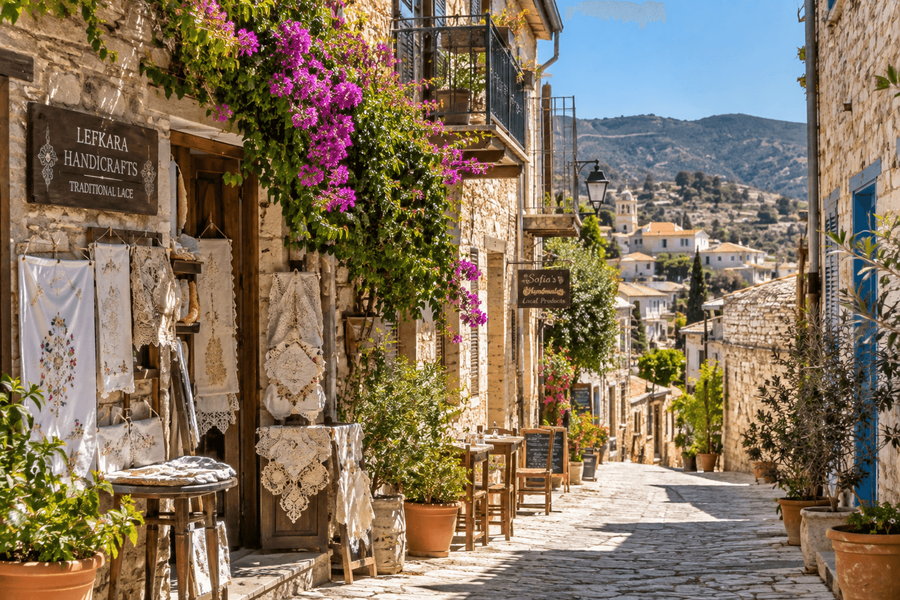
Venturing into the steep, rolling hills of the Larnaca mountain region reveals the picturesque stone village of Lefkara, famous for its hand-made lace and silver crafts. The scenic drive takes you away from the coastline and into a landscape of olive groves, leading to a charming village filled with restored red-roofed stone houses and narrow cobblestone lanes. Here, local women sit outside their doorways on wooden chairs, carefully weaving intricate lace patterns just as their ancestors did.
What makes this village truly special is its incredible artistic heritage. The local lace, known as Lefkaritika, is famous worldwide and has been officially recognized by UNESCO as intangible cultural heritage. Walking through the quiet stone plazas, listening to the gentle click of silver-crafting tools, and enjoying a traditional Cypriot coffee offers a peaceful look into historic mountain life.
One fun fact people love:
The famous Renaissance master Leonardo da Vinci visited Lefkara in 1481 and purchased a large, hand-made lace tablecloth for the altar of the cathedral in Milan.
Where in Larnaca is it?
Located in the mountainous region of the Larnaca district, situated approximately forty kilometers west of the city center.
How to reach:
Accessible by renting a car and driving along the modern A1 and E105 highways, or joining a guided mountain tour from Larnaca.
Best time to visit:
April to October when the mountain air is warm and the outdoor craft workshops are fully active.
Best time of day:
Morning around 9:30 AM to explore the narrow streets in comfort and secure a quiet table at a village bakery.
Entry fee:
Completely free to walk the historic streets and explore the local craft workshops.
Commute difficulty:
Moderate; the mountain highway is well-paved, but the streets inside the village itself are exceptionally narrow and steep.
Things nobody tells you about this place:
- Parking inside the historic core is almost impossible, so use the free public parking lot at the entrance of the village.
- Authentic Lefkara lace is highly intricate and can take months to complete, which is why real pieces are expensive compared to imported imitations.
- The village is divided into Kato Lefkara and Pano Lefkara, with Pano Lefkara hosting the majority of the historic shops and cafes.