

Spain
Spain is a destination that invites you to slow down, look closer, and experience life beyond the landmarks. Every region has its own rhythm, from lively plazas filled with music and conversation to quiet villages where centuries-old traditions continue as part of everyday life. Rather than offering one single experience, Spain rewards travelers with an incredible variety of landscapes, flavors, and cultures that feel completely different from one destination to the next. Wake up to the aroma of freshly baked pastries in a neighborhood café, spend the afternoon wandering through colorful streets lined with local boutiques, and end the day watching the sunset from a seaside promenade. Food is more than a meal here. It is a celebration of community, with tapas shared among friends, fresh seafood served along the coast, and regional specialties that tell the story of the land and its people. Nature lovers can explore dramatic mountain ranges, golden Mediterranean beaches, volcanic islands, and rolling vineyards, while history enthusiasts will find castles, cathedrals, and architectural masterpieces around every corner. Whether you are traveling as a couple, with family, or on your own, Spain offers experiences that feel authentic, welcoming, and deeply memorable. It is a country where every journey becomes a collection of moments worth remembering long after the trip has ended.


Packages in Spain
Curated trips across Spain's top cities



Things to Do in Spain
Top activities and experiences across Spain
Plaza de España
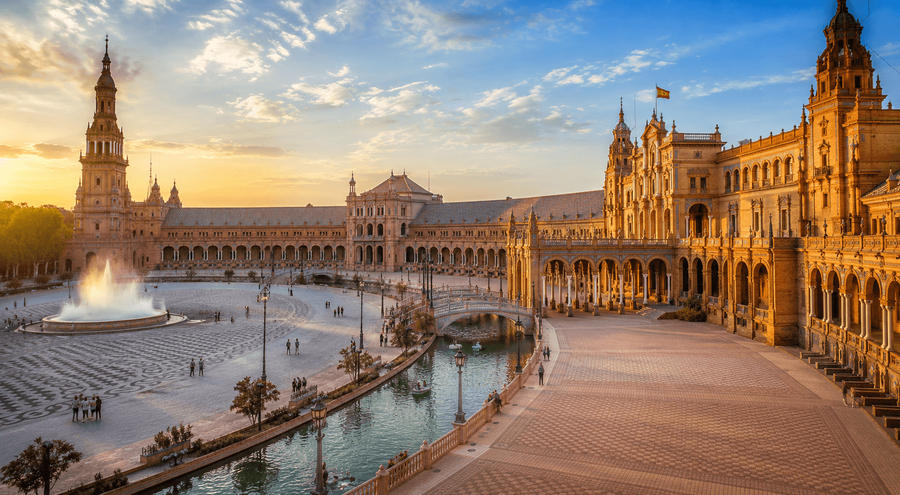
A visit to Plaza de España offers travelers the opportunity to experience one of Seville’s most impressive and photogenic landmarks. Known for its sweeping semicircular architecture, colorful ceramic decoration, elegant bridges, peaceful canal, and spacious central plaza, the site combines history, craftsmanship, and striking urban design. Begin by walking through the open plaza, where the grand curved building creates a dramatic backdrop. Its long arcades, towers, balconies, decorative columns, and warm-toned brickwork reflect a blend of Renaissance Revival, Moorish-inspired, and regional Andalusian architectural styles. One of the main highlights is the series of tiled alcoves positioned along the building. Each alcove represents a province of Spain through detailed ceramic maps, historical scenes, decorative benches, and colorful azulejo tiles. Travelers can walk along the façade, admire the craftsmanship, and photograph the different provincial displays. Continue toward the canal that curves through the plaza. Several beautifully decorated bridges cross the water, featuring patterned tiles, ceramic railings, and elegant stonework. Depending on availability, visitors may also see small rowboats moving through the canal. At the center of the plaza stands a large fountain surrounded by open space, pathways, and sweeping views of the surrounding architecture. The wide layout creates excellent opportunities for photography, relaxed walks, and quiet moments while admiring the scale of the landmark.

Alhambra and Generalife
A visit to the Alhambra and Generalife offers travelers the opportunity to explore one of Granada’s most extraordinary historic landmarks. Set on a hill overlooking the city, the complex combines royal palaces, defensive towers, elegant courtyards, intricate decorative halls, peaceful gardens, fountains, and wide views across Granada and the Sierra Nevada mountains. Begin at the main entrance and continue through the landscaped grounds toward the different sections of the complex. The Alhambra is extensive, and each area reveals a different part of its history, architecture, and cultural importance. One of the main highlights is the Nasrid Palaces, known for finely carved walls, geometric patterns, Arabic inscriptions, tiled surfaces, decorated ceilings, archways, and peaceful courtyards. Spaces such as the Court of the Myrtles and the Court of the Lions are among the most photographed areas within the complex. Continue toward the Alcazaba, the oldest fortress section of the Alhambra. Its towers, walls, defensive areas, and elevated viewpoints provide panoramic views of Granada, the Albaicín neighborhood, and the surrounding landscape. Travelers can also visit the Palace of Charles V, a Renaissance building known for its impressive circular courtyard. Its architectural style provides a striking contrast to the decorative interiors of the Nasrid Palaces. The visit continues through tree-lined pathways and gardens toward the Generalife, the former summer estate of Granada’s rulers. The Generalife Gardens feature long pools, fountains, flower beds, shaded walkways, trimmed hedges, courtyards, terraces, and scenic viewpoints. One of the most beautiful areas is the Patio de la Acequia, where a long water channel, fountains, flowers, and surrounding architecture create a peaceful and elegant setting. The gardens are especially attractive during spring and early summer, when flowers and greenery are at their most vibrant.

Almudena Cathedral
A visit to Almudena Cathedral offers travelers the opportunity to explore one of Madrid’s most striking religious landmarks. Located beside the Royal Palace, the cathedral stands out for its grand architecture, distinctive dome, twin towers, and unusual combination of traditional and modern design. Begin by approaching the cathedral from the palace side, where the broad stone façade creates an impressive first view. Its symmetrical structure, tall columns, arched windows, sculptures, and elevated position give the building a monumental appearance. Continue inside to discover a bright and colorful interior. Unlike many older European cathedrals, Almudena Cathedral features contemporary ceiling decoration, geometric patterns, stained-glass windows, religious paintings, chapels, and richly detailed altars. One of the main highlights is the cathedral’s central nave, where high ceilings, decorative arches, polished stone floors, and carefully arranged lighting create a spacious and peaceful atmosphere. Travelers can walk quietly through the interior, admire the artwork, and observe the contrast between classical architectural forms and modern decorative elements. Visitors may also explore the crypt, depending on opening conditions. The crypt contains columns, chapels, tombs, religious statues, and a more traditional Neo-Romanesque architectural style. The cathedral’s location beside the Royal Palace makes it easy to combine both attractions in the same itinerary. The surrounding area also provides attractive views, open plazas, and excellent photography opportunities.

Royal Alcázar of Seville
A visit to the Royal Alcázar of Seville offers travelers the opportunity to explore one of the city’s most extraordinary historic landmarks. Known for its intricate Moorish-inspired architecture, elegant courtyards, richly decorated palace rooms, and expansive landscaped gardens, the complex reveals centuries of artistic, cultural, and royal influence. Begin by walking through the palace courtyards, where carved arches, patterned tiles, decorative plasterwork, reflecting pools, and shaded walkways create a peaceful and visually striking atmosphere. The combination of Islamic, Gothic, Renaissance, and Mudéjar design makes every section of the palace feel distinctive. One of the main highlights is the Palace of King Pedro I, celebrated for its detailed Mudéjar architecture. Its rooms feature geometric ceilings, Arabic-style inscriptions, colorful ceramic tiles, carved wooden doors, and ornamental walls designed with remarkable precision. Continue toward the Courtyard of the Maidens, where a long reflecting pool is surrounded by graceful arches, delicate columns, and richly decorated façades. This courtyard is one of the most photographed areas of the Royal Alcázar and provides an excellent example of the palace’s refined architectural style. Travelers can also explore grand halls, royal chambers, reception rooms, historic galleries, and the Hall of Ambassadors, known for its magnificent domed ceiling and elaborate decoration. After exploring the interiors, continue into the landscaped gardens. The grounds feature fountains, ponds, orange trees, palm-lined pathways, flower beds, shaded terraces, pavilions, and quiet corners ideal for relaxed walking and photography.

Seville Cathedral and Giralda
A visit to Seville Cathedral and the Giralda offers travelers the opportunity to explore one of the city’s most important religious and architectural landmarks. Known for its vast Gothic interior, richly decorated chapels, historic artwork, monumental altarpiece, royal connections, and distinctive bell tower, the complex provides a powerful introduction to Seville’s history and cultural identity. Begin by entering Seville Cathedral, where soaring columns, ribbed vaults, stained-glass windows, carved choir stalls, and large ceremonial spaces create an immediate sense of scale. The cathedral’s interior is filled with religious paintings, sculptures, tombs, chapels, silverwork, and decorative details collected over centuries. One of the main highlights is the tomb traditionally associated with Christopher Columbus. The monument is supported by four sculpted figures representing the historic kingdoms of Castile, León, Aragón, and Navarra. Its dramatic design makes it one of the most photographed features inside the cathedral. Continue toward the cathedral’s monumental main altarpiece, known for its extraordinary scale, intricate gilded carvings, biblical scenes, statues, and detailed craftsmanship. Travelers can also explore side chapels, treasury areas, historic paintings, and sections connected with Seville’s religious traditions. After exploring the cathedral, guests may continue to the Giralda tower, one of Seville’s most recognizable landmarks. The tower was originally built as a minaret and later adapted as the cathedral’s bell tower, creating a distinctive blend of Islamic and Christian architectural influences. The climb to the upper levels follows a series of gently rising ramps rather than a conventional staircase for much of the route. From the viewing areas, travelers can enjoy panoramic views across Seville, including the cathedral rooftops, Alcázar gardens, Plaza de España, historic neighborhoods, church towers, and the surrounding cityscape.

Royal Palace of Madrid
A visit to the Royal Palace of Madrid offers travelers the opportunity to explore one of the city’s most impressive historic landmarks. Known for its grand architecture, ceremonial interiors, royal collections, decorative rooms, and sweeping courtyards, the palace provides a fascinating introduction to Spain’s royal history and artistic heritage. Begin the visit by approaching the palace from Plaza de la Armería, where the vast open courtyard creates a dramatic view of the main façade. The balanced architecture, stone columns, statues, balconies, and formal entrances immediately reflect the scale and importance of the residence. Inside, travelers can explore a selection of ceremonial halls and historic rooms used for official events, royal receptions, diplomatic functions, and state occasions. Interiors feature chandeliers, frescoed ceilings, gilded decoration, marble floors, mirrors, silk wall coverings, and finely crafted furniture. One of the main highlights is the Grand Staircase, designed to create a powerful first impression. Its wide marble steps, elegant balustrades, columns, sculptures, and decorative ceiling make it one of the palace’s most photographed interior spaces. Continue through rooms such as the Throne Room, where rich red fabrics, gilded details, ceremonial furniture, large mirrors, and royal symbols create a formal atmosphere. Other important spaces may include the Banqueting Hall, Royal Chapel, Gasparini Room, and private royal apartments, depending on the areas open during the visit. The palace also houses important royal collections, including paintings, tapestries, decorative clocks, porcelain, silverware, historic furniture, musical instruments, and ceremonial objects. Travelers interested in military history may also visit the Royal Armory, which displays suits of armor, weapons, shields, and equipment connected with Spanish monarchs.

Puerta del Sol
A visit to Puerta del Sol offers travelers the perfect introduction to central Madrid. Known for its lively atmosphere, historic buildings, major shopping streets, famous monuments, and constant flow of local life, the square is one of the best places to begin an orientation walk through the Spanish capital. Start by exploring the open central area, where several important streets meet. Puerta del Sol acts as a major pedestrian and transport hub, connecting travelers with nearby landmarks, shopping districts, restaurants, cafés, and historic neighborhoods. One of the main highlights is the Real Casa de Correos, an elegant red-and-white building overlooking the square. Its clock tower is widely recognized for marking Spain’s New Year celebrations, when crowds gather to eat twelve grapes at midnight as the clock strikes. Near the building, travelers can locate Kilometer Zero, a small plaque embedded in the pavement. This point traditionally marks the starting reference for Spain’s radial road network and is one of the square’s most photographed details. Continue toward the famous Bear and the Strawberry Tree statue, known locally as El Oso y el Madroño. The sculpture represents one of Madrid’s most recognizable symbols and is a popular meeting point for residents and visitors. The square is surrounded by historic façades, illuminated signs, shops, cafés, street performers, and pedestrian routes leading toward Gran Vía, Plaza Mayor, the Royal Palace, and the Literary Quarter. Its central location makes it an ideal starting point for exploring Madrid on foot.

Albaicín Walking Trail
A walk through the Albaicín offers travelers the chance to explore one of Granada’s most atmospheric historic neighborhoods. Set on a hillside opposite the Alhambra, the district is known for narrow cobbled lanes, whitewashed houses, flower-filled balconies, traditional courtyards, Moorish influences, and scenic viewpoints. Begin near central Granada and gradually walk uphill into the neighborhood. As the streets become narrower, modern city surroundings give way to old stone pathways, archways, small plazas, and traditional homes known as cármenes, which often include private gardens hidden behind high walls. The trail passes through quiet residential lanes and lively local areas filled with cafés, artisan shops, tapas bars, and Moroccan-style tea houses. Decorative doorways, tiled walls, wrought-iron balconies, and small fountains add character to the route. One of the main highlights is Mirador de San Nicolás, where travelers can enjoy one of Granada’s most famous views of the Alhambra with the Sierra Nevada mountains in the background. The viewpoint is especially beautiful in the late afternoon and at sunset. Travelers may also explore historic locations such as Plaza Larga, Puerta de Elvira, Carrera del Darro, and the old Moorish walls. The district rewards slow exploration, with unexpected turns revealing hidden courtyards, churches, viewpoints, and peaceful corners.